Tehrathum, 26 January: Dhannach, the cultural dance of the Yakthung (Limbu) tribe, originally residing in eastern Nepal, has reached the point of extinction. Along with the rituals of happiness and sorrow, the Yakthung (Limbu) community has a culture of dancing rice by holding hands and forming a circle during fairs, various festivals and celebrations. The rice dance, which was very popular until the 1950s, has recently become extinct, said Sam Thamden, chairman of the Kirat Yakthung Chumlung Myanglung Municipal Committee.
According to him, at that time, rice dance was performed not only at gatherings like fairs, weddings, and barkhants, but also among young people who met at a certain place by appointment. But now, rice dance is not seen anywhere like it was then. Over time, rice dance has become limited to the stage and videos of occasional programs.
Dhannach is a respected cultural dance of the Yakthung (Limbu) tribe, says Kirat Yakthung Chumlung Chairman Sesehang Hukpa Chongbang. According to him, before the rice dance, the sexual intercourse between the male and female parties is checked. If sexual intercourse occurs, one should apologize and leave. If one accidentally steps on the other’s feet or touches the body during the rice dance, one should fold both hands and apologize.
Palam (a type of song sung while dancing) is sung during the rice dance. Singing Palam is considered mandatory during the rice dance. Palam, which is sung in a question-and-answer format between the male and female sides, discusses the origin of creation, references to the development of human civilization, discussions of the universe, and even love.
During the Palami Q&A, couples fall in love with each other and even get married. Chairman Chongbang said, “Couples who fall in love and get married while singing Palam during the rice dance in Yakthung (Limbu) villages are still found today.”
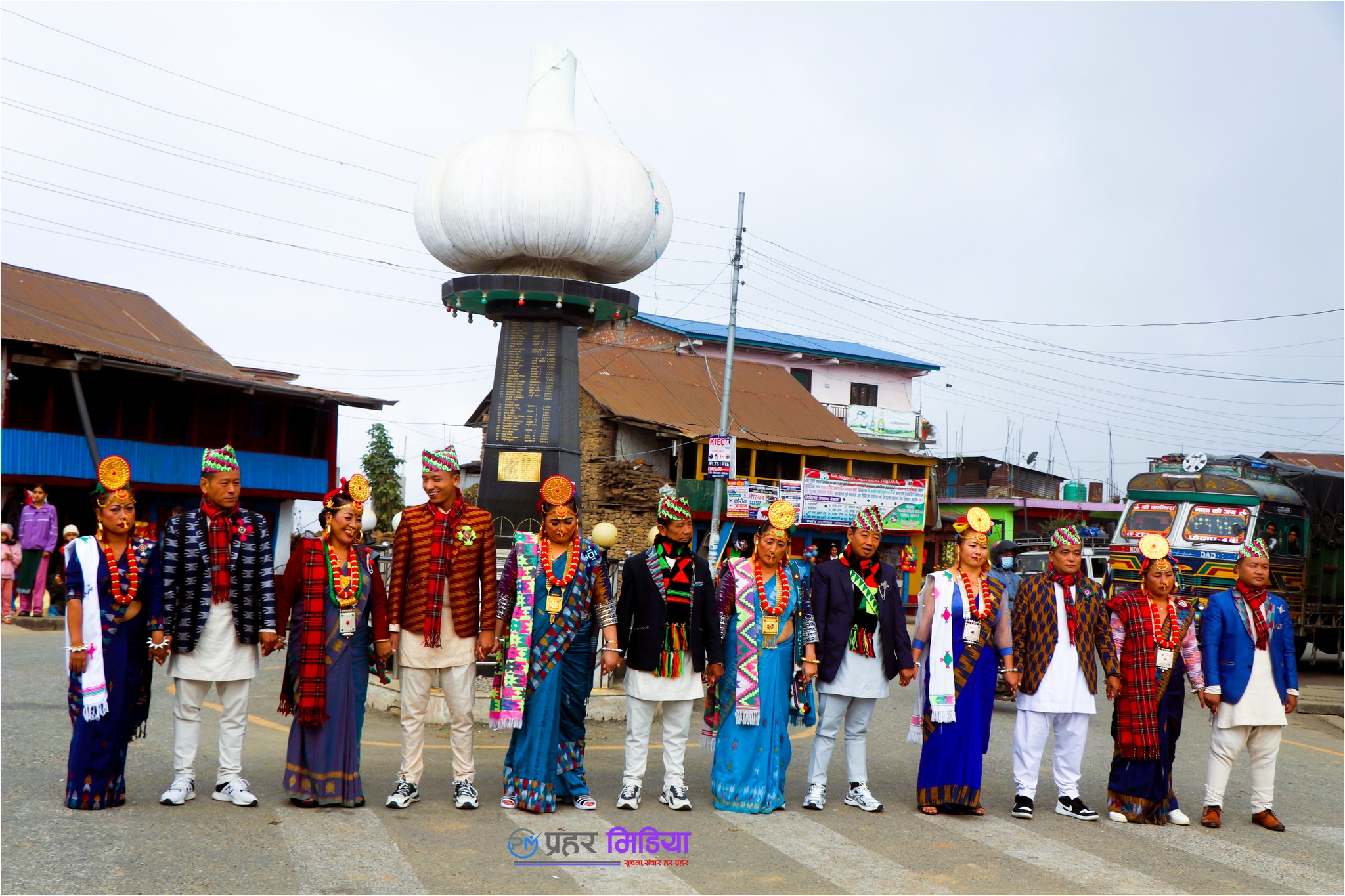
According to experts on the history and culture of the Yakthung (Limbu) tribe, the rice dance began when people entered the agricultural era. As described in the Mundhum, people started farming after a bird named Phangbhangna brought them rice seeds on the condition that they should not be chased away. However, the birds started coming and eating the grain they grew day by day. Amid the condition that the birds could not be chased away, people found a new way to preserve the grain. They made a heap of ripe grain and collected it in one place. Young men and women gathered, held hands with each other, formed a circle and started trampling the rice saying ‘Chhui ha .. ha ..’. It is said that this is where Ya?lak (paddy trampling) later became Ya?lang (paddy dance) and the word Palam is derived from ‘Chhui ha .. ha ..’ used to chase away the birds. Currently, the place where the rice dance is performed is called ‘Khala’, while when singing ‘Palam’, the phrase ‘Chhui Ha .. Ha ..’ or ‘Hai Ha .. Ha ..’ is used, said Radha Fombo, a long-standing rice dance conservation activist.
Tara Bahadur Kandangwa, coordinator of the Yakthung Tangnam Conservation Committee, Athrai, says that it is sad that the Dhannach, which carries the identity and identity of the Yakthung (Limbu) people, is about to disappear. He says that the younger generation should work together to preserve the Dhannach and other original cultural heritages, which are being forgotten due to the increasing influence of Western culture.