Kathmandu, 09 Aug: Prime Minister KP Sharma Oli returned home today after participating in the Third United Nations Conference on Landlocked Developing Countries (LLDCs) held in Turkmenistan.
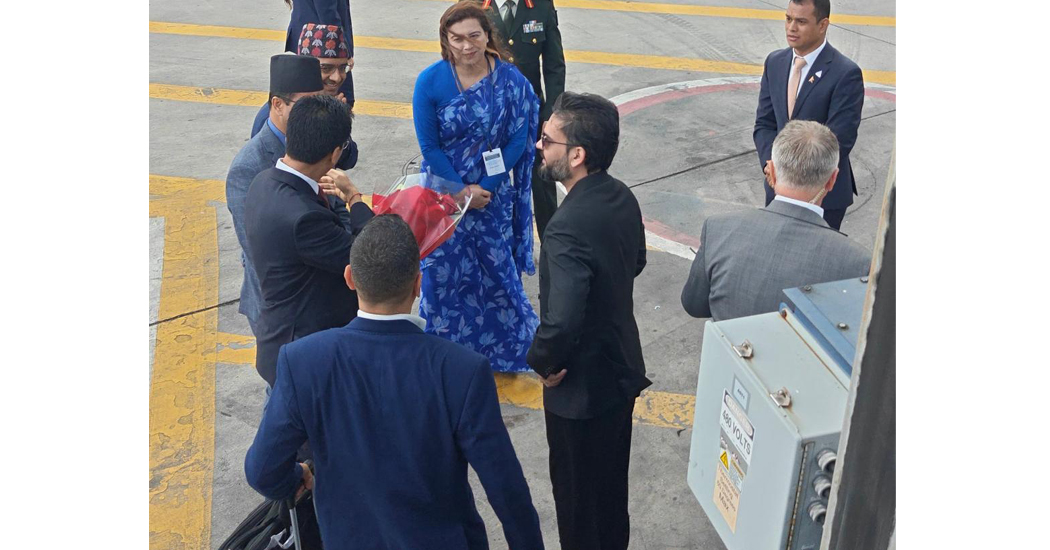
At the Tribhuvan International Airport’s VIP lounge, Deputy Prime Minister and Minister for Urban Development Prakash Man Singh, Home Minister Ramesh Lekhak, and Minister for Culture, Tourism, and Civil Aviation Badri Prasad Pandey welcomed the Prime Minister.
On the occasion, the Chief Secretary of the Government of Nepal, the Chief of Army Staff, heads of security agencies, and senior officials of the Government of Nepal were present. The Nepali Army presented an honor guard in tribute to the Prime Minister.
Prime Minister Oli had traveled to Turkmenistan to participate in the conference upon formal invitation from President Serdar Berdimuhamedow of Turkmenistan and United Nations Secretary-General António Guterres. The conference was held from Shrawan 20 to 23 (August 5 to 8) in the city of Avaza, Turkmenistan.
At the conference, Prime Minister Oli delivered a speech as the Chairperson of the Global Coordination Bureau of Least Developed Countries (LDCs). During the event, he also co-chaired a high-level roundtable meeting and addressed various other programs.
A total of 32 landlocked developing countries from Asia, Europe, Africa, and South America participated in the conference. The discussions focused on issues such as the lack of direct regional access to the sea, challenges faced by landlocked countries, and the benefits they can derive from the global market.
Considering the reality that international trade for these countries depends on transit through other nations, the conference concentrated on addressing significant increases in overall costs caused by additional border crossings, long distances from major markets, cumbersome transit procedures, insufficient infrastructure, and challenges related to transportation and other transactions. The Ministry of Foreign Affairs stated that the conference aimed to enhance the competitiveness of landlocked developing countries.
During the conference, Prime Minister Oli held meetings with heads of delegations from various countries, as well as senior officials from the United Nations and other international organizations.
Landlocked developing countries face challenges in international trade, connectivity, and economic development due to their lack of direct regional access to the sea.
The conference is believed to be fruitful in helping these countries achieve Sustainable Development Goals, despite difficulties in gaining significant benefits from global markets, the absence of an easy global transport network, and challenges in developing food infrastructure.
It is expected that the conference will support member states by fostering strategic partnerships, increasing investment to address these challenges, and assessing the full potential of these countries. Similarly, the conference has played a role in building a mutually equal and prosperous future by assisting these nations.
The second United Nations conference of landlocked developing countries was previously held from November 3 to 5, 2014, in Vienna, Austria. Around ten years ago, that conference discussed the implementation review of the Almaty Programme of Action, and the identification of policies related to international, regional, sub-regional, national, and international trade and transit transport cooperation to face new and emerging challenges.
The high-level delegation led by the Prime Minister included Secretary of the Ministry of Foreign Affairs Amrit Bahadur Rai, First Lady Radhika Shakya, Chief Advisor to the Prime Minister Vishnu Prasad Rimal, Member of Parliament Surya Bahadur Thapa Chhetri, Chief Personal Secretary to the Prime Minister Rajesh Bajracharya, private physician Prof. Dr. Divya Singh Shah, senior government officials, journalists, and security personnel.