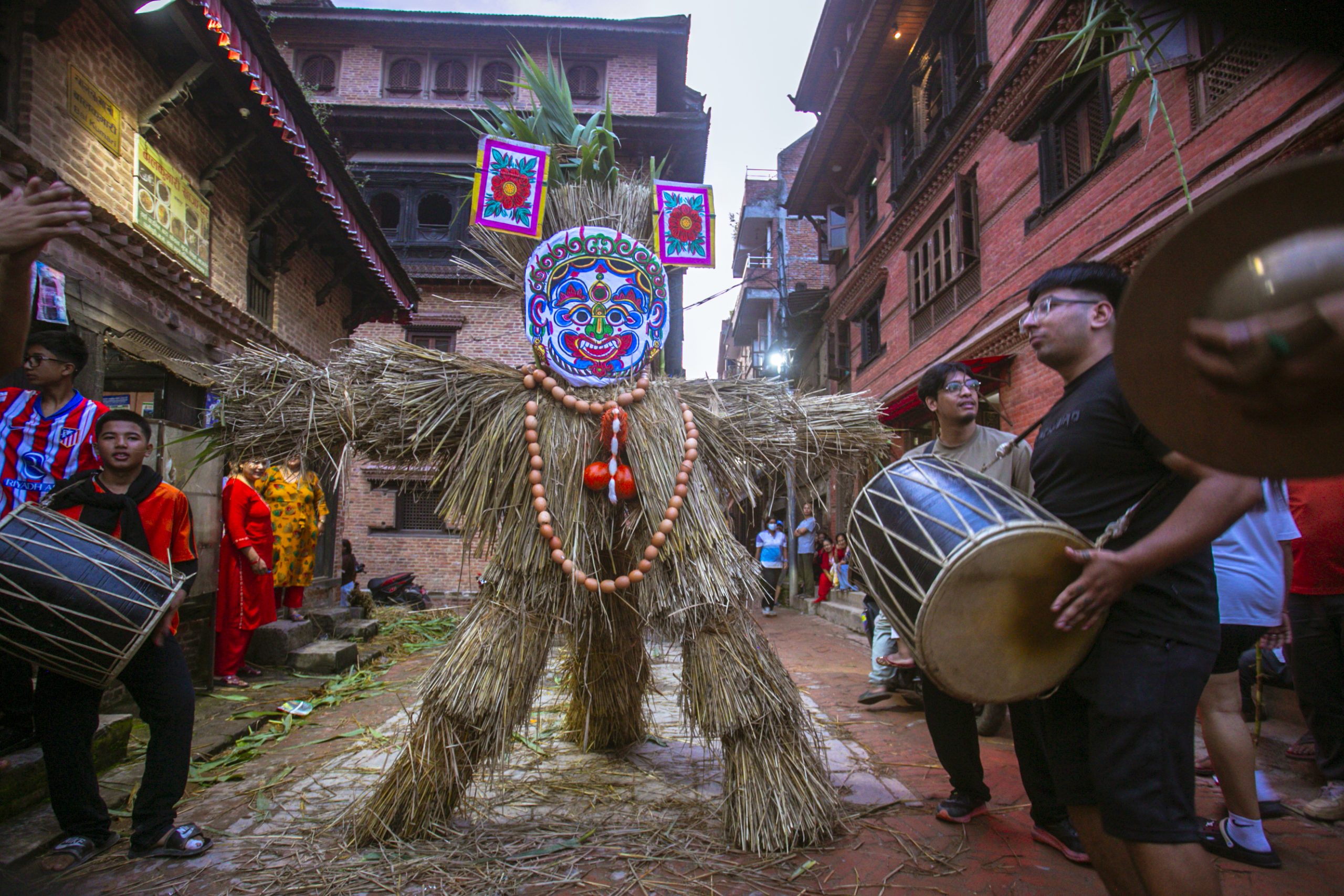
Kathmandu, 12 August: Members of the Newar community across the Kathmandu Valley celebrated Ghantakarna Chaturdashi, popularly known as Gathemangal or Gathamuga Chahre, with traditional rituals, cultural activities and religious fervor on Tuesday.
The annual festival, observed on the 14th day of the dark fortnight of the Nepali month of Shrawan, is one of the important traditional festivals of the Newar community. The festival is deeply rooted in Newar culture and is associated with the belief that evil spirits, demons and negative forces are driven away from homes and communities, paving the way for peace, prosperity and good fortune.
According to traditional belief, Ghantakarna is depicted as a terrifying demon who causes fear and trouble among people. On the occasion of the festival, communities construct an effigy of Ghantakarna using locally available materials such as reeds, straw and dried maize stalks. The effigy is then carried through the locality before being ceremonially burned or taken to a nearby river or stream and disposed of.
Although the festival is commonly described as a ritual for driving away ghosts and evil spirits, cultural experts say its significance extends beyond religious beliefs. Ghantakarna is also regarded as a symbolic festival of cleanliness and purification. It traditionally marks the beginning of a period when households and communities pay particular attention to cleaning their surroundings and removing unwanted elements after the agricultural activities of the monsoon season.
On the occasion, various traditional incense and aromatic substances are burned inside homes, with smoke spread throughout the rooms. The practice is believed to purify the household and drive away harmful insects, germs and negative energies. The tradition is particularly associated with the completion of rice plantation, when farmers traditionally begin focusing on maintaining cleanliness and protecting their homes from insects and other contaminants.
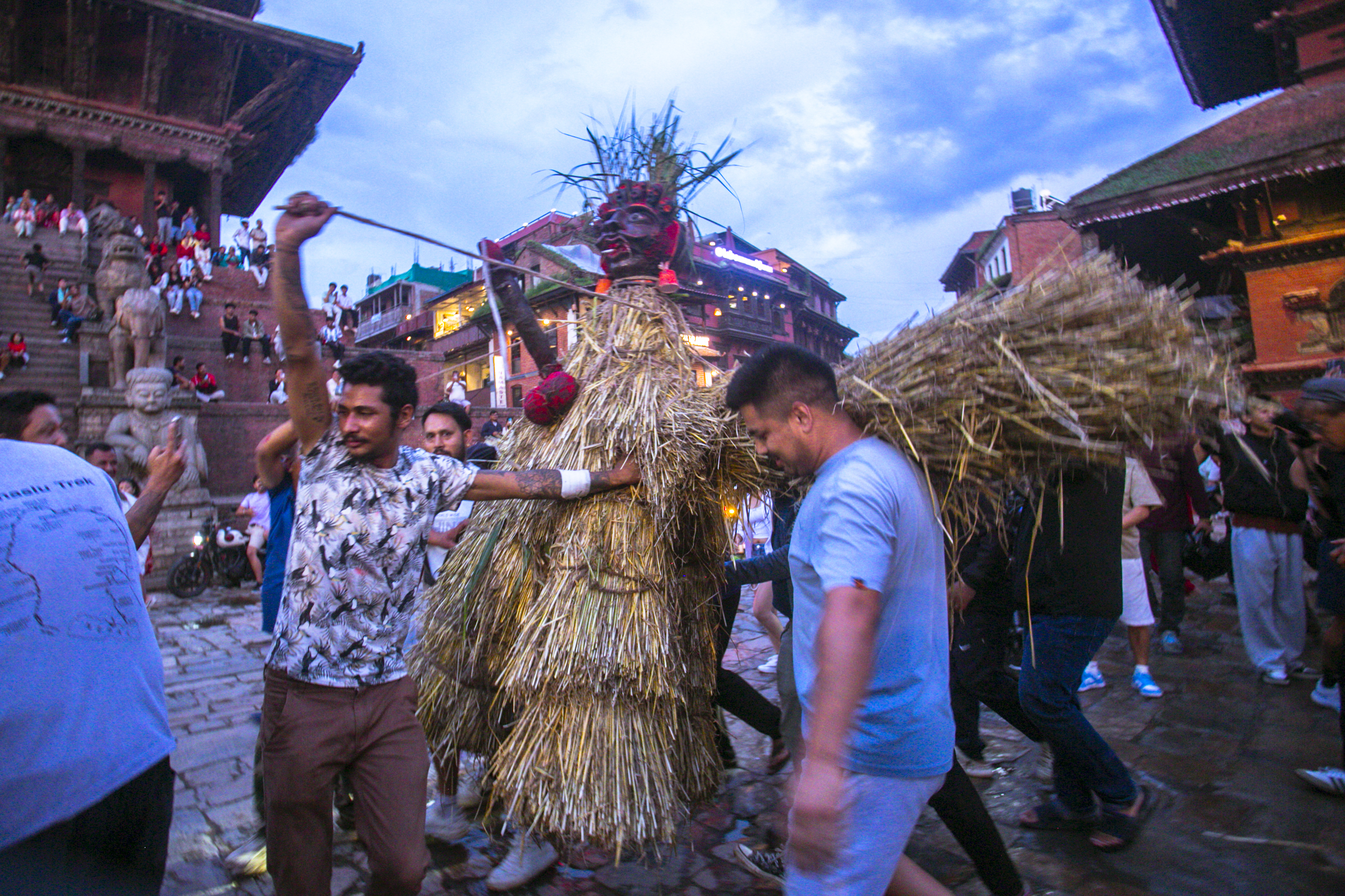
Religious rituals are also performed during Ghantakarna Chaturdashi. In some communities, tantric rituals are conducted to bid farewell to spirits, ghosts and other supernatural beings. Offerings and prayers are made according to traditional practices, reflecting the festival’s combination of religious belief, folklore and cultural heritage.
In Bhaktapur, members of the Newar community in and around the Dattatraya area observed the festival with special enthusiasm. They prepared an effigy representing Ghantakarna and later ceremonially burned it, marking the symbolic removal of evil and misfortune from their homes and community.
The festival also provides an opportunity for younger generations to learn about Newar traditions and participate in cultural practices that have been preserved for generations. Families and community members gather together to perform rituals, prepare traditional materials and observe the symbolic burning or disposal of the demon effigy.
Ghantakarna Chaturdashi therefore holds a distinctive place in the cultural calendar of the Kathmandu Valley. While its rituals are connected to ancient beliefs about ghosts, demons and supernatural forces, the festival also reflects practical traditions related to cleanliness, community participation and the transition from the rice-planting season.
The celebration demonstrates the rich cultural diversity of the Kathmandu Valley and the continuing efforts of the Newar community to preserve its centuries-old traditions and rituals in modern times.