Kathmandu, 01 Aug: The agreement to resume cross-border trade through Nepali territory, Lipulek Pass, Simkila Pass, and Nathula Pass, in point 9 of the 12-point agreement reached during talks between Chinese Foreign Minister Wang Yi and Indian Foreign Minister S. Jaishankar on August 19, is seriously objectionable.
The decision to operate the Lipulek border crossing for mutual trade purposes without Nepal’s knowledge, involvement, and consent has been a blatant interference in Nepal’s sovereign authority.
During Indian Prime Minister Narendra Modi’s visit to China on May 14-16, 2015, when India and China decided to use Lipulekh as a trade route and when a road was inaugurated in the area on May 8, 2020, Nepal immediately expressed its disagreement through a diplomatic note. But now, by repeating the same mistake, the Indian and Chinese governments have inflicted a great insult on the Nepali nation and the Nepali people.
The Sugauli Treaty of March 4, 1816, the Supplementary Treaty of December 11, 1816, and the Boundary Treaty of November 1, 1860, signed between Nepal and the then East India Company, have determined the eastern, southern, and western borders of Nepal.
Nepal updated its map 204 years after the Sugauli Treaty. The map, prepared using scientific technology and including land left out due to technical reasons, was approved by the Council of Ministers on 18 May 2020 and made public on 20 May. Schedule-3 of the constitution related to this was unanimously passed by the House of Representatives on 13 June, by the National Assembly on 17 June 2020 and certified by the Honorable President on 18 June 2020. Earlier, pressure-based suggestions from the citizen level had also motivated the government to publish the map.
After failing to keep Nepal under its influence, the East India Company government attacked Nepal unexpectedly from six locations in 1814. As a result, the war ended in a treaty. The Treaty of Sugauli (1816) was the document of that treaty.
Since the source of the Mahakali is Limpiyadhura, the western parts of the river belong to India, while the eastern parts, Lipulek and Kalapani, automatically belong to Nepal. Therefore, the current dispute is not about Kalapani, but about Limpiyadhura. India is trying to grab the land from Lipulek to Limpiyadhura by showing the dispute over Kalapani. We should always be aware of this.
Land encroachment
After the India-China border dispute escalated in 1960 (2019), India established Indo-Tibetan Border Police Force (ITBPF) posts at 17 locations on Nepal’s northern border, including Kalapani, to deter China. After the dispute was resolved, the posts elsewhere were removed in 1969 (2026 BS) and all forces were concentrated in Kalapani, and each year, security forces were gradually added and the camp was expanded.
Taking advantage of the absence of Nepal’s security forces and administration, the border was extended to Tinker Bhanjyang on land. The origin of Kali has been changed every year. Initially, a 25-meter-long well inside the Indian military post of Tulsi Newrang was said to be the source of Kali, and to confirm this, an artificial Kali and Shiva-Parvati temple was built.
Administrative encroachment
Taking advantage of Nepal’s administrative absence, the Indian government has also carried out administrative encroachment by distributing Rasan cards, providing government services and facilities (employment), and carrying out development and construction work internally without informing the Nepalese government.

KP Oli and Narendra Modi
Diplomatic encroachment
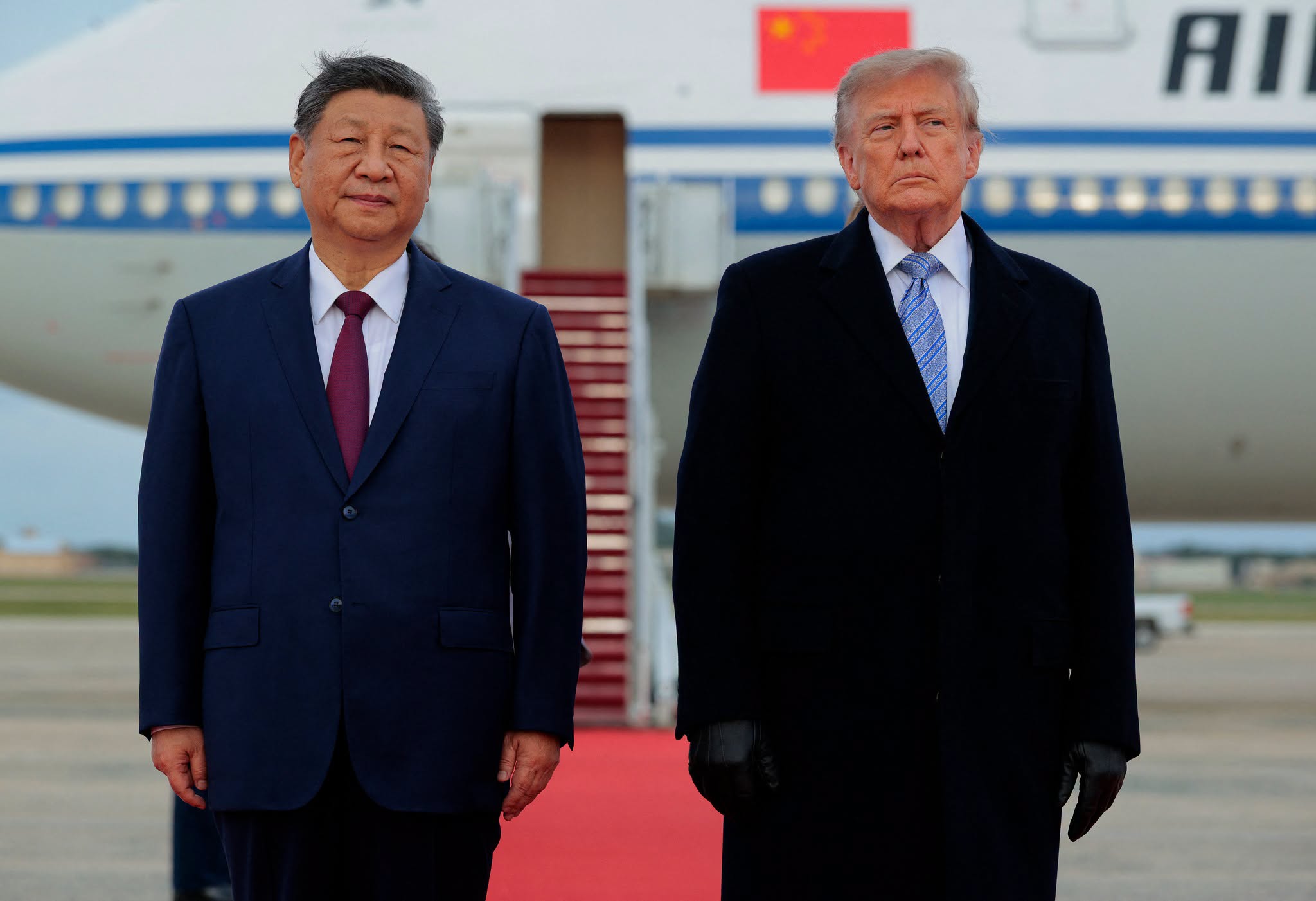
In 2020, the Nepalese government published an updated political map of Nepal, including Limpiyadhura, which was left out of the mapping due to technical reasons, and it was also included in the constitution. Meanwhile, during the two-day visit of Chinese Foreign Minister Wang Yi to India on 2 and 3 Bhadra(18-19 August 2025), Nepal has once again been diplomatically encroached upon by agreeing to reopen cross-border trade through the encroached Lipulek area and the Sipkila Pass and Nathula Pass trade points, ignoring Nepal’s sovereignty.
In this way, India is moving forward diplomatically with the support of China. This action is being strongly criticized and opposed by the Nepali government, Nepali intellectuals, political parties, and all Nepalis.
Opportunity
The current fact is that even though the land is included in Nepal’s map, India has been occupying it. Now the way to bring it to Nepal is through talks and discussions at the highest political level. Based on historical documents and factual evidence, this issue should be taken as an opportunity and raised with priority during Prime Minister KP Sharma Oli’s visits to China and India.
For that, the Government of Nepal should not delay in engaging in talks with a mandate from all parties and all sectors, with a national consensus, by taking diplomatic initiatives. Taking the bilateral visit of the Honorable Prime Minister to China and India as a golden opportunity.