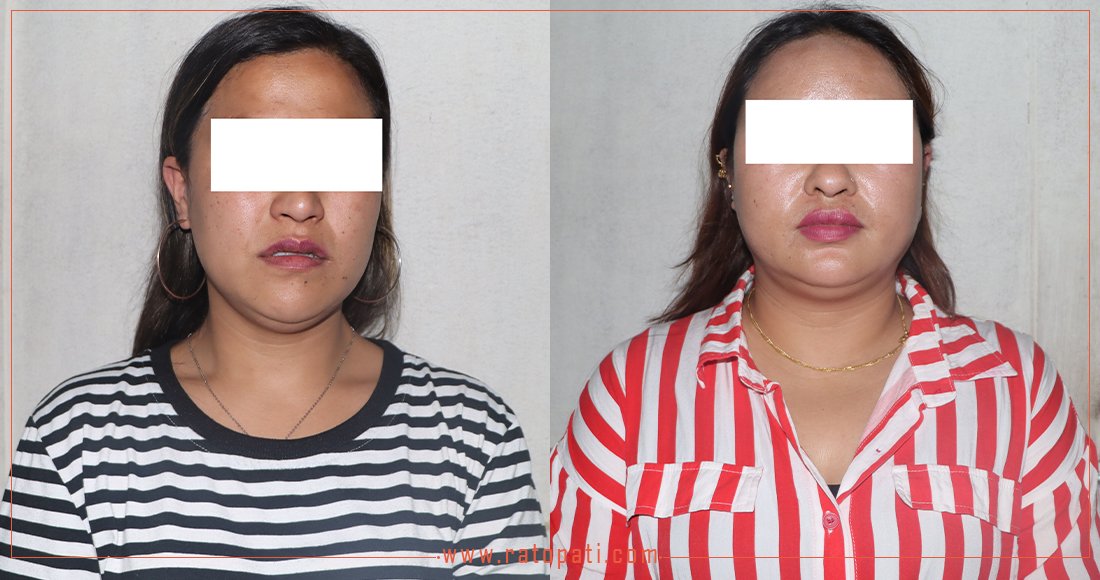
Kathmandu, 22 May: Nepal Police have arrested two women on charges of extorting money through a honey trap scheme. The arrested individuals are 34-year-old Mamata Tamang, originally from Kailali and currently residing in Kathmandu Metropolitan City–5, and 34-year-old Anchal Shrestha, also known as Anchal Chauguthi, from Bhaktapur Municipality–17.
They are accused of extorting NPR 500,000 from a victim by luring him into a trap. According to Kazi Kumar Acharya, spokesperson of the Kathmandu Valley Crime Investigation Office, the two suspects had contacted the victim via the social media platform Facebook.
They invited the victim to a hotel in Thamel, where they offered him snacks and alcoholic drinks. When the victim became unconscious, they took obscene photos and videos of him. According to Superintendent of Police Acharya, Tamang and Chauguthi later sent screenshots of the photos and videos to the victim via Messenger and threatened to file a sexual harassment case unless he gave them a house and 4 aana (approx. 1360 square feet) of land in Kathmandu.
They also forced the victim to issue a check for NPR 500,000. The police arrested the suspects on Wednesday from Hanumansthan, Kathmandu Metropolitan City–11. Authorities recovered two mobile phones and a check for NPR 500,000 made out in the name of Anchal Chauguthi from Prime Commercial Bank.
SP Acharya confirmed that the suspects have been handed over to the District Police Office, Bhadra Kali, for further investigation and prosecution under charges related to criminal extortion.
Conclusion:
The arrest of Mamata Tamang and Anchal Chauguthi highlights the growing misuse of social media and the rise of deceptive schemes like honey traps for financial extortion. This case underscores the need for increased public awareness about online interactions and the importance of prompt legal action against those who exploit others through threats and manipulation. Authorities continue to investigate the case, reinforcing their commitment to curbing cyber-related crimes and protecting individuals from such exploitation.