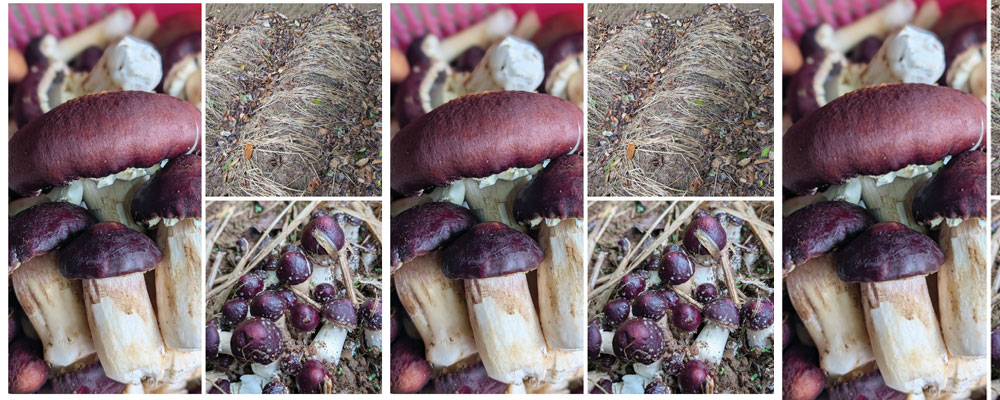
Kathmandu, 15 April: Many people in Nepal understand mushrooms as a crop grown indoors under controlled temperatures. However, experts say that the successful testing of the “wine cap” mushroom— which can be cultivated outdoors like potatoes using soil ridges—has opened new possibilities.
Senior entomologist RP Mainali from the Nepal Agricultural Research Council (NARC) stated that this mushroom, tested by the International Centre for Integrated Mountain Development (ICIMOD), has shown promising production results and could be useful for expansion. He claims it can yield high production at low cost within just 45 days, making it highly beneficial for rural Nepali farmers. Researcher Dr. Shailesh Ranjitkar added that the mushroom can be grown year-round in areas where temperatures remain below 32°C.
The mushroom was initially used in China on barren land after mineral extraction. After its success in Yunnan Province, efforts were made to introduce it to Nepal. As a result, it has now been successfully tested in three different seasons in Nepal. In trials conducted in Godawari, Lalitpur, around 400 kilograms of mushrooms were produced from just two aana (a small land unit), proving its high productivity even on limited land.
Ranjitkar emphasized that due to its low cost, simple technology, and quick yield, this mushroom could open new income-generating opportunities for small farmers, cooperatives, and community forest user groups.
According to him, the technology was introduced to Nepal from China under a livelihood improvement program. After initial testing, it was adapted to local environmental conditions, making successful production possible in Nepal. Since it can be grown using locally available organic materials in both hilly and Terai regions, its expansion potential is high.
The production process does not require complex infrastructure. Similar to potato farming, soil ridges are prepared, and compost made from sawdust and straw is used. The compost and spawn (seed) are placed in the ridges, covered with about 5 mm of soil, and mulched with straw while maintaining around 70% moisture. Harvesting can be done within 45 days.
Agricultural economists say that with proper market assurance, such productivity could significantly contribute to the rural economy. Since it utilizes materials like straw and sawdust available in forest areas, it is also considered an environmentally friendly technology. However, market management and price determination remain major challenges as production increases. Currently, Nepal’s mushroom market is largely dominated by button and oyster mushrooms, so consumer awareness will be necessary to promote this new variety.
Researchers have also highlighted the need to give legal recognition to “mushroom breeding,” similar to plant breeding, and to regulate spawn production, registration, and quality control. There is also a need to focus on training, subsidies, and expanding market access to promote this innovation. Experts believe that collective production and marketing through cooperatives could make this mushroom a reliable source of rural income.
Given the risks posed by climate change to traditional farming, experts say alternative crops are becoming increasingly important, and the wine cap mushroom could be a suitable option. If production, processing, and market management are integrated effectively, this technology could become a “low investment, high return” business for small farmers in Nepal. Long-time agriculture practitioner Krishna Dhital also noted that the mushroom has good market value and can generate strong profits for small and medium-scale farmers.