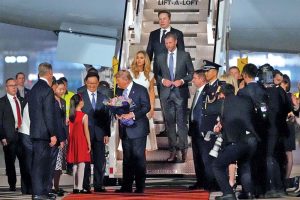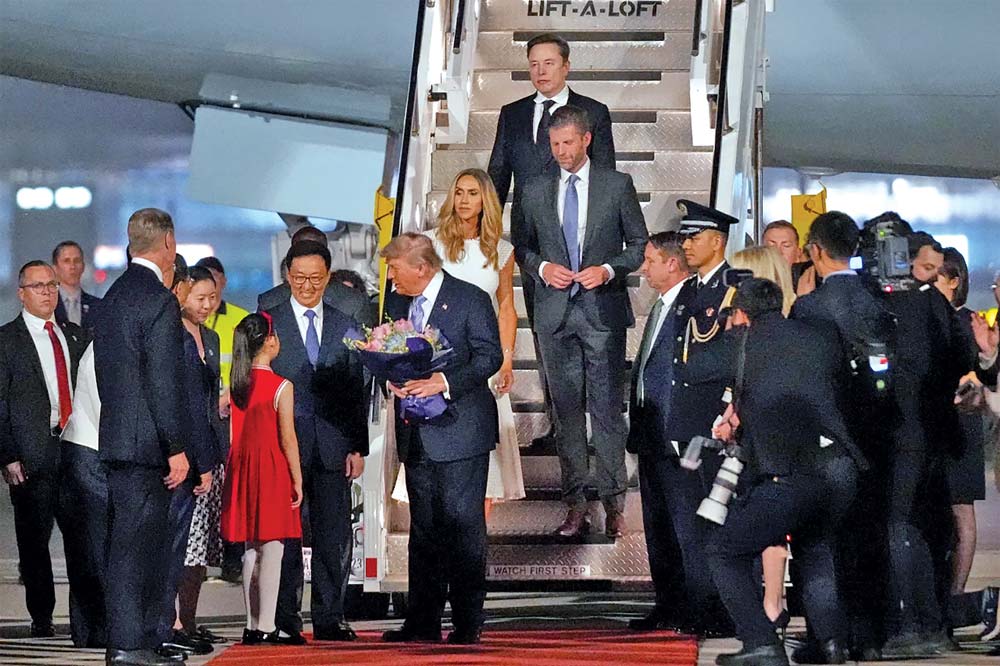
A summit meeting between U.S. President Donald Trump and Chinese President Xi Jinping is set to take place in Beijing on Thursday. The global community is closely watching the meeting between the leaders of the world’s two largest economies. According to China’s Xinhua News Agency, President Trump arrived in Beijing on Wednesday evening for a three-day state visit, his first in nine years.
Before departing for China, Trump signaled a new approach to managing trade, technology, and geopolitical tensions with Beijing. Ahead of the much-anticipated summit with Xi Jinping, he publicly stated that he would urge China to become more “open” to American companies. After leaving Washington, Trump said via social media that he wants to expand access for U.S. businesses and technology firms in China, describing Xi as “a leader with extraordinary vision.”
“I urge President Xi to make China more open so that American talent and technology can help take China to a higher level,” Trump wrote. The Trump administration appears to view this visit not only as a diplomatic engagement but also as an opportunity to rebalance economic and strategic relations. For this reason, several prominent U.S. business leaders from the trade and technology sectors are also part of his delegation.
Beijing, on the other hand, seeks to improve relations with Washington while also easing rising tensions in West Asia. China supports ending the war between the United States and Iran and stabilizing the situation. To this end, China’s Foreign Ministry has urged Pakistan to intensify mediation efforts between Iran and the United States, signaling Beijing’s willingness to expand its diplomatic role in regional stability.
This is Trump’s first visit to China since 2017. According to the schedule, a state banquet, tea reception, and high-level ceremonies will be held in his honor at the Great Hall of the People in Beijing.
Key agenda items for the summit are expected to include China’s control over rare mineral exports, competition in artificial intelligence (AI), trade imbalances, and technology security issues. The two leaders last met in South Korea in October, and discussions are also expected on extending the current trade truce for another year.
Meanwhile, the cost of the U.S. military campaign against Iran has been rising rapidly. Although the Pentagon has acknowledged spending around $29 billion so far, experts claim the actual cost is several times higher. When long-term military expenses, veterans’ healthcare, reconstruction of damaged military infrastructure, and new weapons production are included, the total cost could reach as much as $1 trillion.
A study published by Harvard Kennedy School suggests the situation could be even more serious. War budget expert Linda Bilmes has warned that the total cost of the Iran war could ultimately reach $1 trillion. According to her, the currently disclosed expenses represent only a small portion of the true cost, which is expected to grow significantly in the coming years.