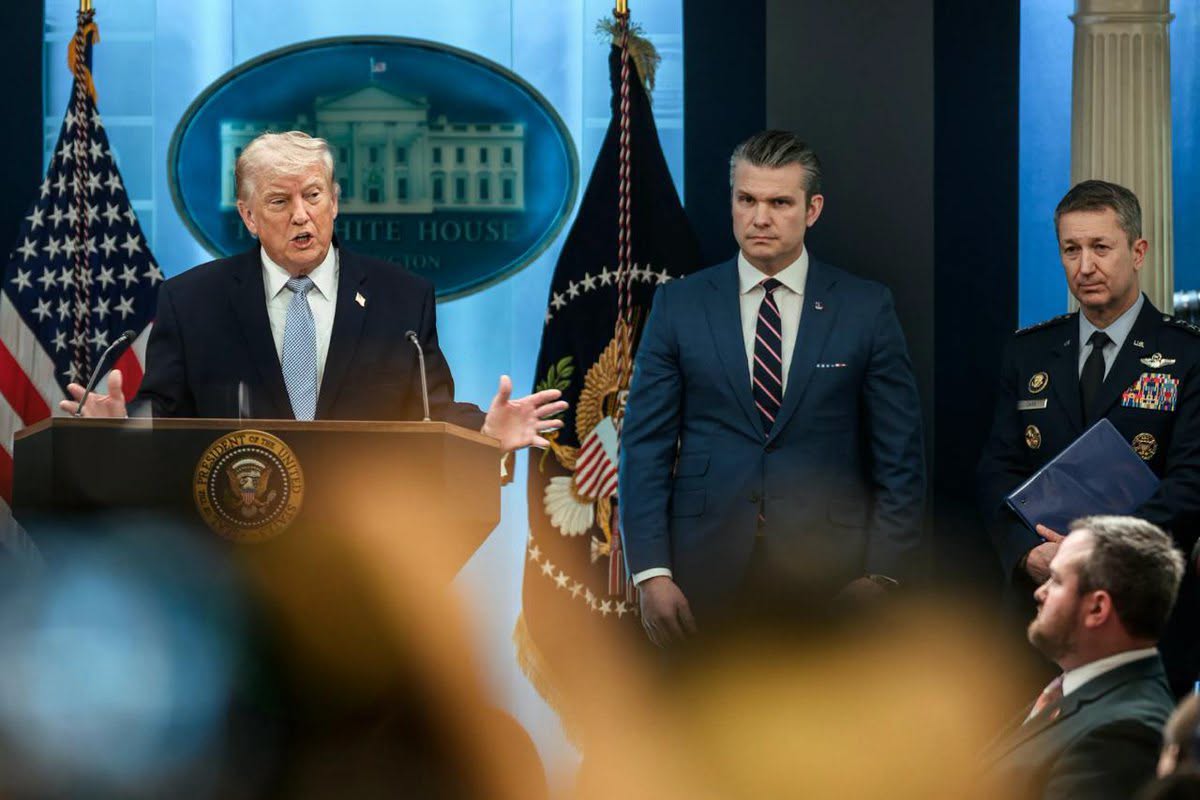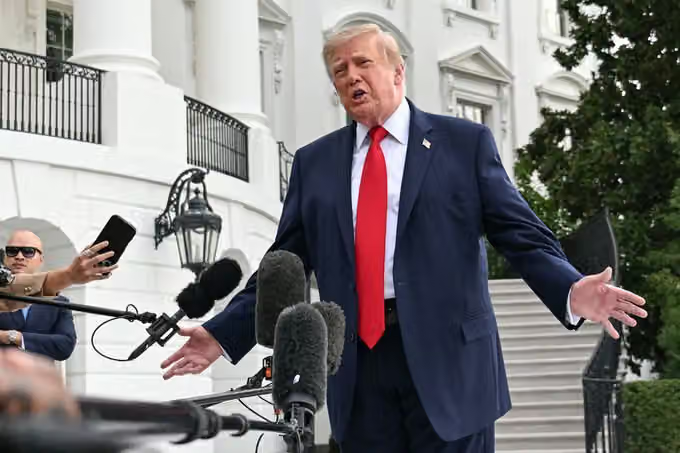
US President Donald Trump said Thursday that the United States would not attack Iran before the November 3 midterm elections, citing what he described as “productive discussions” with Tehran. However, he confirmed that the US blockade of Iranian ports would remain in place.
In a post on Truth Social, Trump said Washington was engaged in productive talks with Iran, offering the clearest indication yet of a pause in renewed US military strikes. Nevertheless, he left open the possibility of military action after the elections.
Trump has previously expressed optimism about negotiations before launching military operations. In June 2025, he said he would decide within two weeks whether to join Israel’s war against Iran, citing the possibility of diplomatic progress. US forces struck Iranian nuclear facilities days later.
Iranian President Masoud Pezeshkian said during a meeting with Russian President Vladimir Putin that Tehran remained committed to negotiations and was preparing its response to the latest US proposal.
Iranian Foreign Minister Abbas Araghchi said Tehran had received Washington’s response to Iran’s proposed seven-day plan and was reviewing it. He added that Iran would respond within the next few days and that messages continued to pass between the two countries through mediators.
US Military Prepares for Possible Strikes
Despite ongoing diplomacy, reports indicate that Washington is preparing for potential renewed military action.
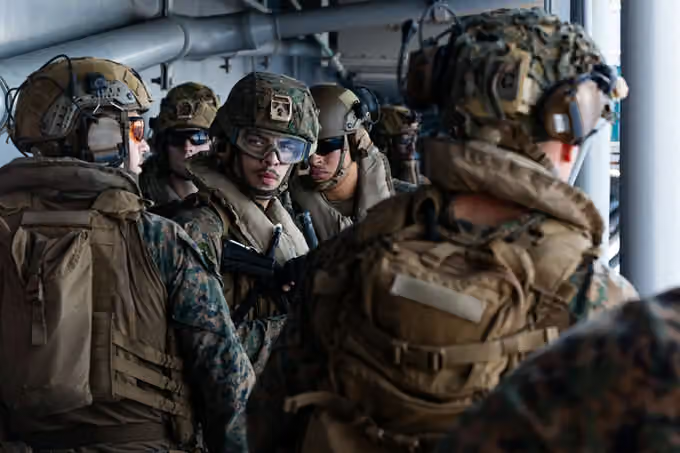
Israel’s Channel 12 reported Thursday that senior US officials had informed Israeli military chief Eyal Zamir that the White House and Pentagon had instructed American forces to prepare for a possible large-scale attack on Iran within three weeks.
According to the report, Zamir warned that an attack during that period could force Israel to postpone its October 27 election, as Iran was expected to respond with heavy missile strikes.
Trump’s latest statement appears to rule out an attack before the US midterm elections but does not eliminate the possibility of military action afterward.
US Defense Secretary Pete Hegseth said Washington was not seeking to deploy large numbers of ground troops or engage in nation-building in Iran. He said the primary objective was to prevent Tehran from acquiring nuclear weapons, adding that any necessary military operation would be “swift and decisive.”
Meanwhile, mediators have reportedly asked Trump to allow more time for negotiations before considering an attack.
Iran Warns Against Interference in Strait of Hormuz
Iran has also intensified its warnings over the Strait of Hormuz, a vital international shipping route and a major point of contention in negotiations with Washington.
Revolutionary Guards commander-in-chief Ahmad Vahidi said the United States and other foreign powers had no right to interfere in the strait or the Persian Gulf. He warned that threats and unauthorised naval movements would face a forceful response.
Vahidi said Iran’s naval forces possessed precision-guided missiles, attack drones, fast boats, electronic warfare systems and coastal defences.
Iranian Defense Ministry spokesperson Reza Talaei-Nik also said the country had sufficient weapons-production capacity to sustain a prolonged war. He added that Iran’s military was using battlefield experience to improve its weapons and equipment.
Meanwhile, Reuters reported Thursday that shipping traffic through the Strait of Hormuz had fallen to its lowest level in more than two months following increased attacks on tankers, highlighting continuing risks to regional security and global energy supplies.