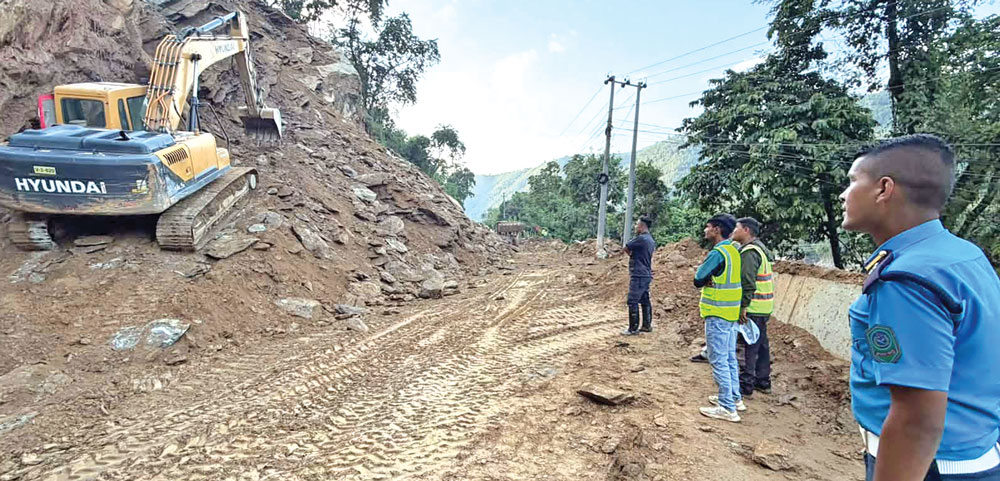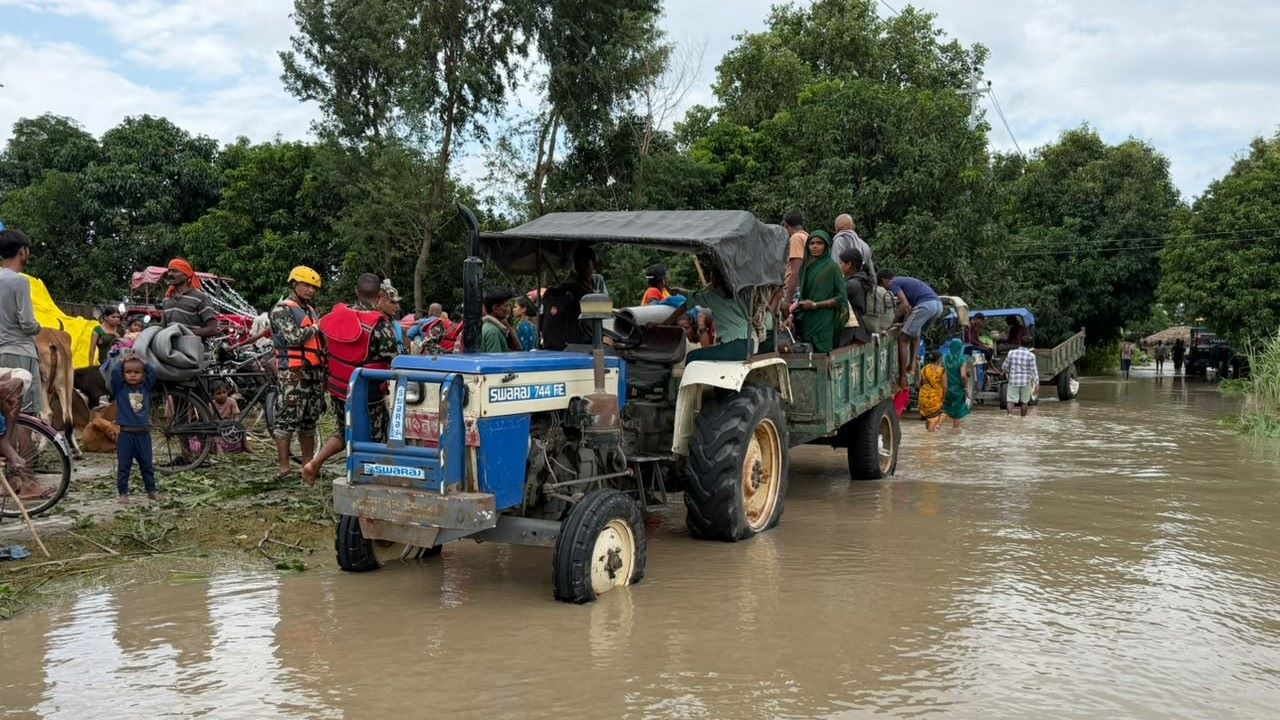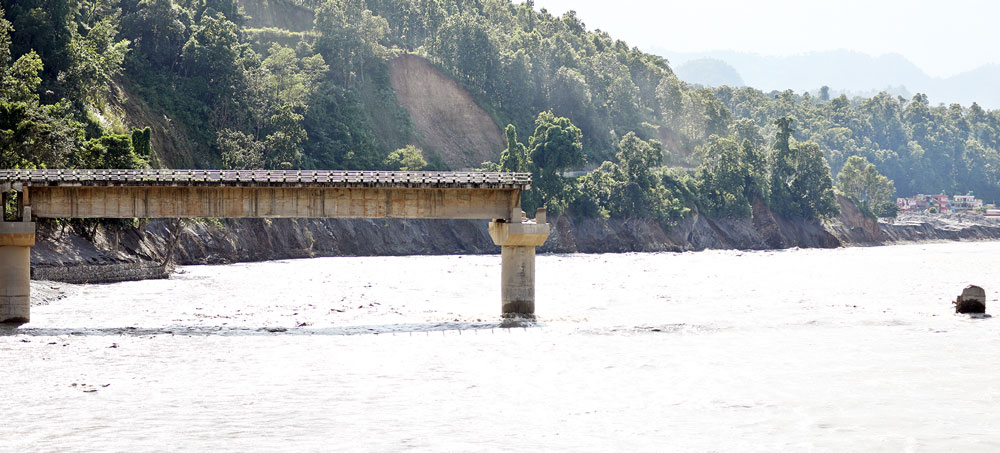
Kathmandu, 2 Oct: Continuous rainfall from Ashoj 8 to 12, followed by floods and landslides, caused severe damage to bridges and suspension bridges across Nepal. In many places, floodwaters were seen flowing over the tops of bridges. Bridges in the Himalayan and hilly regions appear to have suffered the most damage.
The widespread destruction has raised several questions: Were the bridges not built high enough to withstand rising river levels? Did river water levels rise unusually high this year? Were the bridge designs inappropriate for Nepal’s geography and the flow characteristics of rivers? And should the design of bridges now being reconstructed or newly built be reconsidered in light of the lessons from this year’s floods and landslides?
Former Secretary and engineer Tulsi Sitaula said the damage caused by the Bhotekoshi flood on Bhadra 10 and the floods and landslides triggered by continuous rainfall in the second week of Ashoj has demonstrated that the height of many bridges is no longer sufficient to withstand extreme weather events.
He said bridge designs currently used in the Tarai/Madhesh region may still be adequate, but bridges constructed over rivers and streams in the Himalayan and hilly areas need to be built higher. According to him, technical experts have reached the conclusion that the height of new bridges in such areas should be increased by at least five meters. The sight of bridges being washed away and floodwaters flowing over bridges clearly indicates that their height has not been sufficient for current river levels, he said.
Although bridge designs traditionally consider the maximum flood level recorded over the past 50 or 100 years, Sitaula said climate change has resulted in exceptionally heavy rainfall within short periods, making previous estimates increasingly unreliable.
According to him, a safety clearance, known as freeboard, is normally maintained between the underside of a bridge and the maximum expected water level. However, the freeboard can become inadequate when floods carry rocks, debris, mud and sand, causing the riverbed to rise. As sediment and debris accumulate along riverbeds, the effective river level rises, allowing floodwaters to reach or even overtop bridges.
Lack of Engineering Research
Former Secretary and engineer Tanuk Lal Yadav said engineering research is one of the most important aspects of bridge construction, but in Nepal, bridges in Himalayan and hilly areas are often designed without adequate research into changes in flood-prone areas.
He also pointed to problems with existing bridge designs.
“When bridges are designed here, the mud, rocks, sand and other materials carried by rivers during floods are not properly taken into account. Only the floodwater itself is considered. This is a major problem in bridge construction,” Yadav said.
He added that changes in weather patterns, changing flood behavior, inadequate studies, rising riverbeds and insufficient space for water to flow between rivers and bridges all contributed to the extensive damage caused by the Bhotekoshi and Ashoj floods.
Yadav suggested that future bridge construction should not rely solely on historical data. Instead, engineers should assess the possibility of extremely high floods in the future and increase bridge heights accordingly.