Kathmandu, 26 Jan: Tobacco industries around the world have been found to be interfering in policy-making by challenging laws while marketing tobacco products. Nepal has ranked 14th among countries where such interference is prevalent.
A study conducted jointly by the Ministry of Health and the National Network for Health Rights and Tobacco Control found that tobacco companies in Nepal are violating existing laws by distributing various gifts and providing sponsorships under the guise of corporate social responsibility, thereby challenging legal provisions.
The report titled “Tobacco Industry Interference in Tobacco Control”, conducted in 100 countries including Nepal, shows that Nepal ranks 14th among countries facing high levels of industry interference. According to World Health Organization (WHO) data, tobacco consumption causes the deaths of 39,200 people annually in Nepal, while approximately NPR 45 billion is spent each year on treatment related to tobacco-related illnesses.
Although Nepal has legal provisions prohibiting any form of advertising, promotion, and publicity of tobacco products, tobacco companies continue indirect promotion and marketing under the banner of social responsibility. Shantalal Mulmi, Coordinator of the National Network for Health Rights and Tobacco Control, stated that interference by the tobacco industry in public health policies aimed at tobacco control has been increasing.
According to the 2025 report, strategies used by tobacco companies to maintain their influence have become more sophisticated and aggressive. The report notes that the industry is attempting to gain access to government mechanisms to prevent tax increases, weaken pictorial health warnings, keep new products outside regulatory frameworks, and continue indirect promotions targeting youth.
Dr. Prakash Budhathoki, Spokesperson of the Ministry of Health, said that tax increases on tobacco products have not been implemented as proposed. He explained that although the Ministry of Health submitted proposals to the Ministry of Finance, tax hikes could not be enforced, resulting in Nepal losing large amounts of money to healthcare costs due to revenue-driven priorities.
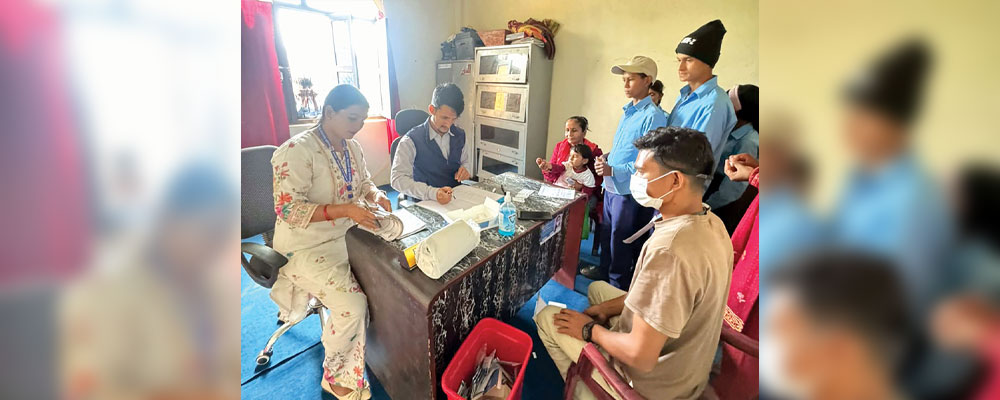
Similarly, Dr. Radhika Thapaliya, Director of the National Health Information and Communication Center, said that tobacco companies are creating public misconceptions by providing financial assistance to schools, purchasing ambulances, and engaging in activities that violate the Tobacco Product Control Act and the Public Health Act, portraying the tobacco industry as not harmful.
The report highlights that despite the existence of the Tobacco Product Control Act and Regulations in Nepal, full implementation has not been achieved. The assessment evaluated the influence exerted by the tobacco industry on governments, policymakers, and public institutions in various countries during the period from April 2023 to March 2025.
Globally, the highest levels of tobacco industry interference were found in the Dominican Republic, Switzerland, the United States, Georgia, Japan, and Romania, while Brunei, Palau, Botswana, Finland, and Ethiopia reported relatively low levels of interference.
According to the evaluation criteria, Nepal scored 44 points, while Brunei scored 14 and the Dominican Republic scored 98. Lower scores indicate less industry interference. In South Asia, the Maldives ranked 8th with 43 points, Sri Lanka 17th with 45 points, Pakistan 33rd with 54 points, India 48th with 59 points, and **Bangladesh 69th with 66 points.
Coordinator Mulmi reiterated that despite legal provisions banning all forms of tobacco advertising and promotion, tobacco companies continue promotional activities under the pretext of corporate social responsibility.