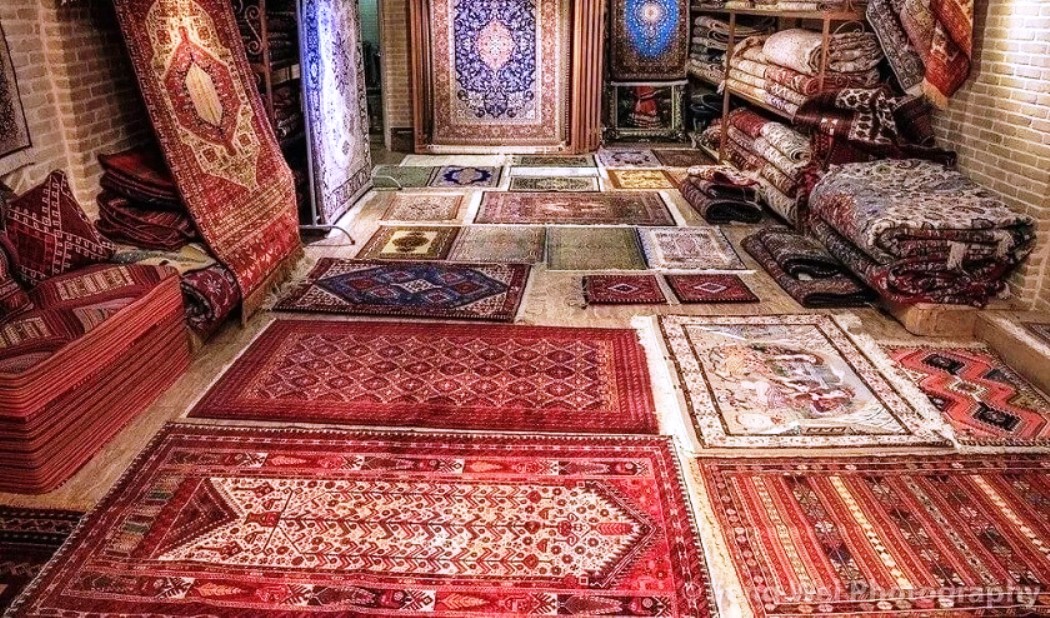
Iran’s handmade carpet industry, long considered a pinnacle of the nation’s cultural heritage, is currently facing a severe crisis. This traditional trade, which for decades generated billions of dollars in revenue, has now dwindled, with its market confined to just a handful of countries.
The industry is on a path of decline, driven by a severe economic crisis and shifting consumer preferences. In a staggering drop, the sector’s exports have collapsed from over two billion dollars annually in the 1990s to a mere $4.17 million projected for the 2024/25 fiscal year—a decline of more than 95 percent.
The single largest blow came in 2018 when the United States re-imposed sanctions, causing Iran to lose its most significant market. Prior to the sanctions, the US market alone accounted for 70 percent of sales for Iranian hand-woven carpets. Zahra Kamani, the head of Iran’s National Carpet Center, states, “We lost our main market due to the ruthless and harsh sanctions of America.”
Intense Global Competition
While the industry was still exporting over $40 million as recently as 2017, its carpets now primarily go to markets like Germany, the United Arab Emirates, Japan, and China. However, competitors like India, Nepal, Pakistan, and China are capturing global market share by producing carpets at lower prices. In a telling reversal, some foreign-made carpets are even being re-imported into Iran itself.
Livelihoods of Millions at Stake
According to Kamani, nearly two million people in Iran depend on this industry, many of whom earn only a few dollars a day. Trader Hamed Nabizadeh echoes this concern, noting, “Carpets are being imported to Iran from India, Turkey, and China, which has caused a sharp decline in domestic sales.”
Decline in Tourism Compounds Problems
The industry also suffers from a sharp drop in tourism. Foreign tourists, who once bought Iranian carpets as prized souvenirs, are now scarce due to strained international relations and travel advisories. “Maybe tourists today don’t like our carpets. They also find them very expensive,” Nabizadeh said, adding, “The European customer who used to buy a silk carpet for 30-40 thousand dollars is no longer in a position to do so.”
Economic Policies and Lack of Government Support
Experts point to a combination of international sanctions, flawed foreign currency policies, high production costs, and governmental neglect as the root causes of the decline. While Trade Minister Mohammad Atabak has acknowledged the loss of international markets, he remains cautiously optimistic, suggesting that new trade agreements and policies could revitalize the industry. He emphasized the need for adaptation, stating, “Carpets must be woven to suit modern interior design tastes. Efforts must be made to build the brand and attract online customers through social media.”
Domestic Market in Shambles
The crisis has crushed the domestic market as well. The severe devaluation of the Iranian currency has made handmade carpets unaffordable for most local customers. Sheema, a 31-year-old preparing for marriage, shared her disappointment: “I always wanted a hand-woven carpet for my dowry, but my family cannot afford one. Instead, we have bought a machine-made carpet.” She added, “Nowadays, many families are opting for cheaper mechanical carpets, and some have even stopped buying carpets altogether.”