Radha Chalise
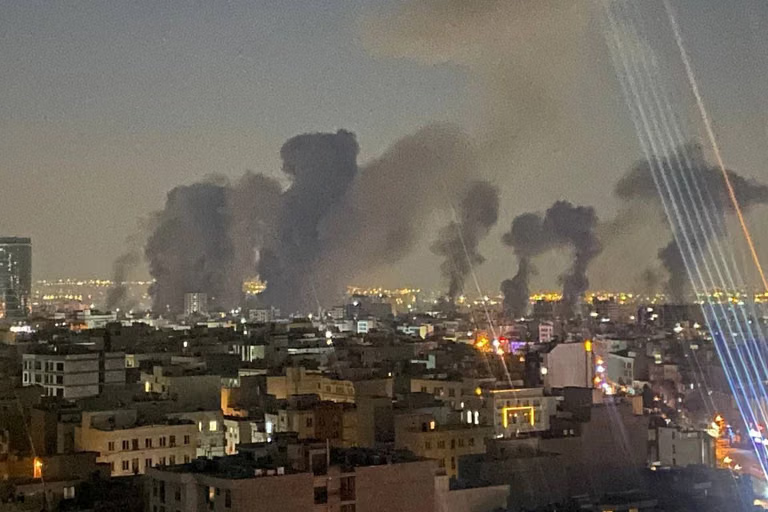
Recently, the Government of Nepal has been in a dilemma over whether or not to continue sending Nepali youth to work in Israel. The hesitation arose mainly after the Hamas militant attack on Israel’s southern region on Ashwin 20, 2080 BS (October 7, 2023), which plunged the country into a state of war.
That very attack claimed the lives of 10 Nepali students, injured six others, and left Bipin Joshi still missing after being taken hostage by Hamas. All of them had gone to Israel under the “Learn and Earn” project, a bilateral agreement between Nepal and Israel, which allowed them to study agricultural technology while gaining practical skills and income.
For the families of the 10 deceased Nepali students, the Israeli government has been providing support equal to that of its own citizens. According to Janan Biber, Deputy Chief of Mission at the Israeli Embassy in Kathmandu, Israel has also taken responsibility for the injured until they fully recover. Moreover, any injured student wishing to pursue higher education in an Israeli university is eligible for a full scholarship. Currently, one of the injured is studying there on such a scholarship.
After the Hamas attack triggered escalating hostilities between Israel and Iran, some Nepali workers wishing to return home were assisted by the Nepali government. While many returned, others chose to stay, and some who came back to Nepal have even returned to Israel for work.
For example, Geeta Dahal from Jhapa recently returned to Nepal but soon went back to Israel for employment. She said, “Compared to other countries, Israel offers women much more facilities, safety, and respect in foreign employment. Here, work is respected, and there is no discrimination between Israeli citizens and foreign workers in terms of services and facilities.”
Another woman from Jhapa, Geeta Paudel, who has been working as a domestic helper in Israel for over seven and a half years, also shared that she is treated with dignity and works in a respectful environment.
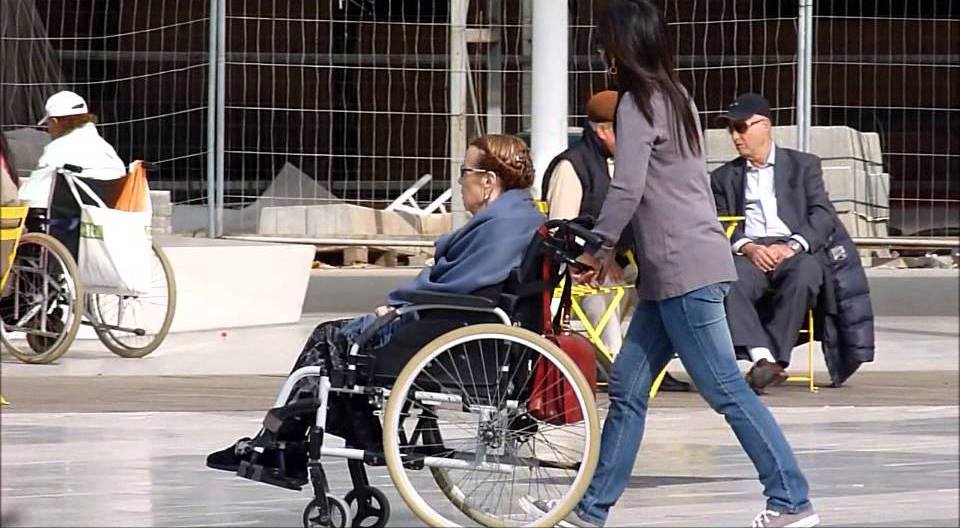
Working as a caregiver for the elderly, Geeta further explained that Nepali women seeking foreign employment face no major issues in Israel if they have some skills and language training. She said, “It is much safer here than in Gulf countries.”
Following the ceasefire on Asar 10, 2082 BS (June 24, 2025), Israel has been expecting even more Nepali workers. However, according to Israeli Ambassador to Nepal, Smulik Ariebas, the Nepali government has shown little urgency in this matter. He warned that due to delays in decision-making by Nepal regarding the Learn and Earn program, the quota reserved for Nepali students might be transferred to other countries.
He said, “If Nepal does not decide on time about the Learn and Earn project, we will be forced to allocate this quota to other countries.” He also mentioned that he had repeatedly met with Nepal’s foreign and education ministers urging quicker action, but added, “The responsible officials in Nepal have not shown the urgency we expected.”
Since 2020, around 2,000 Nepalis have gone to Israel as caregivers through the government-to-government (G2G) system. Currently, preparations are underway to send another 1,000 workers, of which 1,263 have already been selected. According to the G2G facilitation branch of the Department of Foreign Employment, 810 visas have already been issued, while others are in process.
Nepal’s Ambassador to Israel, Dhan Prasad Pandit, highlighted that Israel has more than 14,000 care homes requiring a large number of caregivers, presenting significant opportunities for Nepalis. However, due to delays in decision-making by Nepal, some of these opportunities have already gone to Sri Lankan workers. He explained, “Israel had requested 1,000 workers from Nepal. But because of the government’s slow process, that opportunity went to Sri Lanka. Now that the process has restarted, some Nepalis will soon reach Israel.”
Nepalis working in Israel’s elderly care homes express high satisfaction. Manju Bhujel, an NRN member in Israel, said, “We are very satisfied here. Once you learn the way of working, it becomes very easy. Israelis have great trust and confidence in Nepalis.”
According to her, Israeli seniors teach new workers patiently, and both accommodation and food facilities are very good. As long as workers follow protocols, they face no problems.
Workers also have legal protections. If they experience discrimination or injustice at work, they can hire a lawyer and file a case. Caregivers typically earn around NPR 250,000 per month, and with overtime, earnings can reach up to NPR 300,000. Since they go through the G2G system, expenses are minimal, but the work contract allows only five years. This creates a challenge because just as workers begin to gain skills and higher earnings, they are required to return to Nepal, where similar opportunities do not exist.
Manju and 11 other Nepalis have requested that the government negotiate with Israel to extend the work period, making it easier for them.
Additionally, through the Israel Agency for International Development Cooperation (MASHAV), Israel has been providing Nepalese professionals with opportunities for both short- and long-term training and workshops in fields such as child development, education, health, telecommunications, and environmental protection. According to the Israeli Embassy, more than 3,000 Nepalis have already benefited from such training programs.