Former US President Donald Trump announced on Saturday that Washington and Tehran were close to finalizing an agreement aimed at ending the conflict that began on February 28, involving the United States and Israel against Iran. He stated that most aspects of a Memorandum of Understanding (MoU) had already been negotiated and that a formal announcement would be made soon.
Iranian authorities also signaled progress, saying they were nearing a similar understanding that could halt the fighting and open the door for further negotiations.
According to Trump, one key part of the agreement would involve reopening the Strait of Hormuz, a vital route for global oil shipments that Iran has largely restricted during the conflict. However, Iran’s semi-official Fars News Agency, which is closely linked to the Revolutionary Guard, responded shortly afterward, saying the strait would remain under Iranian control and describing Trump’s remarks as incomplete and not fully accurate.
Meanwhile, three senior Iranian officials told The New York Times that Tehran had agreed in principle to a deal that would stop hostilities and allow the Strait of Hormuz to reopen. The arrangement would also include lifting the US naval blockade and permitting free commercial shipping without any transit fees imposed by Iran. Additionally, about $25 billion in frozen Iranian assets abroad would be released, and fighting across multiple fronts, including in Lebanon, would cease.
Trump did not mention Iran’s nuclear program in his statement, despite previously insisting that Iran must not acquire nuclear weapons or retain its stockpile of highly enriched uranium. Iranian officials also confirmed that nuclear issues are not part of the current discussions.
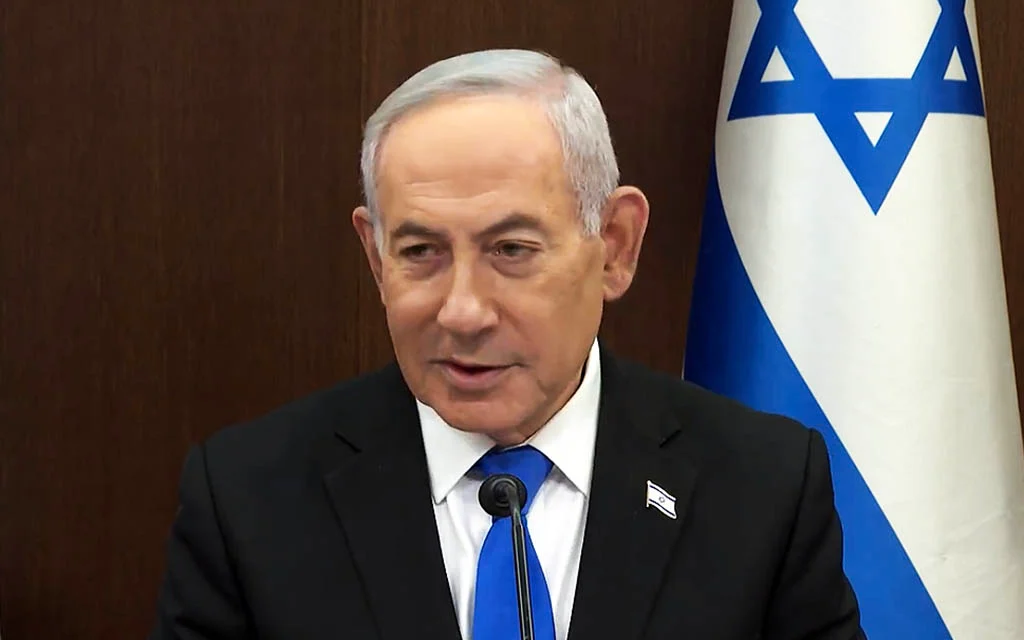
As developments unfolded, Israeli Prime Minister Benjamin Netanyahu reportedly held urgent consultations with political allies and security officials. Israeli media indicated that Israel has been largely excluded from the negotiations and was not part of a conference call Trump held with regional leaders. Instead, Israel is relying on intelligence sources to follow the situation.
Trump, who earlier suggested that Netanyahu had mixed feelings about the deal, later spoke with him by phone, describing the conversation as positive. However, Israeli officials, speaking anonymously, expressed strong concern, warning that the reported terms could be harmful to Israel’s interests.
According to Israel’s Channel 12, the deal would allow Iran to reopen the Strait of Hormuz in exchange for financial relief, while key issues such as Iran’s nuclear activities and enriched uranium stockpile would be postponed for future discussions. Iran’s ballistic missile program was reportedly not addressed at all. The report concluded that the US appears to be offering immediate concessions, while Iran’s commitments remain uncertain.
Trump also said his broader discussions with Middle Eastern leaders had been productive. Posting on Truth Social, he stated that negotiations were progressing well and that the agreement—focused on achieving peace—was close to completion. He added that final details were still being worked out and would be announced soon, emphasizing again that the Strait of Hormuz would be reopened as part of the deal.