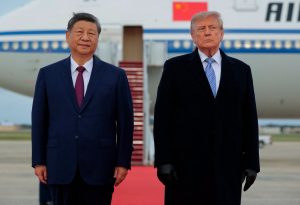
U.S. President Donald Trump has announced that a 25% tariff will be imposed on goods from India starting August 1. This means that all products exported from India to the United States will be subject to a 25% customs duty.
Trump announced the imposition of an additional 25% import duty on India due to its continued purchases of weapons and oil from Russia. According to President Trump, India’s defense and energy deals with Moscow are indirectly helping Russia sustain its war in Ukraine. He stated that India must now pay an additional “penalty” for this.
This move comes while the two countries have been engaged in months-long trade negotiations. Despite ongoing talks aimed at reaching a trade agreement, Trump declared the new tariff measures against India, setting a deadline of August 1. Ultimately, he announced the tariffs two days before the deadline.
The biggest question now is: Will India bow to Trump’s pressure over its ties with Russia, or stand its ground?
India’s Defense Priorities Under Pressure
Dr. Rajan Kumar, Associate Professor at the Centre for Russian and Central Asian Studies at Jawaharlal Nehru University in Delhi, says, “If Trump puts strong pressure on the oil issue, India might concede slightly. Currently, India imports around 40% of its oil from Russia. To meet Trump’s demands, this could potentially be reduced to 20%.”
India’s Petroleum Minister Hardeep Singh Puri also hinted at this earlier this month. Speaking at the Energy Dialogue 2025 held in New Delhi, Puri stated, “We are under no kind of pressure. India’s oil imports are not dependent on any one country. We are not concerned about the situation in any way. If something happens, we will handle it. There is no issue with oil supply.”
In other words, according to Puri, India has alternative options for oil supply beyond Russia. But the bigger question remains: What will India do regarding defense procurement?
Dr. Rajan Kumar explains, “This is the most critical issue. India will not bow to Trump’s threats related to military equipment purchases. In fact, Trump wants India to buy arms from the U.S. instead of Russia. But India is unlikely to comply, because Russia not only supplies weapons but also transfers its technology. The U.S., on the other hand, does not. Moreover, public sentiment in India is increasingly negative toward Trump and the U.S., especially after Operation Sindoor. In a democratic country, no government can completely go against public opinion.”
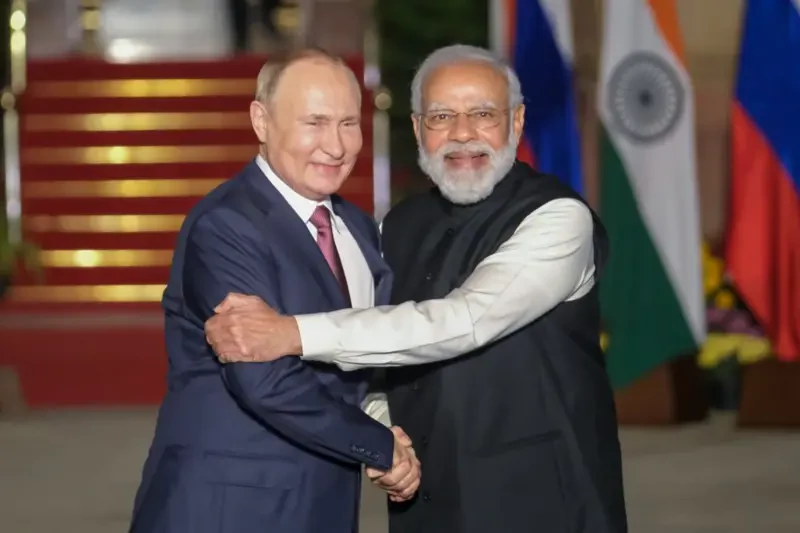
Growing Distance from Russia Brings Rising Risks
Dr. Rajan Kumar notes, “India is already dealing with the challenge of the growing alliance between China and Pakistan. In such a scenario, it cannot afford to risk pushing Russia closer to that axis. Moreover, if we distance ourselves from Russia, India’s Chabahar project in Iran will struggle to progress, and the North-South Corridor initiative will remain incomplete.”
“We cannot strengthen ties with Iran while distancing ourselves from Russia. The United States cannot replace Russia for us—because it never compromises on its commercial interests. Despite its rivalry with China, U.S.-China trade continues. We cannot allow Russia to drift fully into China’s embrace,” he added.
Historically, the U.S. has maintained close ties with Pakistan, a relationship that has long made India uncomfortable. Further deepening India’s skepticism was the U.S.’s sudden military withdrawal from Afghanistan last year.
By ending its 20-year war without a stable transition, the U.S. left the Afghan people to depend on the Taliban. That withdrawal had negative implications for India as well—New Delhi had invested significantly in Afghanistan, and with the Taliban’s return, all of those development projects are now at risk.