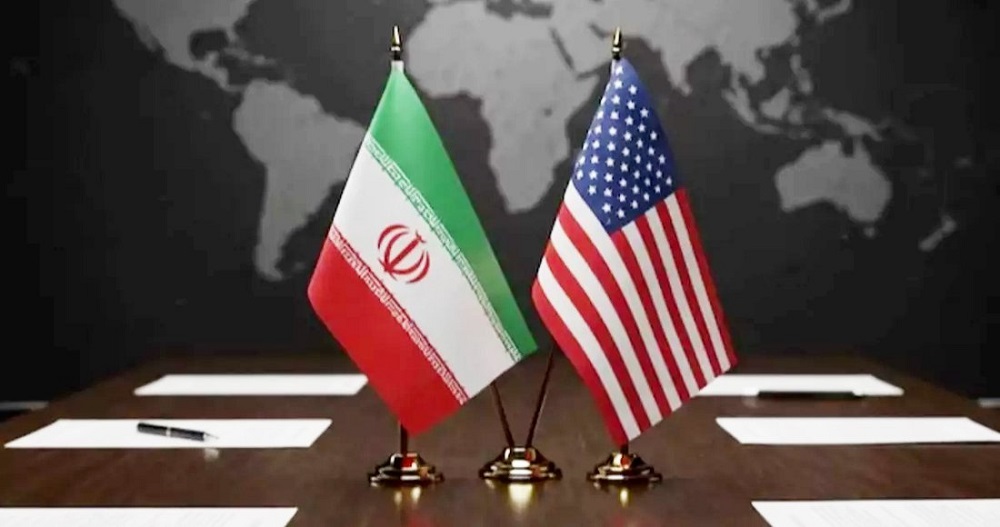
As the ongoing ceasefire between the United States and Iran nears its end, both sides have warned that they are prepared for war. With the future of talks uncertain, there are indications that diplomatic efforts may once again focus on Pakistan. However, the situation has become more complicated as Tehran has not made its position clear regarding participation.
According to the White House, Vice President JD Vance is preparing to return to Islamabad to advance the second round of talks. However, Iran has expressed serious dissatisfaction with US actions and has remained silent on whether it will participate in negotiations. Tehran has accused the US of violating the ceasefire by imposing a blockade on its ports and seizing a vessel.
Iran’s parliamentary speaker Mohammad Bagher Ghalibaf accused the US of trying to use negotiations as a tool of pressure, stating that talks are unacceptable in a threatening environment. According to him, Iran has been preparing to demonstrate new strategies on the battlefield over the past two weeks. Meanwhile, Iran’s Revolutionary Guards have warned that vessels passing through the Strait of Hormuz without permission could be targeted.
US President Donald Trump, on the other hand, has accused Iran of violating the ceasefire by obstructing ships in the strategic waterway. According to him, since the war initiated by the US and Israel on February 28, Iran has disrupted a route responsible for transporting nearly one-fifth of the world’s oil. Trump stated via social media that the blockade is weakening Iran and signaled that pressure will continue until an agreement is reached.
As the ceasefire deadline approaches, Trump said Iran must be ready to participate in talks. He warned that large-scale attacks could begin if the ceasefire ends, adding that the likelihood of extending the truce is low.
Despite the risk of war, global oil prices have shown a declining trend. Analysts suggest the market is influenced by hopes that an agreement between the US and Iran could reopen the Strait of Hormuz. Although some normalcy has returned to Tehran after the ceasefire, uncertainty and economic pressure persist among the public. Local residents say conditions remain difficult and the economy is still very weak.
Meanwhile, a separate ceasefire has already been declared between Israel and Lebanon, involving Hezbollah. Preparations are underway for renewed talks in Washington between the two sides. However, sporadic violence continues in southern Lebanon, and Israel has warned civilians not to return to certain areas.
The United Nations Security Council has condemned the killing of a French peacekeeper in Lebanon, blaming Hezbollah for the incident. Government data shows that thousands have died in Lebanon due to the Israel–Hezbollah conflict so far.
Another key issue in US–Iran talks is Iran’s stockpile of enriched uranium. Trump claimed that Iran had agreed to transfer the stockpile, but Iran has rejected the claim, stating clearly that it will not hand over its uranium. A spokesperson for Iran’s Foreign Ministry said the issue has never been مطرح as an option in negotiations.