Prem Dhakal:
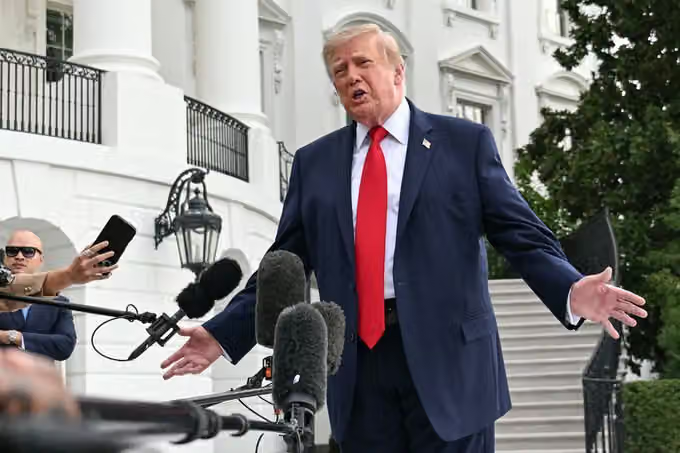
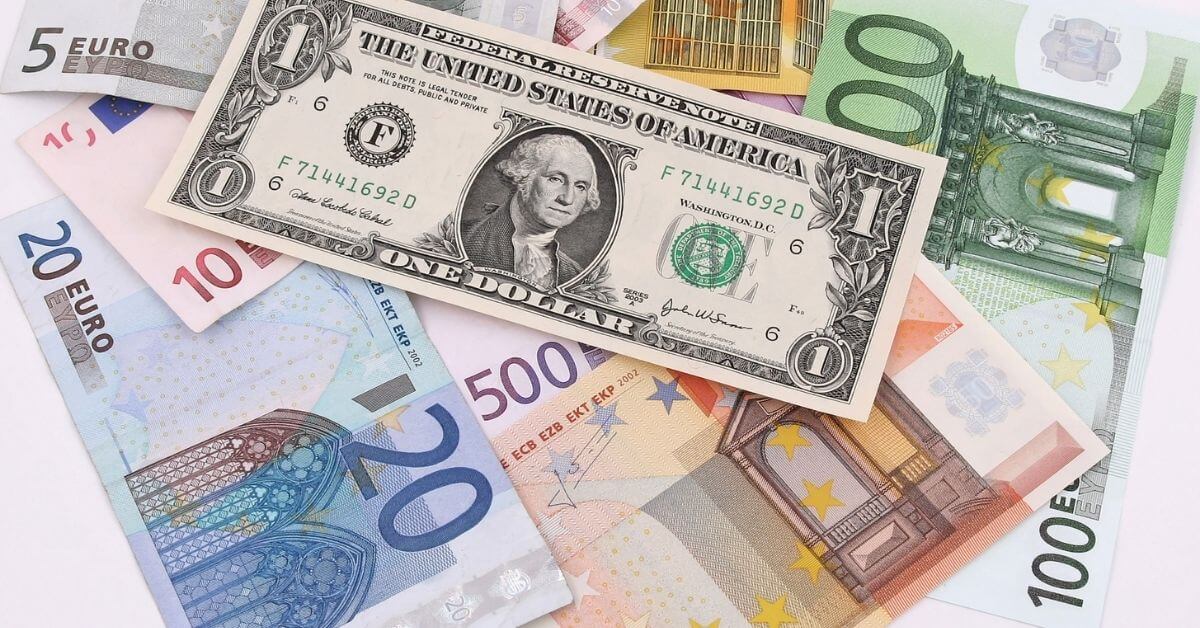
Kathmandu, 26 May: U.S. President Donald Trump has postponed the 50% tariff he had threatened to impose on the European Union (EU) starting June 1, delaying it until July 9.
Trump has frequently accused the EU of being established with the intention of harming the United States. Claiming that Europe had exploited America in the past, he had demanded that the EU sign a trade agreement favorable to the U.S. as compensation.
However, just as Trump backed down when China refused to yield to U.S. pressure, the EU also adopted a firm stance and chose not to bow to American demands. In response, a frustrated Trump warned this week that if no trade deal was reached, he would impose a 50% tariff on goods produced in the EU’s 27 member states starting June 1.
Just two days later, on Sunday, after a conversation with European Commission President Ursula von der Leyen, Trump decided to halt his plans. Claiming it was his “special privilege” to suspend the move, Trump said he was doing so to allow more time for trade negotiations.
Posting on his social media platform Truth Social, Trump stated that he had postponed the tariffs until July 9 because von der Leyen had assured him that talks would begin swiftly.
Von der Leyen also posted on social media, stating that the EU and the U.S. share “the world’s most important and closest trade relationship.” She said they had a good conversation and emphasized that the EU needed more time to conclude a trade deal. She assured that negotiations would now proceed quickly and decisively.
Having recently experienced a setback in his trade standoff with China, Trump has now also backed down from his threat to impose high tariffs on the EU. On April 2, Trump had announced a 10% tariff on all trade partners and higher “reciprocal” tariffs on major rival countries—setting a 20% rate specifically for the EU. However, when it became evident that such measures could severely harm the U.S. economy, Trump, within a week, postponed the reciprocal tariffs for all countries except China until July 9. He has stated that if no trade agreements are reached by then, the reciprocal tariffs will be reimposed.
Following in the footsteps of other countries, the European Union (EU) also began trade talks with the United States. During negotiations, the EU proposed zero tariffs on each other’s industrial products, stating that it would be mutually beneficial, according to The New York Times.
The EU also offered to buy American oil and gas as part of the deal. However, the U.S. insisted that it had suffered losses in past dealings with Europe and refused to offer anything in return.
Unlike other countries that had entered talks out of fear of Trump, the EU showed no flexibility. This increasingly frustrated the U.S. administration. Seeing how China had benefited from resisting Trump, the EU was also unwilling to back down.
The U.S. demanded that the EU eliminate its value-added tax (VAT), but the EU argued that VAT is a general consumption tax applied to all goods, including its own, and therefore does not discriminate against American products. As such, the EU firmly refused to remove VAT under any circumstances. Additionally, the EU demanded that the minimum 10% tariff imposed by the U.S. after any agreement should not apply to it.
Angered by the EU’s firm stance, Trump on Friday issued a threat: if no deal was reached by June 1, a 50% tariff would be imposed on goods produced in the EU’s 27 member states.
This threat triggered a fresh dip in global stock markets. Although the EU was concerned that a 50% tariff could hurt its economy, it believed that standing firm would be more beneficial than yielding to Trump.
The EU held its ground, understanding well that imposing a 50% tariff would also harm the U.S. economy. According to Bloomberg, such a tariff could shrink the U.S. economy by 0.6 percentage points and raise inflation by 0.3 percentage points.
Following a direct initiative from European Commission President Ursula von der Leyen, Trump agreed to delay the tariffs, realizing that they would hurt both sides. Despite his aggressive trade stance in his second term, Trump once again backed down.
On April 2, under the theme of “Freedom Day,” Trump had declared that all trading partners would face a 10% tariff, with even higher “reciprocal” tariffs imposed on key rival countries. He warned that retaliatory actions would result in even steeper tariffs, while those who didn’t retaliate would be rewarded. Fearing such consequences, no country except China responded with countermeasures.
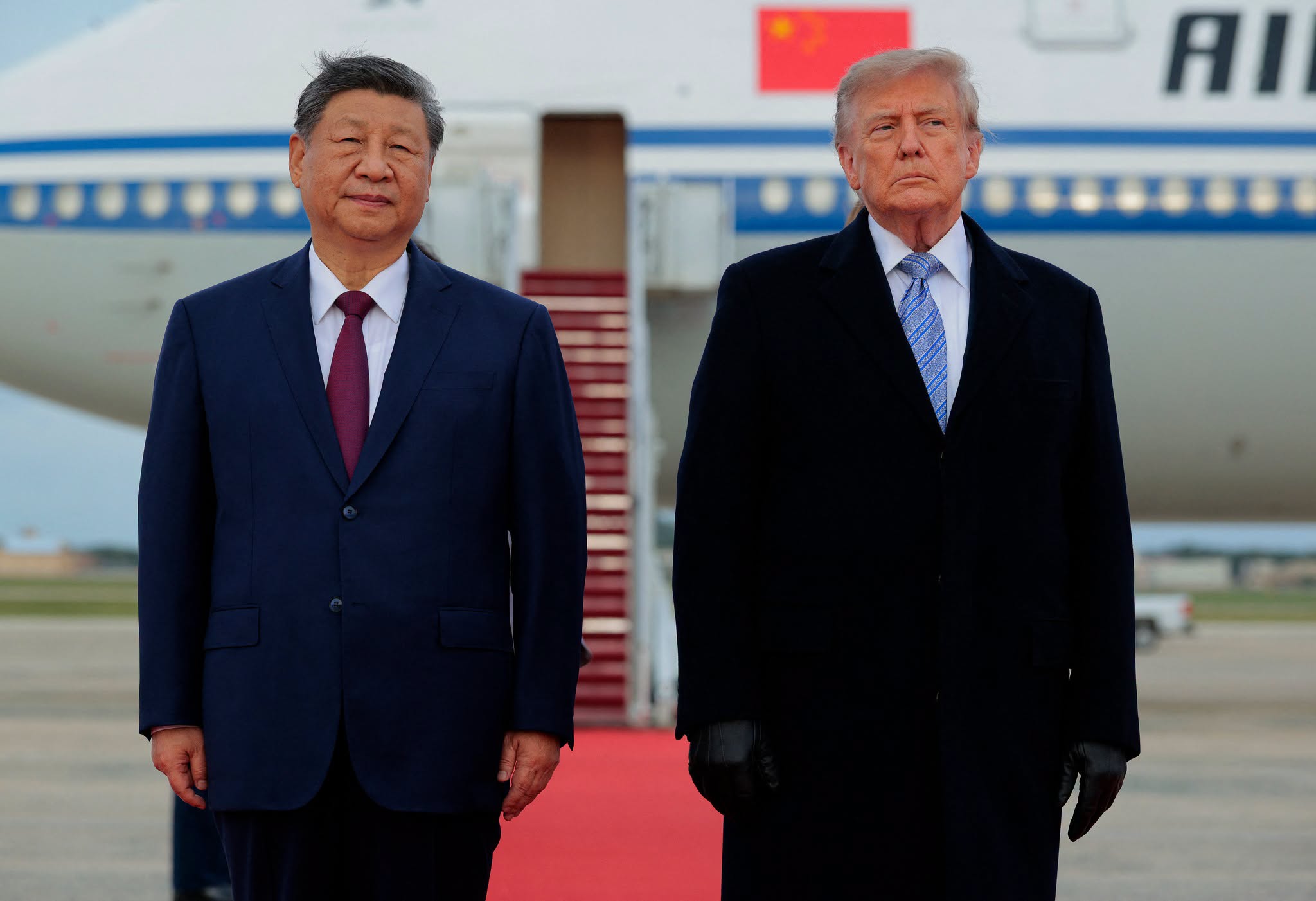
China, however, ignored Trump’s threats and imposed retaliatory tariffs. As a result, U.S. tariffs on Chinese goods surged to 145%, while China’s tariffs on U.S. products reached 125%.
Despite his tough rhetoric, the tariff war with China began to backfire on the U.S. economy. Trump was then forced to soften his stance.
Following trade talks in Switzerland on May 12, the U.S. and China agreed to reduce tariffs on each other’s goods by 115 percentage points for a 90-day period. This brought the average tariff rate on Chinese goods in Trump’s second term down to 30%.
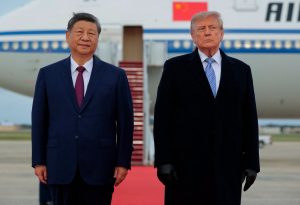
The world has seen that China gained the upper hand because President Xi Jinping stood firm and refused to bow to Trump’s pressure. Trump, who portrays himself as the world’s best dealmaker, is now finding it increasingly difficult to bully others into trade deals.
Many compare Trump’s domineering style to that of a schoolyard bully—someone who targets the weak but avoids picking fights with those of equal or greater strength. As long as the victims stay silent, the bullying continues, but once they resist, the bully retreats. Trump has shown similar behavior. Smaller nations may not be in a position to confront the U.S. yet, but larger powers have demonstrated that they can stand up to him.
Inspired by China’s defiance, India has also adopted a policy of resistance. The EU has done the same, refusing to accept Trump’s harsh terms. As a result, Trump has now backed down from his threat to impose a 50% tariff on EU goods.