Kathmandu, 10 Jan: After Nepal has been placed on the United States’ ‘Visa Bond’ list, i.e., the list of countries that require a deposit for a visa, interest has increased about what happens now. The US government has updated its visa bond list, adding Nepal along with 38 other countries to that list on Thursday. The list contains mostly least developed and developing countries described as economically weak and having weak passport security.
After being placed on the list, concerns have risen among Nepali citizens that they will not be able to visit relatives abroad for study and work purposes. Not only that, suspicions have also begun to arise that the path to travel to the US on a tourist visa or for any business and commercial promotion purposes might be completely blocked. There is also a perception that Nepal has been placed on such a list because its passport security is weak.
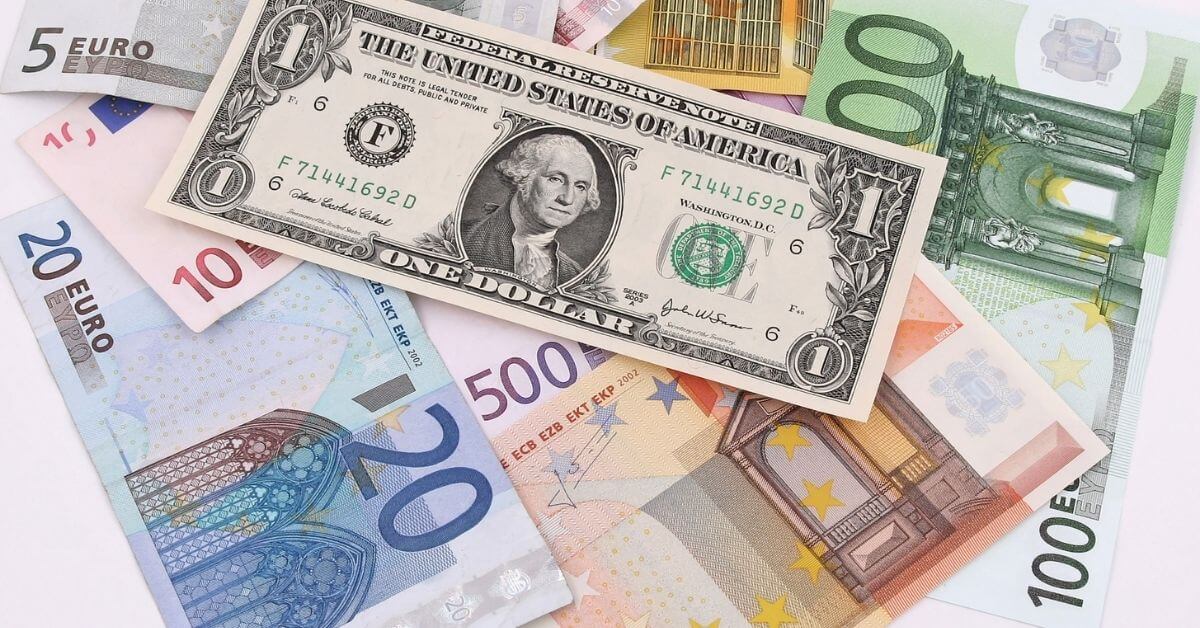
According to the list updated by the US Department of State, a deposit ranging from five thousand to fifteen thousand US dollars will now be required for applying for tourist and business visas. Along with Nepal, Bangladesh and Bhutan from South Asia, and African and Latin American countries totaling 38 countries are on the list. For Nepal and most countries, this policy is scheduled to be implemented from January 21st.
Although that list will not become a complete obstacle for traveling to the US from Nepal, it has indeed made it more difficult, claims former Foreign Secretary Dr. Madan Kumar Bhattarai. He said, “The US has adopted a policy of not providing easy access to foreigners to strengthen its foreign policy and immigration policy; it is not a complete ban.”
According to him, a compulsory situation has been created where a large deposit must be paid to visit relatives in the US, or for business and tourist purposes. He added, “After educating children with hardship in the US, parents used to easily go on a tourist visa for graduation ceremonies, or to meet newborn grandchildren; now, to go in that manner, the stipulated deposit has to be arranged, otherwise one cannot go.”
Will not hinder bringing in tourists
He estimates that this policy might affect Nepal’s tourism sector a bit more. However, the Director-General of the Tourism Board, Sunil Sharma, says they are currently in a ‘wait and see’ situation regarding the US policy.
According to him, Nepal is focusing more on activities related to how to bring quality tourists into Nepal from abroad. He said, “Our policy is to strengthen ‘Tourist Inbound’; we are not that focused on ‘Tourist Outbound’, so it doesn’t seem like a huge loss will occur.”
His argument is that the promotional programs aimed at bringing in more tourists to Nepal to increase revenue and raise the income level of Nepalis will not be significantly affected. However, he clarifies that since the number of Nepalis traveling abroad for tourism has been increasing recently, we need to wait a few days after implementation to see what happens regarding that and what happens to promotional work that requires foreign travel.
Passport is not a factor
The Director-General of the Immigration Department, Tirtharaj Aryal, clarifies that Nepal has not been placed on that list because its passport is weak. He clearly states that it is a plan by the US to strengthen its foreign policy. He said, “Passport, visa, and the person carrying it are all different subjects; a passport is a booklet for recording who goes abroad, while a visa is a legal right given to the person going.” A visa is given by looking at the necessity and background of the person going. He argues that it cannot be said that a country’s passport is weak simply because a person did something wrong.
He claims that Nepal’s electronic passport in recent times is an example of balanced security maintained as a passport. There are neighboring countries like India and others that issue their own electronic passports by looking at Nepal’s passport. Aryal states that Nepal was the first country in South Asia to issue an electronic passport.
Policy is a pilot program
According to the issued information along with the list, this policy is being operated as a pilot program based on a study by the US Department of Homeland Security. It has been stated that those who arrived on B-1 and B-2 visas were found to have stayed beyond the stipulated period.
It has been informed that those deemed eligible after a visa application will only be recommended for a visa interview after depositing the stipulated bond. Not only that, they also have to fill out the Homeland Security application form. The deposited bond amount will be deposited in ‘Pay.gov’. For that, the bond deposited only on the recommendation of a consular officer will be refunded later, but that amount does not ensure getting a visa. It has been informed that the amount of the visa bond to be deposited will be decided during the interview process.
Specified airports
It has been stipulated that citizens of countries specified on that list, if they obtain a visa, must travel using the specified airports. The information states: All visa holders must enter and exit the United States through the designated ports of entry; those who do not do so may have entry denied and be deported. According to this, the following airports have been made mandatory for visa holders to use by the specified date: Boston Logan, John F. Kennedy, Washington Dulles, Newark Liberty, Hartsfield-Jackson Atlanta, Chicago O’Hare, Los Angeles International, Toronto Pearson, and Montréal-Pierre Elliott Trudeau International Airport.