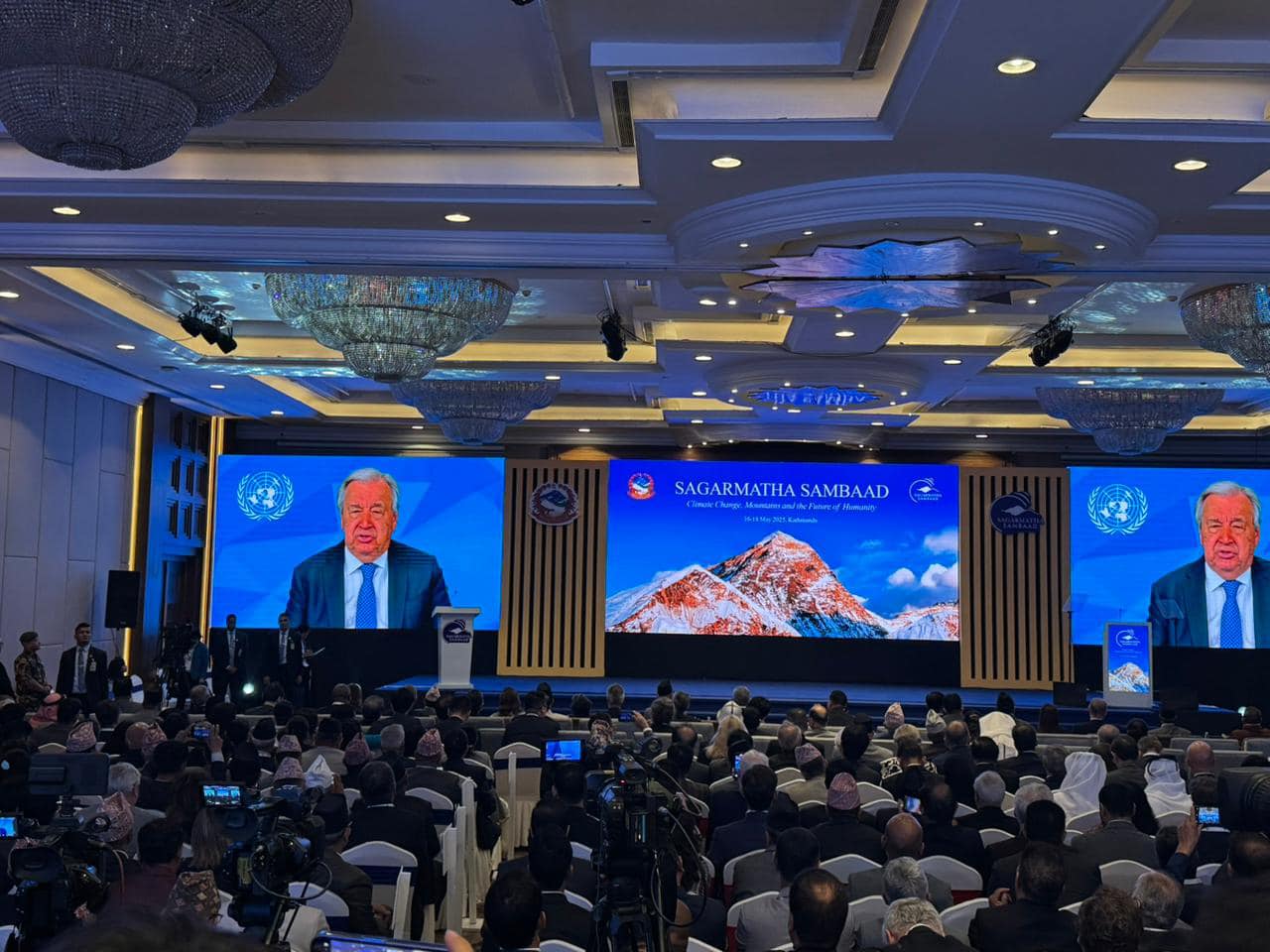
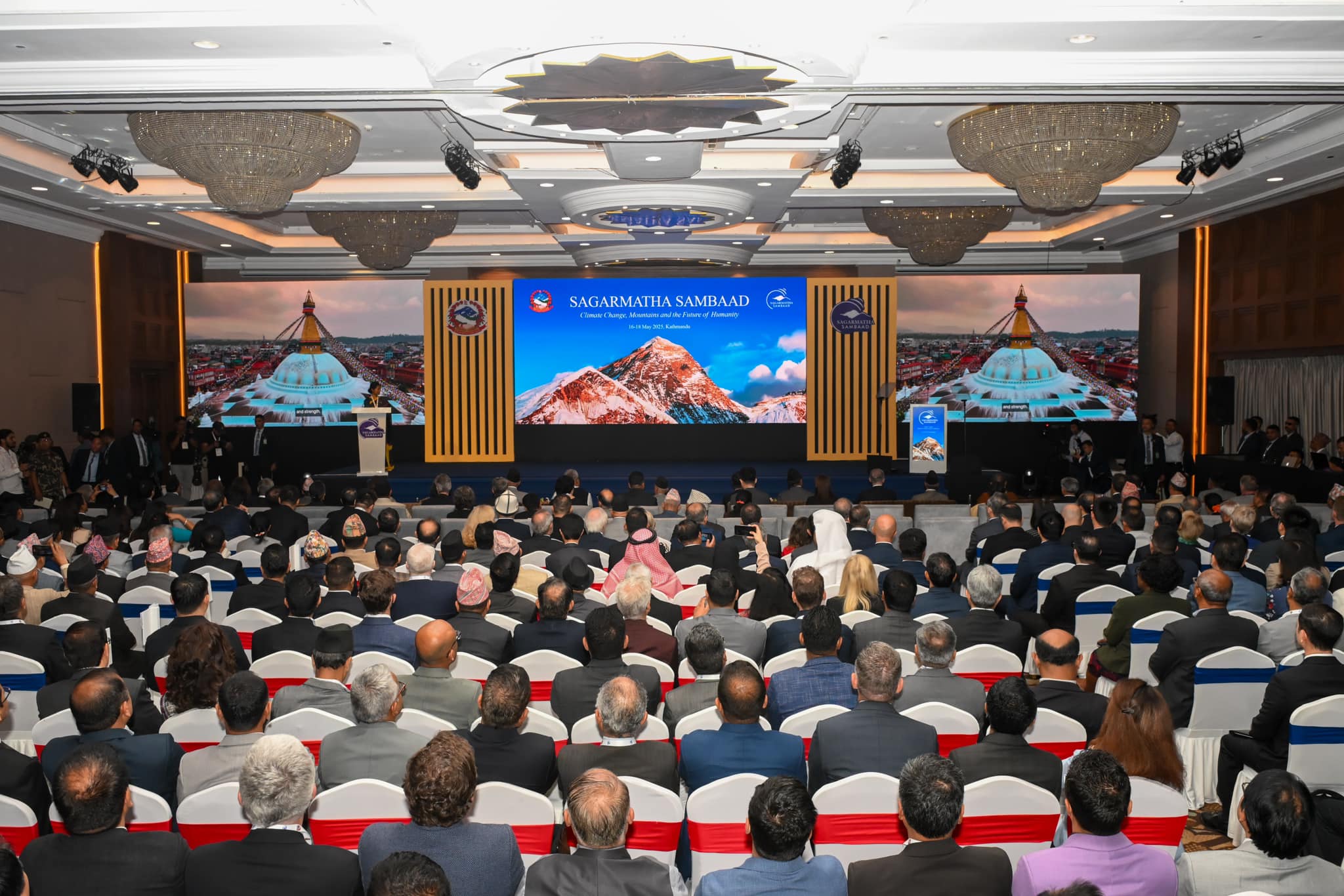
Kathmandu, 17 May: Prime Minister KP Sharma Oli stated that Nepal organized the “Sagarmatha Dialogue” at a time when multilateralism is weakening globally and trust in international institutions is declining.
Speaking at the inaugural session of the Sagarmatha Dialogue on Friday — attended by 175 foreign guests including high-level delegations from 13 countries — Prime Minister Oli said Nepal took this initiative amid decreasing faith in global governance, deepening inequality, and multilateralism being engulfed by a storm of uncertainty. Highlighting Nepal as the land of Buddha and a symbol of knowledge and peace, he mentioned that the idea for this dialogue stemmed from those very values.
He emphasized the Himalayan region’s critical role in maintaining global climate balance and providing water to billions, but noted that “mountains are often neglected in global climate negotiations.” “We need a bold and integrated approach to protect our mountains,” Oli said. “We need a mindset that connects the mountains to the oceans. Let us not forget the mountains that safeguard life.”
Addressing the direct impacts of climate change on mountainous regions and humanity, the Prime Minister posed the questions: “Can humanity survive without our mountains? Can our future be secured without protecting these ancient guardians?”
Since climate change is a global problem, its solutions must also be global, he stressed. “The solution must be guided by justice, accountability, and solidarity. Climate justice must show us the way,” he said.
Referring to the G20 — the group of the world’s richest and developing nations — which accounts for 80% of global emissions, Oli remarked, “Those who pollute the most must contribute the most to the solution. They must support vulnerable nations through financial assistance, technology, and capacity-building.”
Pointing out how technological advancements have made it possible for events in one part of the world to affect others instantly, he said, “A fire in one region darkens the skies of another. Melting glaciers in distant places disrupt rainfall cycles, flood fields, dry up lands, and fragment lives.”
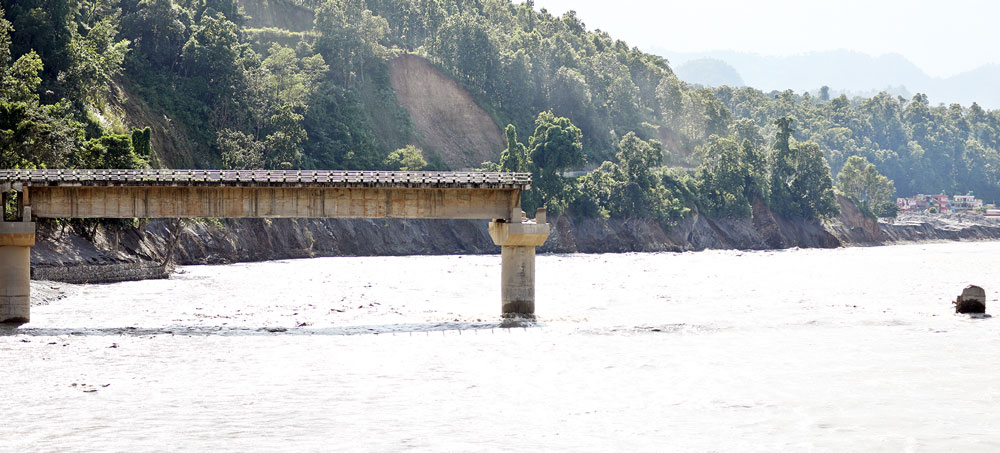
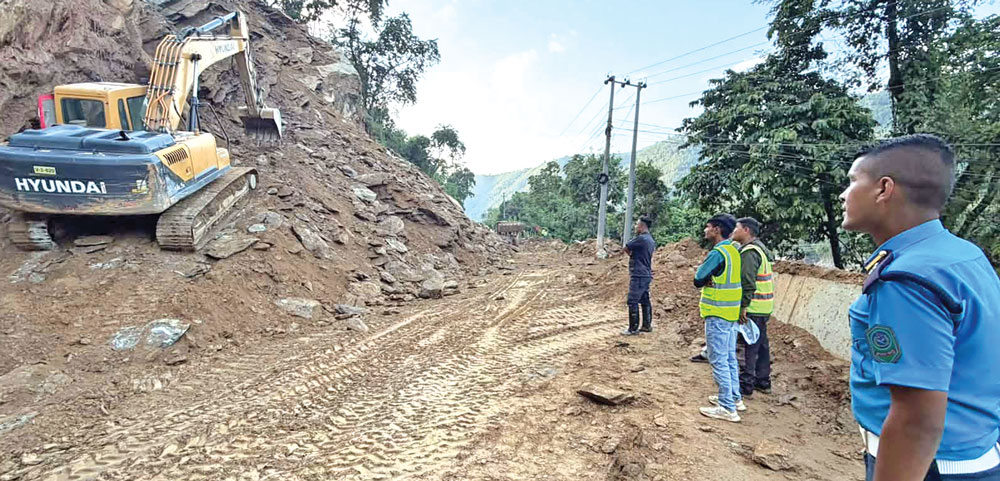
He continued, “Rain has become uncertain, landslides are sweeping away homes, sudden floods and droughts are becoming more common — yet we continue to stand strong.”
Quoting the Sanskrit phrase “vāde vāde jāyate tattva bodha” (truth emerges through dialogue), PM Oli said that Nepal initiated the Sagarmatha Dialogue to discuss, listen, and work towards effective climate action.
He emphasized that mountains, including those in Nepal, are in grave danger, posing a shared threat to global security. “From the lap of the world’s highest peak, Sagarmatha (Mt. Everest), we send a clear and resolute message — saving the mountains is saving the Earth.”
In her welcome remarks, Foreign Minister Arzu Deuba Rana highlighted Nepal’s struggle with the heavy and unequal burden of climate change. “We are stewards of our rivers, forests, and hills, yet we are forced to bear the cost of climate change caused by others. This is a grave injustice and must be addressed immediately,” she said.
She explained how the Himalayas serve as a natural cooling system, and disturbances in the mountains affect the oceans. Stressing that climate change threatens human existence, she called for global cooperation to protect future generations. “Mountain communities are struggling. Local women and marginalized groups are fighting in their own ways. To solve these challenges sustainably, we need global cooperation among governments, corporations, and civil society.”
Rana also stressed the need for easy access to the recently established Loss and Damage Fund and highlighted that Nepal’s efforts in climate mitigation and adaptation require international support.
At the opening session, COP29 President and Azerbaijan’s Minister of Ecology and Natural Resources, Mukhtar Babayev, praised Nepal for hosting a dialogue on mountain conservation, climate impact reduction, and the protection of humanity. He shared that Azerbaijan has seen a 20% reduction in glaciers over the past seven years due to climate change, which has severely impacted agriculture. “To tackle global climate challenges, global action is essential,” he said.
Speaking at the Sagarmatha Dialogue, it was highlighted that mountain-related issues have now entered the agenda of the United Nations Climate Change Conference, also known as the COP process. It was announced that a support initiative worth 3.5 billion US dollars is underway, with assistance from various donor agencies, for the conservation of the world’s glaciers.
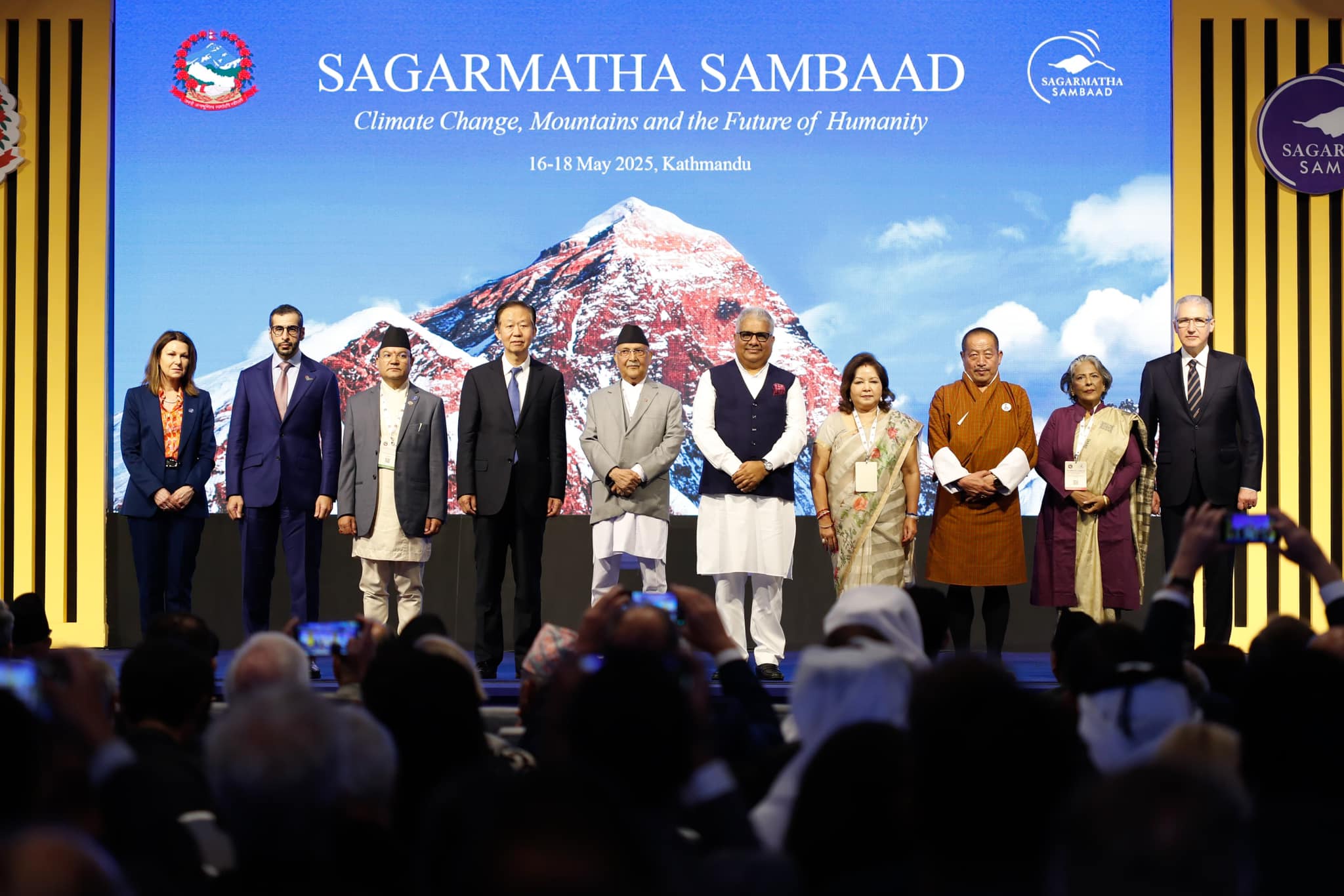
India’s Minister for Environment, Forest and Climate Change, Bhupender Yadav, emphasized that while South Asia contributes very little to global carbon emissions, it is among the most affected regions by climate-related disasters. “Our future must be based on collective efforts,” he said. “To tackle the challenges of climate change, we need to strengthen climate finance and the transfer of technology.”
He stressed the need for shared knowledge and collaboration in addressing climate challenges and highlighted the importance of scientific cooperation, climate resilience, early warning systems, and the empowerment of mountain communities. “Cooperation must be based on the principle of Vasudhaiva Kutumbakam — the world is one family,” he added.
Xiao Jie, Vice-Chairperson of the Standing Committee of the National People’s Congress of China, also spoke at the opening session and reaffirmed China’s commitment to South-South cooperation. He underscored the importance of protecting ecological regions across the globe, including the Hindu Kush and Karakoram ranges.
The dialogue has brought together 175 participants, including high-level delegations from 13 countries, as well as representatives of national institutions and climate experts. Throughout the conference, presentations and discussions will take place on 12 key topics such as climate change, global temperature rise, mountain economies, climate-related loss and damage, and the interconnection between mountains and oceans.
The dialogue will continue until Sunday.