Kathmandu, 29 Sep: Prime Minister Balendra Shah has urged the general public to remain alert, saying that although the rainfall has stopped, the risks of disasters triggered by the rain remain and the danger has not yet passed.
The Prime Minister’s Office said the government is working actively to safely manage people affected by the incessant rainfall, repair damaged infrastructure and restore normal life. According to the Prime Minister’s Office, 27 people have died across the country due to floods, landslides, inundation, strong winds and lightning since October 8. Seven others have been injured and four remain missing.
During this period, a total of 513 monsoon-related incidents have affected 1,065 families. The disasters have completely damaged 225 houses and partially damaged 137 others. In addition, 27 sheds and 114 livestock have been damaged.
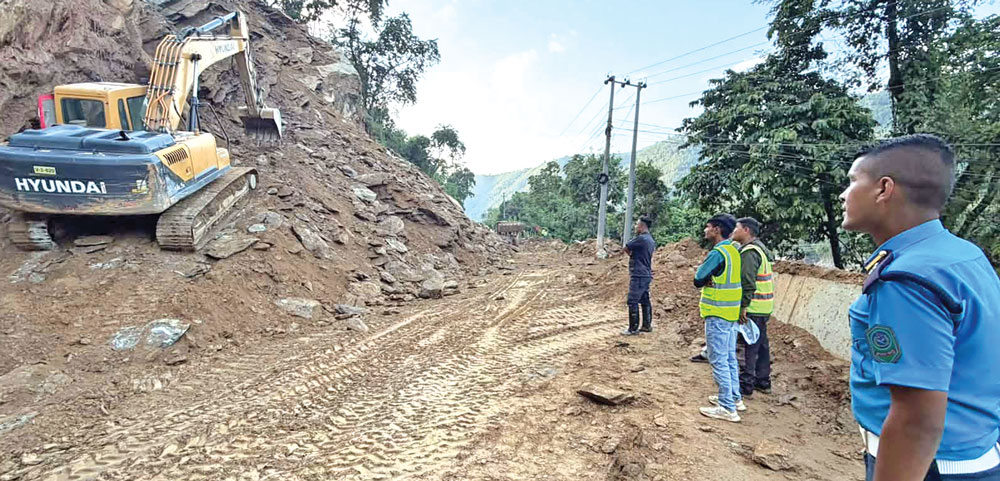
According to the Prime Minister’s Office, infrastructure directly connected to daily life, including roads, bridges, hydropower projects and drinking water systems, has also been damaged. Of the 147 locations across the country where highways and road sections were damaged by floods and landslides, the government has mobilized its agencies and restored traffic at 125 locations following repairs.
Landslides along various sections of the Prithvi Highway have been cleared, allowing one-way traffic to resume. Similarly, the section near Simaltaal along the Narayanghat–Muglin road, where the road had subsided, has been repaired and brought back into one-way operation.
Efforts are continuing to reopen the BP Highway, which has been obstructed by landslides and washed-out diversions at places including Matti, Piple, Daunne–Kalopul, Charsaybesi, Katunje and Chaukidanda. If no further damage occurs, the road is expected to resume operation by Tuesday evening.
Similarly, various sections of the Kaligandaki Corridor, Beni–Jomsom road, and roads in Palpa, Baglung and Nawalparasi have been obstructed by landslides, while some bridge structures have been washed away or damaged. Landslide clearance work is underway, and it is estimated that it will take more than three days to fully restore the roads.
The obstructed Bhalubang–Chakchake–Libang road has also been reopened after landslide debris was cleared. On the Besisahar–Chame road, landslides have been cleared at places including Nason Rural Municipality and Khotrol in Manang, but it is expected to take three days to fully reopen the entire road.
The Tribhuvan Highway has been reopened after landslide debris was removed, with safety precautions in place. Although landslides have occurred at 21 locations along the Saljhandi–Sandhikharka–Dhorpatan road, efforts to clear the road are being accelerated, and transportation is expected to resume by Tuesday.
Power Supply Disrupted
In the electricity sector, power supply totaling 1,013.2 megawatts from the national transmission grid was disrupted across the Kaligandaki Corridor, Marsyangdi Corridor and Seti–Madi Corridor, among others.
Of this, hydropower plants with a combined capacity of 262 megawatts in the Seti–Madi Corridor and 190 megawatts in the Marsyangdi Corridor have resumed operation. Efforts are underway to bring the 144-megawatt Kaligandaki hydropower project, which was disrupted by flooding, back into operation.
It is estimated that the damaged Rahughat hydropower project will take around 10 days to resume operation. Seven hydropower plants with a combined capacity of 190 megawatts have been unable to transmit electricity due to damage to the Kusma–Dana transmission line.
Apart from the 40-megawatt Rahughat Hydropower Project, which remains out of operation due to flooding and is connected to the Rahughat substation, generation capacity of 127 megawatts is in a condition to resume operation.
Similarly, towers No. 21 and 22 on the Dana–Kusma section of the 220-kV Kaligandaki Corridor transmission line in Myagdi have been damaged.
The Prime Minister’s Office said efforts are also underway to restore damaged telecommunications services as soon as possible. Of the 1,132 Nepal Telecom towers whose networks were disrupted, 782 have now been restored. Similarly, 162 Ncell network sites were disrupted, of which 105 have been repaired.
Displaced People Moved to Safety
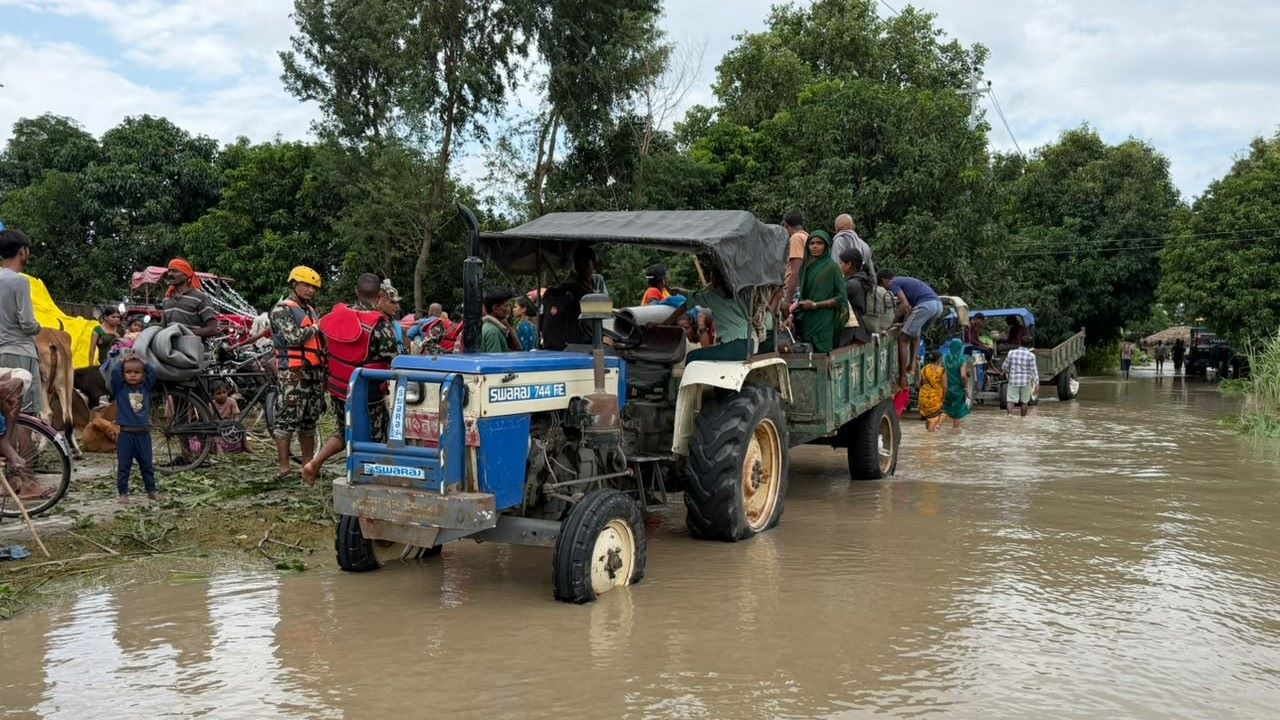
Residents of Susta who were affected by flooding from the Narayani River have been rescued and relocated to safer locations, according to the authorities. Local residents in riverside areas of Chitwan, including Devghat and Baharaghar, have also been relocated.
Similarly, after the water level in the Saptakoshi River rose significantly, 500 families affected by flooding in Tilathi Koiladi Rural Municipality were moved to safer locations.
Flooding of the Lakhandei River in Sarlahi has inundated the settlement of Bhadsar Khutouna. Likewise, riverside areas of Rautahat have been affected by the Lalbakaiya and Bagmati rivers.
More than 1,000 people from around 200 families living in flood-affected riverside areas, including Majhuwa, Pragatinagar, Hattisundhe and Yuddhanagar along the Tinau River, have been relocated to safety.
The floods and landslides have also affected mountainous and Himalayan districts including Mustang, Manang, Palpa, Baglung and Myagdi. The Prime Minister’s Office said relief and temporary accommodation have been arranged for affected residents in coordination with the respective local governments.