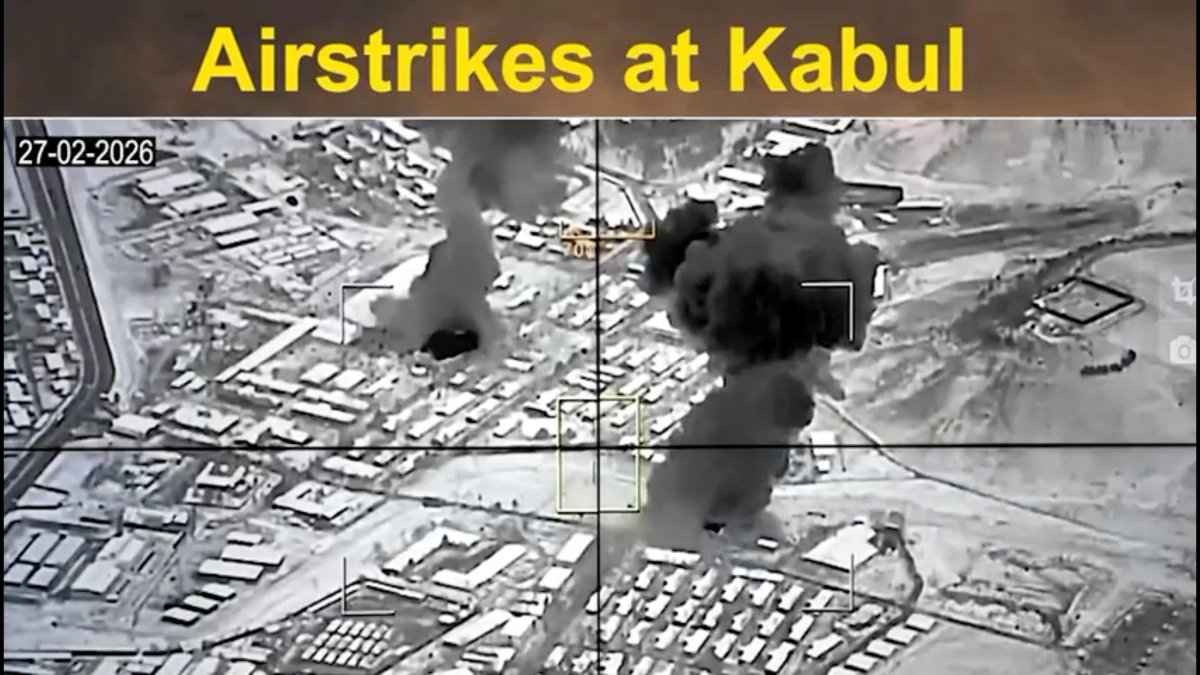
Pakistan carried out overnight airstrikes on major Afghan cities on Thursday, escalating months of border clashes between the neighboring Islamic countries. Islamabad declared the beginning of an “open war” following the attacks.
Pakistan reported that its air and ground forces targeted Taliban military checkpoints, headquarters, and ammunition depots in border areas in retaliation for attacks initiated by Afghan border forces. Both sides have reported heavy casualties from the fighting.
The conflict follows previous deadly border clashes in October, where a significant number of soldiers were killed. Turkey, Qatar, and Saudi Arabia had brokered a ceasefire at that time, though it failed to hold.
Relations between the two nations were initially calm after the Taliban’s takeover of Afghanistan in 2021, a move welcomed by Pakistan. Then-Prime Minister Imran Khan had described it as Afghans “breaking the chains of slavery.”
TTP Dispute Fuels Conflict
However, the primary source of the current dispute is the Tehrik-i-Taliban Pakistan (TTP), also known as the Pakistani Taliban. Formed in 2007 by Islamic militant groups in northwest Pakistan, the TTP has carried out numerous attacks on Pakistani soil, targeting markets, mosques, military bases, and police stations. The group also claimed responsibility for the 2012 attack on education activist Malala Yousafzai.
Pakistan accuses Afghanistan of harboring TTP fighters who launch cross-border attacks. The TTP previously fought alongside the Afghan Taliban against US-led forces, and Islamabad claims the group’s leadership now operates from Afghanistan, along with Baloch insurgents seeking independence in southwestern Pakistan. Pakistan also sought Afghanistan’s help in controlling its own militant groups, a request largely unmet by the ideologically aligned Taliban government.
According to the Armed Conflict Location & Event Data Project, attacks by the TTP and Baloch insurgents have increased every year since 2022. The latest escalation follows a TTP-claimed suicide attack in Bajaur district last week that killed 11 security personnel and two civilians.
While Afghanistan denies allowing its territory to be used against Pakistan, analysts suggest Pakistan may intensify its military campaign. Pakistan possesses a significantly larger and more powerful military than Afghanistan, with approximately 660,000 active personnel compared to Afghanistan’s estimated 75,000. As a nuclear power, Pakistan also maintains a formidable arsenal including over 6,000 armored vehicles and more than 400 fighter jets, while the Taliban’s military aviation capabilities remain unclear.