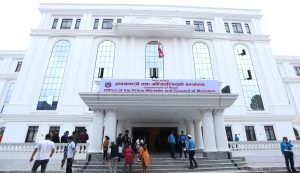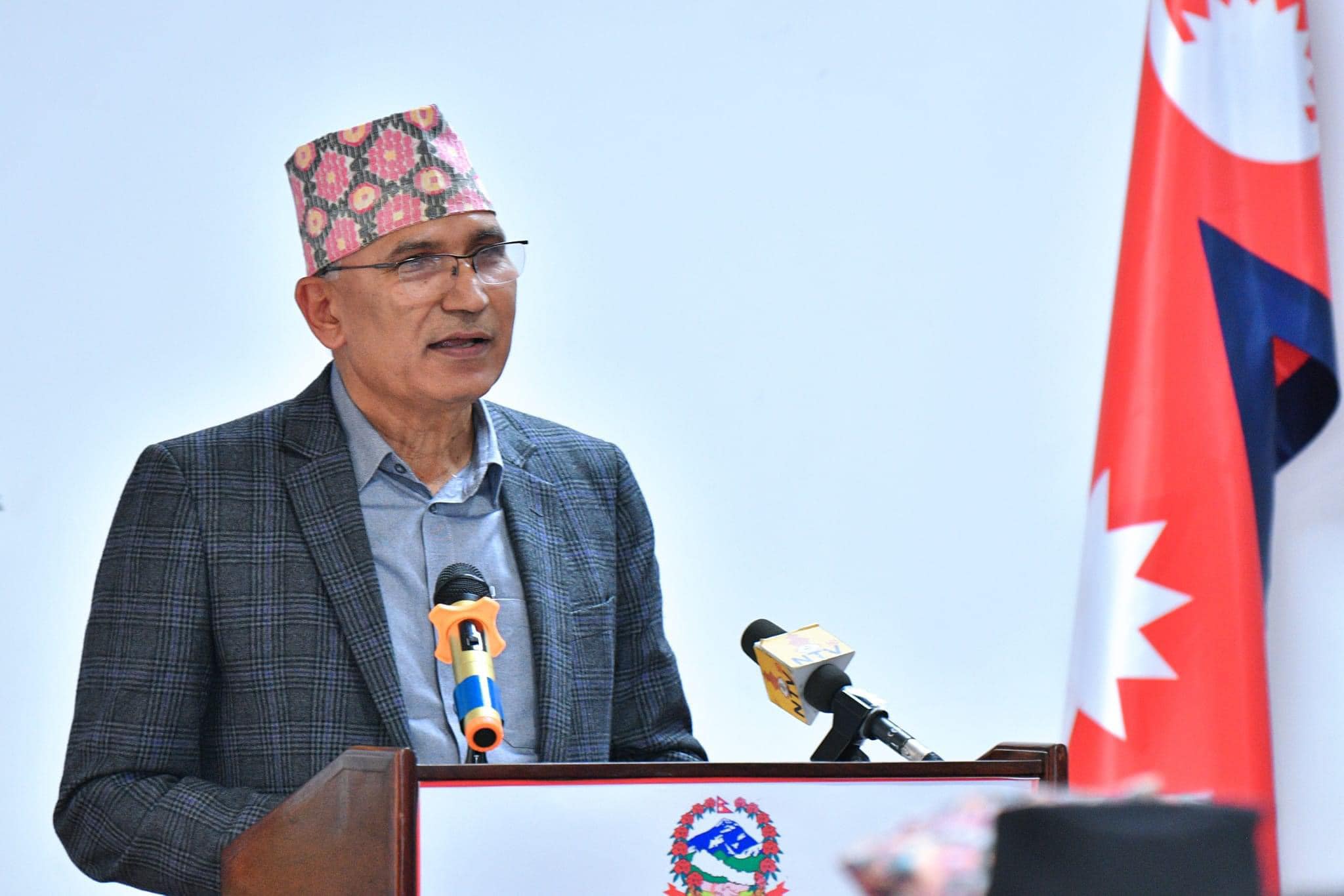
Kathmandu, 02nd December: Deputy Prime Minister and Minister of Finance Bishnu Prasad Paudel has said that Nepal’s sovereign credit rating of 9 shows a favorable environment for investment. In a meeting with development partners held at the Ministry of Finance, Finance Minister Paudel said that after the two major political parties formed the government, political and policy stability was maintained in the country, and the government’s focus was on economic development.
Stating that the results of the credit rating show that Nepal is in a favorable condition for investment, the finance minister expressed confidence that this will increase the morale of the private sector and investors as well as increase foreign investment. “With the formation of the current government, major economic indicators are improving. The country’s external balance and financial sector are in favorable condition. It is estimated that there will be a continuous improvement in economic growth within the current year, which is also mentioned in some of the forecasts made here”, said Finance Minister Paudel while addressing the development partners.
Stating that the government is emphasizing on infrastructure development, human resource development and creating a good investment environment for the private sector, Finance Minister Paudel said, “Current account balance, encouraging growth in electricity exports, growth in remittances and increasing number of tourists are contributing to the strengthening of the country’s economy. However, it is necessary to diversify and expand our exports, so that the external sector can be strengthened even in the long run. Due to the reduction of capital expenditure in recent years, the expected improvement in our public investment has not been achieved. For this, we are working on improving the quality of the project with priority.”
Noting that there is no immediate need to be alarmed by the burden of public debt, he said that he felt the need to re-prioritize debt mobilization to keep it sustainable for a long time. Minister of Finance Poudel requested the development partners to give constructive suggestions while informing that the process of drafting the new development aid mobilization policy and the process of creating a new law on the mobilization of new finance in the public sector has progressed.
Mentioning the government’s emphasis on reforming the public finance management system, the finance minister said that the government is ready to cooperate with development partners in contemporary and urgent areas such as climate mitigation and adaptation by creating a flexible and integrated approach to public investment and building a green economy.
“We are facing some pressure on the balance of public finances. As some of our committed expenses are increasing, our investment in infrastructure is shrinking. Especially, due to our commitment to social security programs and increasing debt service cost, the ratio of capital expenditure has decreased”, Finance Minister Poudel said, noting that Nepal’s economy is not free from challenges, “Since there is a huge demand for resource mobilization at the provincial and local levels, it will have to be managed, while the already implemented strategies The government also has the responsibility of allocating the budget to the projects.”
He expressed his commitment to implement a new revenue mobilization strategy to sustain revenue mobilization and said that internal efforts alone are not enough to raise financial resources for all development efforts. Stating that development aid is an important cornerstone of Nepal’s financial management, Finance Minister Paudel urged the development partners to advance common efforts to achieve more effective and sustainable results.
In the event, the representatives of the development partners thanked the government for setting up a high-level economic sector reform suggestion commission, saying that they are ready to provide more support to the economic development of Nepal. He said that the result of credit rating has made foreign investment more attractive in Nepal. World Bank, Asian Development Bank, United Nations Development Commission and other development partners participated in the discussion.