Several Arab states voiced strong disapproval on Wednesday after Israeli Prime Minister Benjamin Netanyahu said he felt “very much” connected to the concept of a “Greater Israel.”
In a Tuesday evening interview with i24News, host Sharon Gal asked Netanyahu if he identified with the vision of Greater Israel, to which the premier replied affirmatively.
The phrase “Greater Israel” generally refers to an expanded Israel based on certain biblical or historical interpretations. Different versions of the concept include varying borders, with some maps encompassing parts of present-day Jordan, Lebanon, Syria, Egypt, Iraq, and Saudi Arabia. The idea gained wider recognition after the 1967 Six Day War, when it was also used to describe Israel together with territories it had captured — including East Jerusalem, the West Bank, Gaza, the Sinai Peninsula, and the Golan Heights.
While the term is largely associated today with far-right voices in Israel who support annexing or ultimately exerting control over many of those areas, it remains politically sensitive across the region.
Gal, a former right-wing Knesset member, raised the topic after presenting Netanyahu with what he described as an amulet containing “a map of the Promised Land,” though it was not shown on camera. The anchor has recently begun selling pendants that appear to display a broad interpretation of “Greater Israel.”
Saudi Arabia, Qatar, Jordan, and the Arab League all released statements criticizing Prime Minister Benjamin Netanyahu’s recent remarks, warning that they pose a threat to both regional and international stability.
Israel’s Foreign Ministry declined to comment when contacted.
In a statement, Jordan’s Foreign Ministry labeled Netanyahu’s comments a “dangerous and provocative escalation.” Ministry spokesperson Sufyan Qudah expressed an “unequivocal rejection” of the remarks, describing them as “claims and fantasies, championed by extremists within the Israeli government, that fuel ongoing cycles of violence and conflict.”

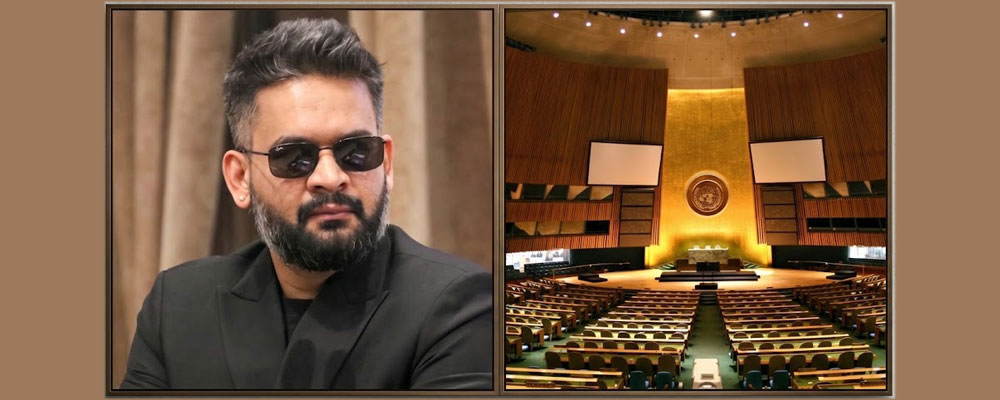
Arab league and UN Security Council will both convene on Sunday
Egypt’s Foreign Ministry also condemned the remark, saying Cairo had asked Israel for clarification given the “implications of provoking instability and reflecting a rejection of the pursuit of peace in the region, as well as an insistence on escalation.”
“This contradicts the aspirations of regional and international parties that are peace-loving and seek to achieve security and stability for all the peoples of the region,” it added.
Qatar’s Foreign Ministry, in its statement, condemned and denounced Netanyahu’s remarks, calling them “an extension of the occupation’s policy of arrogance, stoking crises and conflicts.” Doha said the “baseless Israeli claims and absurdly inflammatory rhetoric” would not erode the legitimate rights of Arab peoples and nations. It reaffirmed Qatar’s “full support for all initiatives aimed at achieving a just, comprehensive, and lasting peace in the region.”
Saudi Arabia’s Foreign Ministry also issued a sharp rebuke, rejecting “the settlement and expansionist policies and projects pursued by the Israeli occupation authorities.” The ministry urged the international community to act against “the ongoing and blatant violations by the Israeli occupation, which… threaten peace and security at both the regional and global levels.”
The Arab League, for its part, said Netanyahu’s comments represented “a blatant violation of the sovereignty of Arab states and an effort to destabilize the region.” The statement described the remarks as “expansionist and aggressive in nature, reflecting a mindset steeped in colonial-era delusions that cannot be accepted or tolerated.”
The Palestinian Authority also condemned Netanyahu’s comments, calling them “a provocation and a dangerous escalation that endangers the region’s security and stability, rooted in the occupation’s expansionist and colonial agenda.”
In its statement, Ramallah reaffirmed its “commitment to international legitimacy and international law regarding the establishment of an independent State of Palestine within the 1967 borders, with East Jerusalem as its capital.”
While the notion of Israel annexing parts of neighboring Arab states under the “Greater Israel” concept is not broadly supported among most Israelis, the presence of certain hardline ministers in Netanyahu’s governing coalition has brought the idea greater visibility in political discourse.
In March 2023, far-right Finance Minister Bezalel Smotrich sparked outrage when he delivered a speech in Paris from a podium displaying a map of “Greater Israel,” prompting Jordan to summon Israel’s ambassador in protest.
At the time, Israel’s Foreign Ministry responded to the backlash by reaffirming its commitment to the 1994 peace treaty with Jordan, stressing that “there has been no change in Israel’s position, which recognizes the territorial integrity of the Hashemite Kingdom.”