Kathmandu, 8 Oct: Scrub typhus infection has spread to 74 districts across Nepal. According to government data, more than 10,000 people have been infected nationwide since January 2026 after being bitten by mites.
Although 22 deaths have been reported to the Epidemiology and Disease Control Division (EDCD) during this period, only seven deaths have so far been confirmed to have been caused by scrub typhus. Dr. Gokarna Dahal, chief of the Vector-Borne Disease Section at the EDCD, said further verification is underway to determine the causes of death in the remaining 15 cases.
Scrub typhus is an infection that occurs in Nepal every year. In previous years, around 8,000 to 10,000 people were infected annually. However, concern over the disease has increased this year following deaths reported in Salyan.
According to the EDCD, 9,330 cases of scrub typhus were recorded in 2023 (2080 BS), while 11,500 cases were confirmed in 2024 (2081 BS) and around 7,000 cases in 2025 (2082 BS). No deaths were reported in those years.
“Scrub typhus occurs every year. Thousands of people were infected last year and the year before as well. The difference this time is that deaths have been reported in Salyan,” Dr. Dahal told Onlinekhabar.
According to EDCD data, Lumbini Province has recorded the highest number of infections, with 2,779 cases. Similarly, 1,947 cases have been reported in Sudurpaschim Province, 1,864 in Gandaki, 1,226 in Bagmati, 1,132 in Koshi, 729 in Karnali and 246 in Madhesh Province.
The disease has been reported more frequently in districts including Dang, Salyan, Bajhang, Syangja, Bardiya, Palpa and Sankhuwasabha.
Delayed Treatment Can Affect Multiple Organs
Scrub typhus is an infectious disease transmitted to humans through the bite of a mite. It is caused by the bacterium Orientia tsutsugamushi. Mites are commonly found in bushes, farmland, forests, grassy areas and overgrown areas around homes.
Dr. Dahal said a preliminary study of deaths reported in Salyan indicated that delays in seeking medical care were among the major contributing factors.
“After conducting a study from the central level, it appeared that the patients died because they did not reach the hospital in time,” Dr. Dahal said. “Even after developing a fever, some people stay at home taking paracetamol and delay going to a health facility.”
According to Dahal, the medicines required to treat scrub typhus are available free of charge at health facilities throughout the year. Patients can recover if they receive treatment on time.
If scrub typhus is not treated promptly, it can lead to multiple organ dysfunction, in which several organs of the body begin to fail simultaneously. The patient may then require intensive care, and the risk of death increases.
“If someone goes to a health facility for examination as soon as a fever develops, the medicine is available and treatment is possible,” he said. “But when treatment is delayed, the infection may already have affected other organs, and complications can continue to develop.”
More than 20 deaths have so far been reported to the EDCD, but verification of the cases is still underway, Dr. Dahal said.
According to him, deaths caused by scrub typhus are verified by examining death certificates and treatment records and consulting with the doctors involved.
“In some cases, the main cause of death may be something else. During reporting, it may simply have been mentioned as scrub typhus,” he said. “Therefore, we review the death certificate and medical records and consult with doctors before classifying a case as a verified death.”
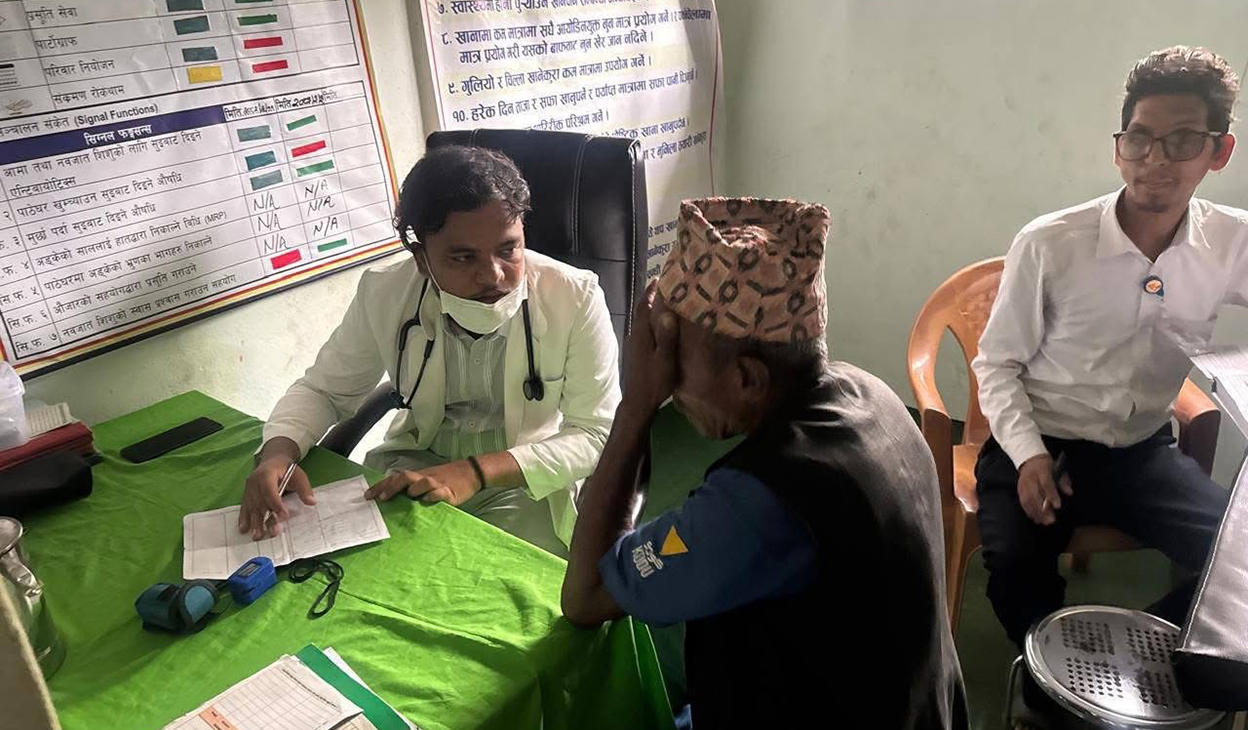
Why Does Infection Increase After the Monsoon?
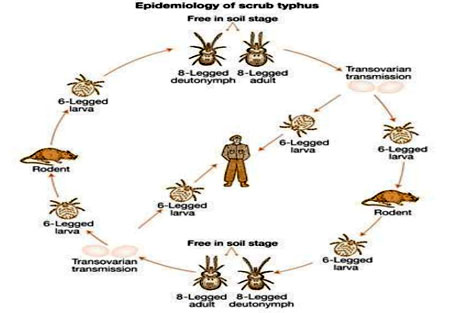
Scrub typhus is an infection caused by the bacterium Orientia tsutsugamushi. According to Dr. Dahal, rats are the main reservoir of the infection. Mites that come into contact with infected rats become infected, and the bacteria enter the human body when an infected mite bites a person.
In Nepal, scrub typhus is the second most commonly reported vector-borne disease after dengue. The disease began receiving attention in Nepal after the 2015 earthquake.
The risk is higher in areas close to forests, bushes and grasslands. According to Dahal, increased moisture and humidity after the monsoon, the growth of vegetation and increased human contact with forests, bushes and farmland create favorable conditions for mites to become more active.
The risk of infection may also increase during this period because people harvest maize and other agricultural crops, bringing them into greater contact with mites.
“During this season, humidity and temperature are favorable for mite development. People also have greater contact with grass, farmland and forests,” he said. “Rat activity also increases, which contributes to the higher number of infections.”
Public Urged to Visit Health Facilities Immediately After Developing Fever
The EDCD has urged people who develop a fever to visit a health facility immediately for examination rather than staying at home and taking medicine on their own.
Dr. Dahal said greater public awareness is particularly necessary at the local level because infections and deaths have been reported in Salyan. Although there are some limitations to the test kits used for diagnosing scrub typhus, he emphasized that clinical assessment and timely treatment are crucial.
“No test kit is 100 percent accurate. Sometimes a positive result may occur even when a fever has been caused by something else,” he said. “However, if doctors can assess the patient’s condition and begin treatment on time, deaths can be prevented.”
According to the EDCD, although scrub typhus occurs throughout the year in Nepal, infections tend to increase after the monsoon. The detection of cases in 74 districts indicates that the disease is no longer limited to a particular geographic area.
Symptoms of Scrub Typhus
Scrub typhus, which is more commonly reported in rural and hilly areas, can cause symptoms including fever, headache, swollen lymph nodes, excessive sweating, loss of appetite, red eyes, cough, diarrhea, pneumonia and body aches. Patients may also feel as though lumps or swollen glands have developed in the body.
A red, rash-like mark may appear at the site of a mite bite and can later develop into a dark or black scab-like mark.
People working in farmland or visiting forests and bushes are advised to wear clothing that fully covers the body and, whenever possible, wear boots.
When sitting in grassy areas or open fields, people should use a mat or carpet rather than sitting directly on the ground. They are advised to sleep or sit on beds or other elevated surfaces whenever possible, keep farmland, bushes, grass and overgrown areas under control, and store grains properly to help control rats and prevent their population from increasing.