Kathmandu, 25 Feb: “Election boycott has become like an easy business. There is no need to go among the people, no need to build an organization — just gather a few people, spread rumors of boycott, and collect money in the name of donations.”
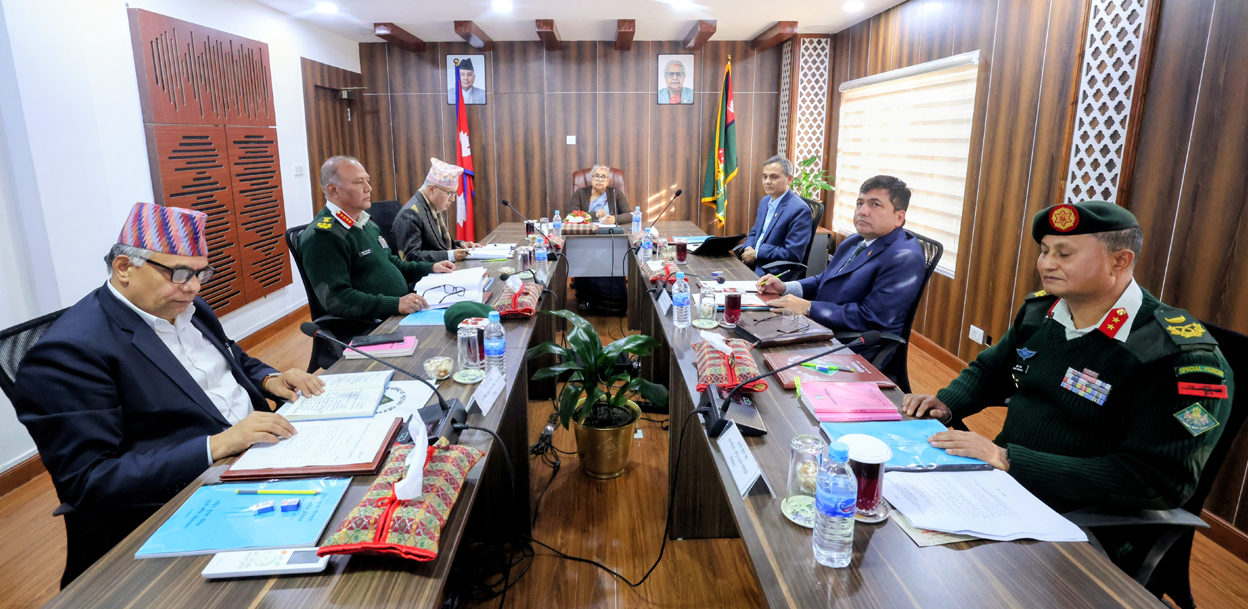
On Falgun 9, while addressing a program in Butwal, Prime Minister Sushila Karki made serious allegations against groups calling for an election boycott, linking their activities to fundraising. She indicated that groups lacking proper organization use election boycotts as an opportunity to maintain their party’s existence and generate income.
The Prime Minister directed security agencies to monitor groups that could disrupt the elections and to ensure strong security arrangements. Following her directive, security agencies have stated that they are closely monitoring such groups.
According to security sources, 12 different groups are currently involved in election boycott activities. Authorities have analyzed that these groups could pose security threats to the upcoming election. Police assessments indicate that security challenges could arise from groups ranging from communist factions to royalist groups.
Among those considered a potential threat is the group led by Durga Prasai, coordinator of the “Nation, Nationality, Religion, Culture and Citizen Protection Mega Campaign,” along with other royalist groups and political parties.
Prasai is currently in custody at the District Police Range, Kathmandu. His group’s PDF (Public Defense Force) and ATF (Any Time Force) have also been listed among groups that could disrupt the election.
After former King Gyanendra Shah made remarks perceived as potentially disruptive to the election, groups close to him have also been placed under police surveillance. On the eve of Democracy Day, Shah released a video message emphasizing national consensus and understanding, claiming that the current election might bring conflict, unrest, and tension instead of solutions.
Subsequently, Shah-affiliated group Shahi Yuwa Shakti Nepal has also been categorized as a potential disruptive force. Individuals associated with the group are reportedly under security surveillance.
Similarly, the Revolutionary Communist Party led by CP Gajurel and the Nepal Communist Party (Majority) led by Dharmendra Bastola have been identified as groups that could disrupt the election.
CP Gajurel argued that there is no justification for holding elections prematurely. He questioned why elections were called when two years of the term remained, alleging that “imperialist forces” wanted the election to legitimize a “puppet” government, and therefore called for a boycott.
On Falgun 5, a team from the Kathmandu Valley Crime Investigation Office arrested Dharmendra Bastola, General Secretary of the NCP (Majority), for his involvement in election boycott activities. He and three others from his group remain in custody.
Other groups identified as potential threats include the Scientific Socialist Communist Party led by Bishwabhakta Dulal, NCP Janapaksha led by Mahendra Malla, Nepal Communist Party led by Rishiram Kattel, a faction of the Socialist Communist Party Nepal, identity-based groups, the Mongol National Organization, and Rohingya refugees.
Security officials say Rohingya refugees are under monitoring not because of direct involvement, but due to concerns they could be exploited by others to disrupt the election. “Their identity is that of refugees. Because they are highly vulnerable to manipulation, monitoring is necessary,” a security official stated.
Police claim that over the past four months, they have conducted detailed analyses of groups that could disrupt the election, evaluating their influence, organizational strength, and potential security risks.
The Nepal Police has formed an Election Security Analysis Division under the command of SSP Dayanidhi Gyawali from the Operations Department. This division collects reports from police posts, area offices, district police offices, and provincial offices nationwide, analyzes security situations, and formulates strategies accordingly.
Based on the analysis of potential threats, relevant police units have been instructed to implement appropriate security strategies.
According to Nepal Police Central Spokesperson and DIG Abhinayaran Kafle, members of groups attempting to disrupt the election have been arrested and brought under legal action.
He stated that 16 individuals are currently in custody on charges of attempting to disrupt the election, while 26 others have been released.
History of Election Boycotts Since 2013
Election boycotts are not new in Nepal. Various groups have boycotted elections since 2013 (2070 BS).
During the second Constituent Assembly election in 2013, major boycott groups included the Revolutionary CPN-Maoist (Mohan Baidya faction), the Nepal Communist Party led by Netra Bikram Chand (Biplav), and the Nepal Communist Party led by Rishiram Kattel.
These groups remained active during the 2017 federal, provincial, and local elections, and continued their boycott stance in the 2019 by-election.
In the 2022 elections, the Revolutionary Nepal Communist Party (CP Gajurel faction), NCP (Majority) led by Dharmendra Bastola, NCP (Biplav faction), and NCP Masal also boycotted the polls.
The same groups boycotted the 2024 by-election. However, among those consistently boycotting elections, the Biplav-led party has now abandoned its boycott stance and decided to participate in elections.
Although these groups link election boycotts to their ideological identity and political existence, security agencies believe they do not possess the capacity to significantly disrupt the electoral process.