Kathmandu, 10 Aug: The traditional cultural festival “Gai Jatra,” which is celebrated every year for eight days from the first to the eighth day of the waning moon in the month of Bhadra, is being observed across the country today, Sunday, with various programs organized in the Kathmandu Valley.
In memory of relatives who passed away within the past year, people decorate either a cow or a person dressed as a cow and parade them around their local area. Devotees offer them milk, fruits, bread, beaten rice, yogurt, grains, and money. There is a religious belief that by taking part in such processions, the souls of the deceased can cross the mythical river baitarani by holding on to the cow’s tail.
Historically, this festival began during the reign of King Pratap Malla. It is said that, to console his queen, who was overwhelmed with grief after the death of their son, the king ordered that “in memory of the deceased from each household, a cow procession should be taken out and paraded around the city” to show her that others also suffer loss. When this did not ease her sorrow, the king further instructed the organization of comedic and satirical performances, leading to the tradition of humor and satire in Gai Jatra.
Since the time of Pratap Malla, it has been customary for the Gai Jatra procession to pass through the Hanuman Dhoka palace (Royal Palace), a tradition that continues to this day. Although the festival is celebrated in various towns across the country, it is especially vibrant in the Kathmandu Valley. Until the eighth day of the waning moon, the celebrations include comedic plays, satirical performances targeting social evils, dances, songs, and even emotional Ramayana verses sung in memory of the deceased.
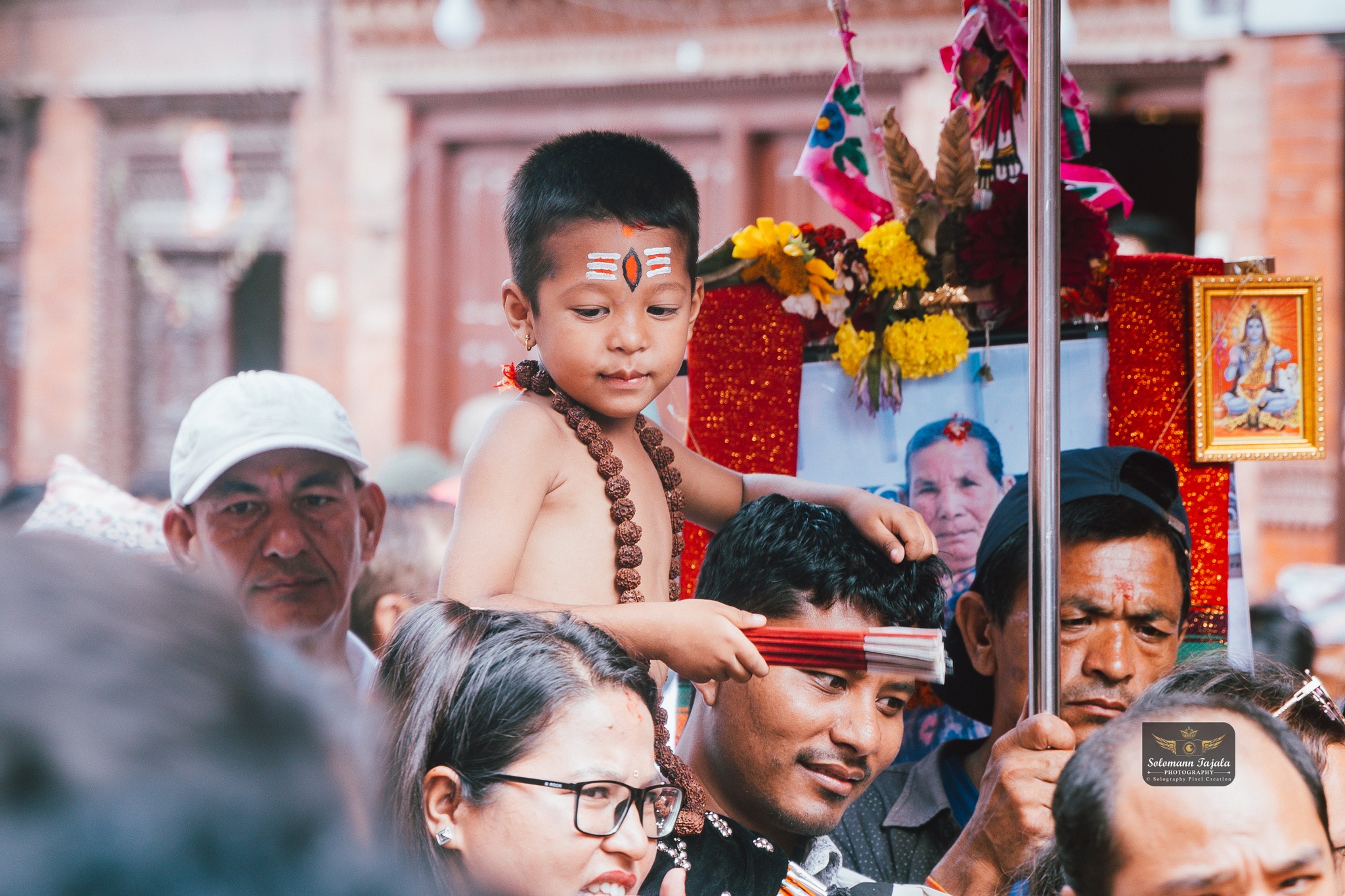
Gai Jatra as satire against social evils
After the royal coup of Poush 1, 2017 B.S., satire against the Panchayat system led to a ban on Gai Jatra celebrations. In 2033 B.S., the Royal Nepal Academy revived the festival with floats, comedy, and satire. Satirical humor serves to warn those acting recklessly and to highlight meaningful truths hidden in absurdities. Notable displays during the festival include samples of paddy and rice from the Satya Yuga shown in Patan, and books written in gold and silver letters displayed in Thamel, Kathmandu. Nowadays, Gai Jatra also serves to expose the distortions and anomalies present in society. Various entertaining and satirical programs are held publicly, and newspapers publish special satire editions addressing social malpractices.
Gai Jatra is celebrated with great enthusiasm in the Kathmandu Valley as well as in Banepa, Dhulikhel, Panauti, Bahrabise, Trishuli, Dolakha, Khotang, Bhojpur, Chainpur, Ilam, Dharan, Biratnagar, Birgunj, Hetauda, Pokhara, and other towns with a significant Newar community presence. On this occasion, comedians also organize special performances. The government has declared a public holiday in the Kathmandu Valley today.