- Pre-War Import Share: Russia accounted for only 0.2% of India’s crude oil imports in 2018.
- Current Import Share: Russia now accounts for 35-40% of India’s total crude imports, making it India’s top oil supplier.
Experts say that the U.S. decision to impose additional tariffs could make Indian goods significantly more expensive in the American market. According to them, India’s exports to the U.S. could decline by as much as 40 to 50 percent.
India Calls U.S. Tariff Decision “Unfair, Baseless, and Illogical”
Following the United States’ decision to impose additional tariffs, India’s Ministry of External Affairs reacted sharply, calling the move “unfair, baseless, and illogical.”
India clarified that importing oil from Russia is essential to ensure energy security for its population of 1.4 billion people. Labeling the U.S. decision to impose a 25% tariff due to Russian oil imports as unfortunate, India added:
“Many other countries are doing the same in their national interest. We reiterate that this move by the United States is unfair, baseless, and illogical. India will take all necessary measures to protect its national interests.”
U.S. Decision Triggers Political Backlash in India
In response to the U.S. announcement, the Indian National Congress criticized Prime Minister Narendra Modi. In a post on X (formerly Twitter), Congress wrote:
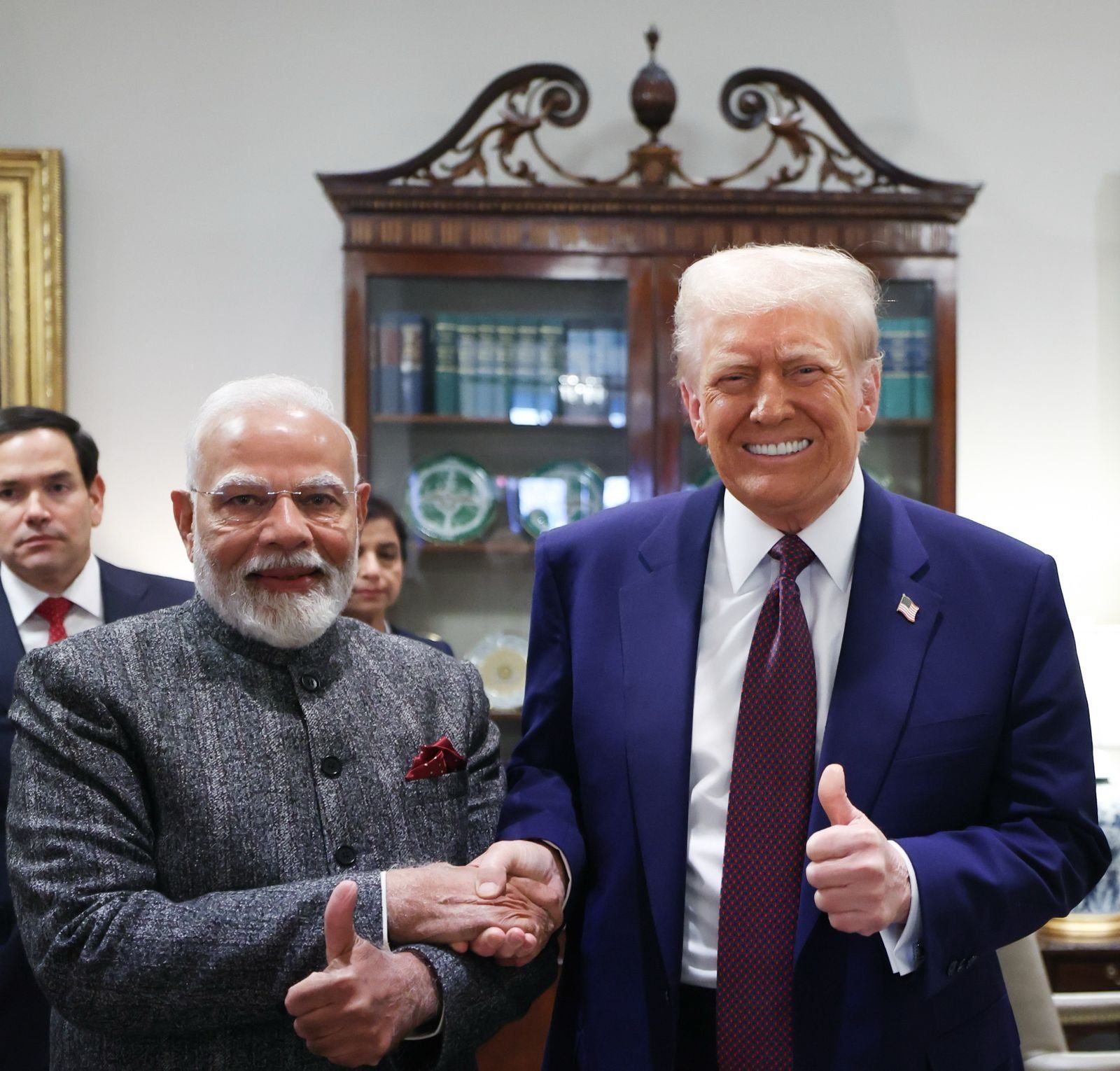
“Trump, a friend of Narendra Modi, has imposed a 50% tariff on Indian goods. Trump continues to take actions against India, yet Modi doesn’t even mention his name. Modi ji, be brave and respond to Trump.”
Congress leader Rahul Gandhi also posted on X:
“Trump’s 50% tariff is a form of economic blackmail — a tactic to pressure India into signing unfair trade deals. Prime Minister Modi must not allow his personal weakness to override the national interest.”
What Experts Say
Ajay Srivastava, head of the Delhi-based think tank Global Trade Research Initiative, said:
“With this move, India now ranks among the U.S. trade partners subjected to the highest tariffs — above competitors like China, Vietnam, and Bangladesh. This could severely impact a large portion of India’s $86.5 billion in annual exports to the U.S., which include everything from textiles to machinery.”
Srivastava further noted that in 2024, China imported $62.6 billion worth of Russian oil — more than India’s $52.7 billion — but faced no U.S. action.
“Washington is hesitant to act against China because it controls key materials critical to U.S. defense and tech sectors, such as gallium, germanium, rare earths, and graphite,” he added.
He also pointed out that:
“The U.S. has turned a blind eye to Russian trade by its own partners. Last year, the European Union imported $39.1 billion worth of goods from Russia — $25.2 billion of which was oil. The U.S. itself imported $3.3 billion worth of strategic resources from Russia.”
Srivastava estimated that:
“This new tariff could make Indian goods much more expensive in the U.S. market and cause a 40% to 50% drop in India’s exports to the United States.”
Trump’s Decision Came After Special Envoy Met Putin
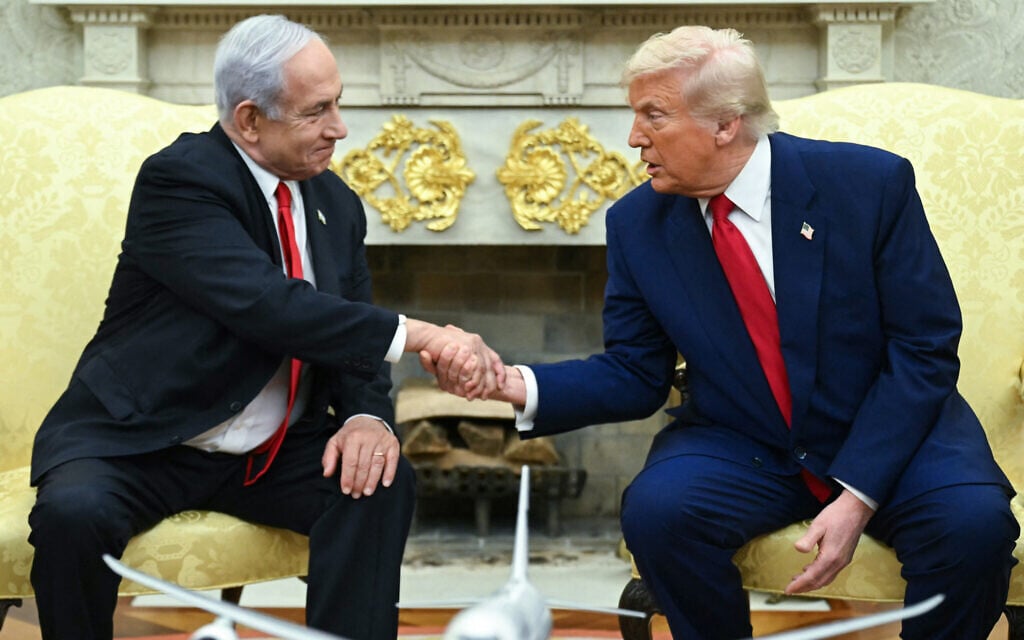
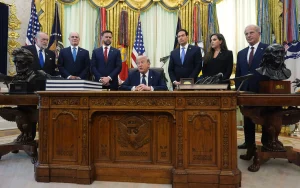
According to the BBC, former U.S. President Donald Trump announced the new tariffs following a meeting between his special envoy, Steve Witkoff, and Russian President Vladimir Putin in Moscow. The meeting reportedly occurred ahead of Friday’s deadline regarding a possible ceasefire agreement in Ukraine.
Previously, Trump claimed he was unaware that the U.S. imports items like uranium, fertilizers, and chemicals from Russia. India had challenged this inconsistency by pointing out the U.S.’s ongoing trade with Russia.
Trump’s Response to a Journalist’s Question
When a journalist asked Trump,
“The U.S. also imports uranium, chemicals, and fertilizers from Russia, yet objects to India’s oil imports. What is your response?”
Trump replied,
“I don’t know anything about that. I will look into it and provide more information later.”
Trump had earlier warned that countries importing oil from Russia would face tariffs soon. He accused India of buying large volumes of Russian oil and selling it to other countries for profit.
India’s Official Response
On Monday, India again warned the U.S. and criticized the European Union, stating:
“Targeting India solely for buying Russian crude oil is unfair and illogical.”
India’s Ministry of External Affairs clearly stated:
“The U.S. and European nations continue to trade with Russia while applying double standards against India.”
The ministry added that Europe has been importing not just energy but also fertilizers, minerals, chemicals, iron and steel, and machinery from Russia. The U.S. continues to import uranium hexafluoride for its nuclear industry, palladium for electric vehicles, fertilizers, and chemicals.
“Therefore, it is unjustified to impose tariffs on India simply for importing Russian oil.”