As Israel and mediators awaited Hamas’s response on Friday to the latest proposal for a hostage release and ceasefire in Gaza, reports emerged that U.S. President Donald Trump planned to offer the Palestinian militant group a personal guarantee of his commitment to ending the ongoing conflict, which has persisted since October 2023.
Israel is reportedly facing intense U.S. pressure to finalize a ceasefire agreement ahead of Prime Minister Benjamin Netanyahu’s upcoming visit to Washington for discussions with Trump next week.
Sources suggest that while both sides have shown flexibility on many issues recently, they remain deadlocked on the core question of ending the war. Israel insists on maintaining the option to resume its offensive against Hamas, whereas the militant group demands that any deal bring a permanent end to the hostilities, which erupted following Hamas’s attack on Israel on October 7, 2023.
To bridge the remaining gaps between Israel and Hamas on ending the war, Channel 12 news presented a Hebrew translation of what it described as Trump’s likely formulation: Trump will “commit that negotiations over the terms for ending the war will continue even after a temporary ceasefire, and that I will do everything in my power to help the parties reach an agreement on the terms of a permanent ceasefire.”
According to the unsourced Thursday report, Trump’s message to Hamas is that if it agrees to the so-called Witkoff framework — which includes the release of 10 living hostages in two phases and 18 bodies in three phases over the course of a 60-day ceasefire — the US will ensure efforts continue to reach a lasting end to the conflict.
Reports have said the proposal contains assurances from the mediators that both sides will not resume fighting as long as negotiations to end the war are ongoing, although Israeli sources have insisted it doesn’t include an Israeli commitment to not renew the fighting if the talks fall through.
Ahead of Netanyahu’s White House visit on Monday, Israel is optimistic about Hamas’s formal response, and believes proximity talks could begin within days, the report added.
Hamas said early Friday morning that it was discussing the US-backed ceasefire proposal with other Palestinian groups, and that it would submit its response to mediators once the talks concluded.
The statement followed unconfirmed claims from Hamas-affiliated sources that the group had provided a “positive response” to the proposal.

Earlier Thursday evening, Channel 13 News, quoting a senior Israeli official, reported that Jerusalem expects Hamas to reply by Friday evening.
“If the response is positive, the deal could be finalized by next week,” the official said.
Both the Kan public broadcaster and Channel 12 have reported that, should Hamas respond favorably, an Israeli delegation will be prepared to travel on short notice to Doha, Qatar, where mediated discussions will focus on resolving remaining issues. One key point is the withdrawal of Israeli troops from Gaza during the ceasefire period.
Netanyahu held a meeting with a small group of ministers Thursday night on the terms of a potential deal.
The 60-day deal is expected to see five separate releases of dead and living hostages, with Channel 13 saying that on day one, eight living hostages will be released; on day seven, five bodies; on day 30, another five bodies; on day 50, two living hostages; and on the last day, eight more bodies.
If this process is completed, 22 hostages would remain in Gaza, with at least 10 believed to still be alive.
Multiple sources have reported similar terms for the agreement, with Hamas reportedly agreeing to forgo public hostage release ceremonies, while Israel would agree to pause military operations as long as negotiations on ending the war continue.
During a previous ceasefire in January and February, Hamas held celebratory events for hostage handovers, which sparked anger from Israel and the U.S. and drew criticism from the UN human rights chief.
According to reports, the hostages’ release would be exchanged for Israel freeing Palestinian security prisoners and increasing humanitarian aid deliveries to Gaza.
The full Israeli security cabinet was scheduled to meet Saturday night to vote on the proposal ahead of Prime Minister Netanyahu’s trip to Washington. Channel 13 reported that the ceasefire could begin while Netanyahu is in the United States.
Meanwhile, several reports indicated that the government and the negotiations team were gearing up for the complex and sensitive task of determining which hostages will be released first if the deal is implemented.
Political leaders were set to make a decision after being presented by the negotiation team with information about the medical conditions of the captives, Channel 12 news reported, citing a senior member of the negotiations team. However, the report added that due to the sensitivity of the matter, the cabinet could decide not to make the decision by itself.
Similarly, Kan news reported, citing unnamed sources familiar with the matter, that the government was planning to task the negotiations team to make recommendations as to the order of hostages’ release.
The report noted that Israel has defined all the remaining hostages as “humanitarian” in lists handed to mediators, and cited an Israeli source as saying the details of the hostages’ release will become clearer if and when there are proximity talks between Israel and Hamas.
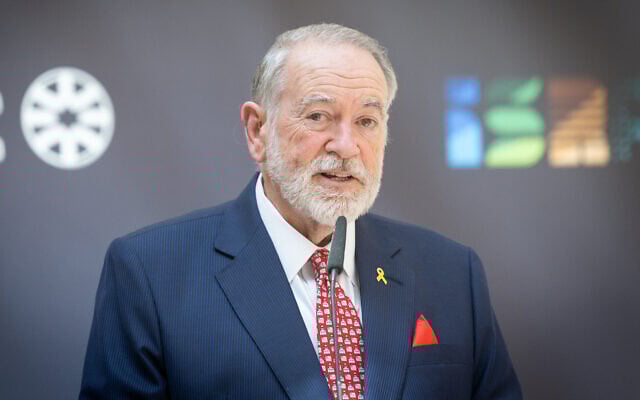
Meanwhile Thursday, US Ambassador to Israel Mike Huckabee said he hoped the ceasefire and hostage release agreement being negotiated was “a done deal,” but whether it will get across the finish line is ultimately up to Hamas.
“Let’s hope they recognize that it’s time to bring this to an end… the delay so far has been because Hamas refuses to release its hold on the hostages,” Huckabee said in an interview with Channel 12.
He also asserted that “Hamas has no future in Gaza.”
Palestinian militant groups currently hold 50 hostages taken from southern Israel during the October 7, 2023 attack, when Hamas-led forces invaded the country. The assault resulted in the deaths of approximately 1,200 people, mostly civilians, and sparked the ongoing war.
Among the hostages are at least 28 bodies confirmed dead by the IDF. Israeli officials say 20 are believed to be alive, while the status of two others is cause for serious concern.