Kathmandu, 18 June: The Chinese side has proposed a review of the rule requiring foreign nationals to pay a $500 entry fee to visit Upper Mustang.
Chinese government officials raised concerns with the Nepali government, stating that the fee imposed by Nepal’s Department of Immigration is too high. They have formally requested a reconsideration of the policy.
Upper Mustang is a restricted area in Nepal, and visitors currently must obtain a permit and pay $500 for a 10-day stay. Nepali officials confirmed that China has suggested reevaluating this provision, citing the high cost as a barrier.
During an interaction program organized by the Nepali Consulate General in Lhasa on Nepal-China trade facilitation and management in Lo Manthang and Jomsom, the Chinese side raised concerns about the Korala border point. They noted that despite having an immigration office, the high entry fee for entering Nepal has hindered smooth cross-border movement.
The Chinese delegation highlighted that Upper Mustang is a restricted zone, requiring any foreign national entering the area to pay a minimum of $500. However, since there are no immigration services at the border, even those willing to pay the fee cannot enter Nepal from the Chinese side. They pointed out that travelers must pay the fee but still face entry restrictions due to the lack of facilities.
To address this issue, the Chinese side requested the following:
-
Integrated Infrastructure Development at the border, including immediate establishment of immigration, customs, and quarantine services.
-
Streamlined Entry Process for foreign nationals visiting Upper Mustang to facilitate smoother cross-border travel.
Nepali representatives have also claimed that reducing the high entry fee would attract more foreign tourists to the region. Regarding the $500 entry fee that Chinese authorities have deemed too expensive and requested Nepal to review, Nepali officials have acknowledged that the steep fee has indeed reduced foreign tourist arrivals.
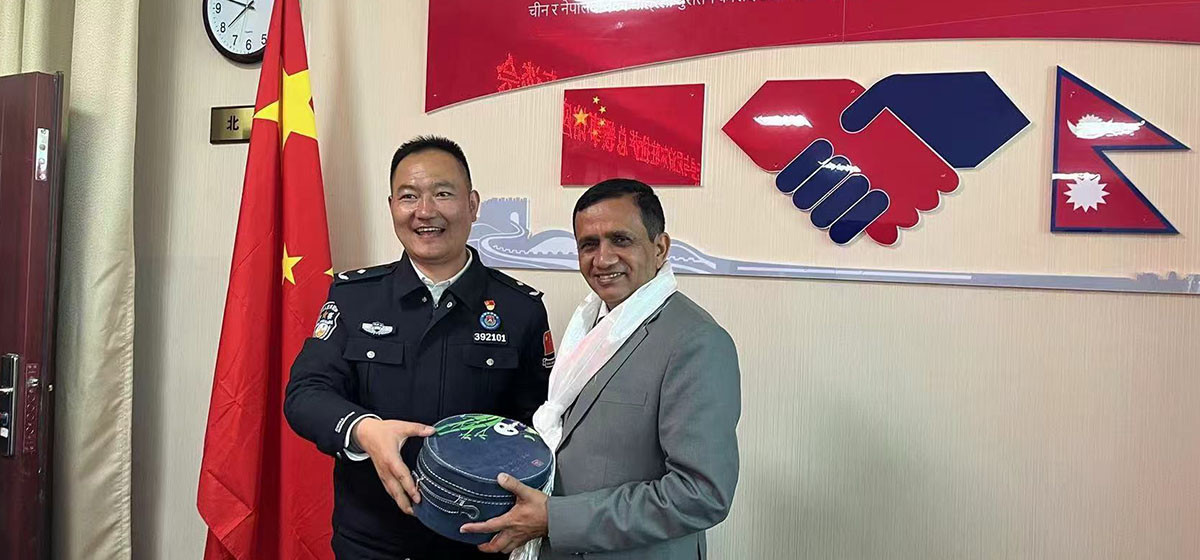
“We recognize that the entry fee has been a deterrent for foreign tourists. The Chinese side has formally proposed a review of the $500 fee to the Nepali government, and we are currently holding internal discussions on this matter,” said Lakshmi Prasad Niroula, Consul General at the Nepali Consulate General in Lhasa.
According to Niroula, during the interaction program in Lo Manthang, local Nepali representatives including Raju Bista (Chairman of Lho Gekhar Damodar Kunda), Tasi Nurbu (Chair of Lo Manthang Rural Municipality), the Vice-Chair of Lo Manthang, ward chairpersons from both municipalities, and local traders operating through the Korala border point all expressed agreement with the Chinese proposal to reconsider the entry fee structure.
During an interaction program held in Jomsom, Mustang’s Chief District Officer Vishnu Prasad Bhusal, chairpersons of all four rural municipalities in the district, along with social workers and security chiefs participated in discussions about the Korala border situation.
Participants noted that while the Chinese side has excellent infrastructure with fully operational immigration and customs offices, Nepal’s side only has a four-room prefabricated building constructed by the provincial government. They pointed out the lack of basic facilities like water and electricity, shortage of staff, and the fact that although the immigration office has been inaugurated, it remains non-functional. These deficiencies have prevented smooth trade operations at the border crossing.
During both programs, Nepali Consul General Niroula in Lhasa assured participants that the Consulate would make maximum efforts to resolve the raised issues through coordination with both Chinese and Nepali authorities.
Consul General Niroula separately held discussions with senior officials from customs, immigration, local administration, and port management offices in Drongpa County of China’s Tibet Autonomous Region.
On this occasion, both Chinese and Nepali sides expressed commitment to take necessary initiatives from their respective sides to streamline operations at the Korala border crossing.
Upper Mustang, a semi-restricted area in Nepal, first opened to foreign tourists in 1992. Visitors must pay a $500 fee per person for a 10-day permit (reduced from the original $700 fee). Since 2009, tourists who wish to stay longer than 10 days must pay an additional $50 per day. All visitors are required to travel with a licensed guide after paying the permit fee.
The region offers unique attractions including barren mountain landscapes, Himalayan vistas, traditional culture and lifestyle, alpine lakes, ancient monasteries (gumbas), the sacred Muktinath Temple, and fascinating cave systems. Key destinations include Lo Manthang (a medieval walled city), Jomsom (the gateway to Mustang), Kagbeni, Marpha, Tiri, and the beautiful Dhumba Lake – all offering both religious significance and tourist appeal.
This remote area preserves Tibetan Buddhist culture and offers a distinctive travel experience different from other parts of Nepal, with its desert-like terrain and well-preserved ancient traditions. The permit system helps control tourism while supporting local conservation efforts.
Some adventurous travelers choose to enter through the challenging Manang-Thorong La Pass route instead.
As part of the world-famous Annapurna Circuit trekking route, Mustang has become increasingly popular with both domestic and international visitors in recent years. Notably, Chinese tourists have shown particular interest in entering through the Korala border crossing point.
These Chinese visitors have formally requested that Nepali authorities reconsider the current entry fee structure to make access more convenient and encourage greater tourism through this border point. The appeal specifically asks for revised fees that would facilitate smoother entry procedures while maintaining the region’s protected status.