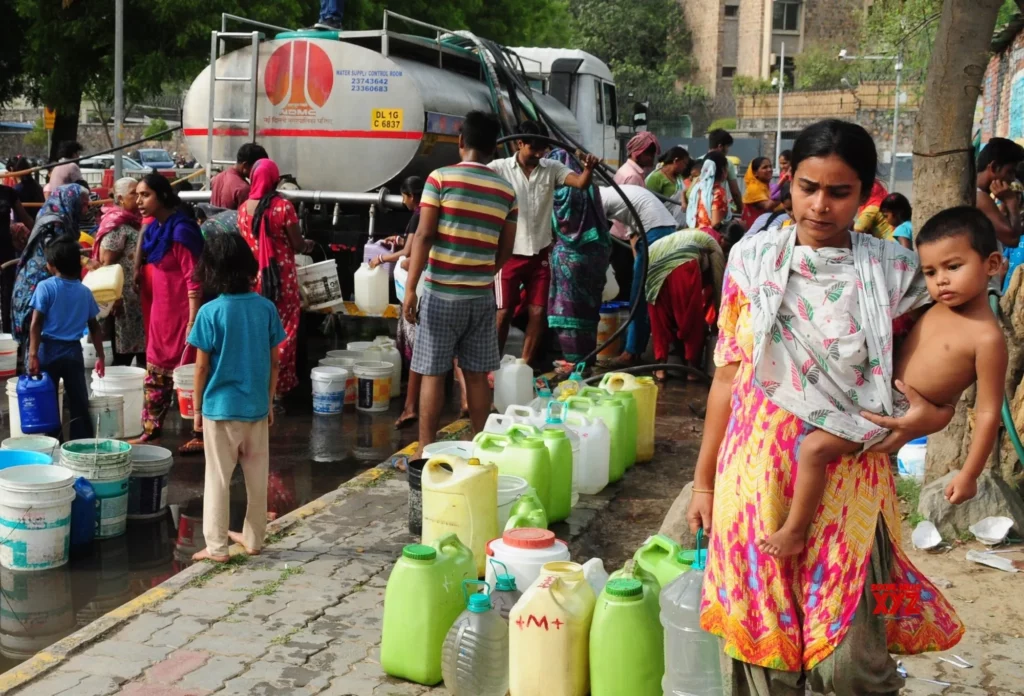
65-year-old Shakuntala Devi, after running the motor for half an hour without getting any water at home, climbed down the stairs to check if water was available at a neighbor’s house. She was disappointed to find none.
Shakuntala Devi says, “Every day, I run the motor for half an hour, but I barely get even a glass of water.”
Shakuntala Devi lives on rent in Sector 34 of Rohini, Northwest Delhi.
She says, “I know the water won’t come, but I still run the motor hoping it might. If the water comes when I haven’t turned on the motor, I regret missing the chance to collect it.”
Like many others living in Sector 34 of Delhi’s Rohini area, Shakuntala Devi also buys drinking water. Often, two jars of water are used up in a single day.
Shakuntala says, “I survive on my old-age pension, but I end up spending more on water than the amount I receive from the pension.”
She hadn’t faced such difficulties before. Until two years ago, regular tap water was available in her home. But now, the situation has changed.
When it comes to drinking water, most residents living in the DDA-constructed flats share a story similar to Shakuntala’s — almost all are forced to buy drinking water from the market.
Deepak, too, is troubled by the lack of water from the government-supplied taps. For people like him living at the grassroots, household expenses have been thrown into disarray.
He says, “I buy two jars of water almost every day. Since we live on the ground floor, we can get a 20-liter jar for 30 rupees, but we can’t afford branded bottled water.”
Deepak’s wife adds, “Nearly 10 percent of our income goes just to buy drinking water. If we didn’t have to spend so much on water, our life would be much easier.”
High Demand, Low Supply
India’s capital, New Delhi, is the country’s largest city by population. According to the 2011 census, Delhi’s population was over 15 million—and it has been steadily increasing since then.
The Delhi Jal Board estimates that residents of the city require nearly 1.29 billion gallons of water every day. However, only around 1 billion gallons are being supplied. This means Delhi currently faces a daily shortfall of 300 million gallons of water.
Due to this gap between demand and supply, a large portion of Delhi’s population is severely affected.
From Sangam Vihar in South Delhi to Rohini in the northwest, ordinary citizens are paying the price for the acute shortage of drinking water.
The rising heat has made this water crisis even more severe. With no water coming from government-supplied taps and many households not receiving water from the Delhi Jal Board’s tankers, residents are being deeply affected by this growing emergency.
More Spent on Drinking Water Than on Groceries
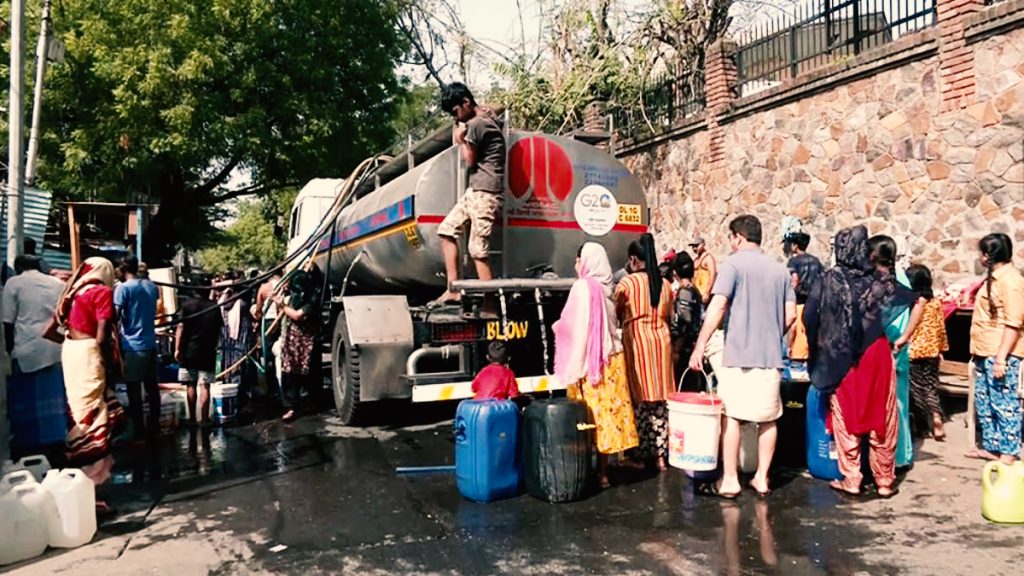
Sangam Vihar in Delhi is a densely populated settlement, estimated to be home to nearly 1 million people. Most residents here depend on water supplied by tankers. For those without access to government-supplied piped water or even purchasable tanker water, daily life is extremely difficult.
Delhi has over 1,700 unauthorized colonies. In many of these areas, the Delhi Jal Board supplies water through pipelines. However, in slum areas where pipelines have been laid, the water supply is still insufficient. A large portion of the population living in these slums is forced to buy drinking water.
Water prices vary depending on the area. In one lane of Devli, for example, 20 liters of water from a tanker is sold for 10 rupees. People have to carry the filled containers back to their homes themselves.
For those who have water delivered directly to their homes, a 20-liter jar can cost anywhere from 20 to 40 rupees. Branded bottled water is even more expensive, with prices ranging from 90 to 100 rupees per jar.
“Nitin Bassi says, ‘In Delhi, 70 to 80 percent of the population do not pay water bills because water is provided for free. We have data on people’s economic conditions, so free water should be given only to those in need. Providing free water to everyone is a major cause of water wastage. Water is both a social and an economic good, and to build good infrastructure, we need to charge consumers a fair price for water.’
According to Professor Prakash Chand Kandpal from the Centre for Law and Governance at Jawaharlal Nehru University, this water shortage poses a risk of turning into a social crisis.
He says, ‘The elite will continue to have access to water, but the 30 percent of people living in slums, rehabilitation colonies, or unauthorized settlements are mostly below the poverty line. In these areas, people have to stand in long queues, sometimes for hours, just to get water. There are often disputes and fights among people over water. Such situations cause dissatisfaction among the population towards the state, and if not addressed, the water crisis could become a source of social tension in the future.’”