Editor: Padam Gurung
Kathmandu, 11 May: When war seemed imminent between India and Pakistan, many speculated that India would emerge victorious. Some even secretly hoped for a Pakistani win. The world stood divided into two poles — some sided with India, while others supported Pakistan. These were people’s speculations, opinions, and biases.
Military and Weapons Comparison
India has 1,455,550 military personnel, while Pakistan has only 654,000. India possesses 513 fighter aircraft compared to Pakistan’s 328. Similarly, India has 2,229 aircraft overall, while Pakistan has just 1,399. This clearly shows that India’s strength is roughly double that of Pakistan.
India has 6 aerial tankers, whereas Pakistan has 4. India owns 979 helicopters compared to Pakistan’s 430. On the ground, India has 4,201 tanks while Pakistan has only 2,627. India has 148,594 armored military vehicles, while Pakistan has merely 17,516. Moreover, India has 2 aircraft carrier ships; Pakistan has none. India possesses 18 submarines compared to Pakistan’s 8. Regarding nuclear capabilities, India has 172 warheads while Pakistan has 170.
In every metric, India appears significantly stronger. Globally, India is considered the 4th most powerful nation, while Pakistan ranks 12th.
Economic Comparison
As of 2025, India is the world’s 4th largest economy, having surpassed Japan. Compared to Pakistan, India’s economy is 10 times larger.
When war breaks out, every country involved suffers economically. Farmers stop cultivating, businesses close, and industrial production halts, causing millions to lose their jobs. Both national and international trade collapse, leading to economic devastation. War destroys infrastructure worth billions and trillions. Personal property and public assets are lost, leading to widespread hunger, disease, looting, theft, robbery, murder, and violence.
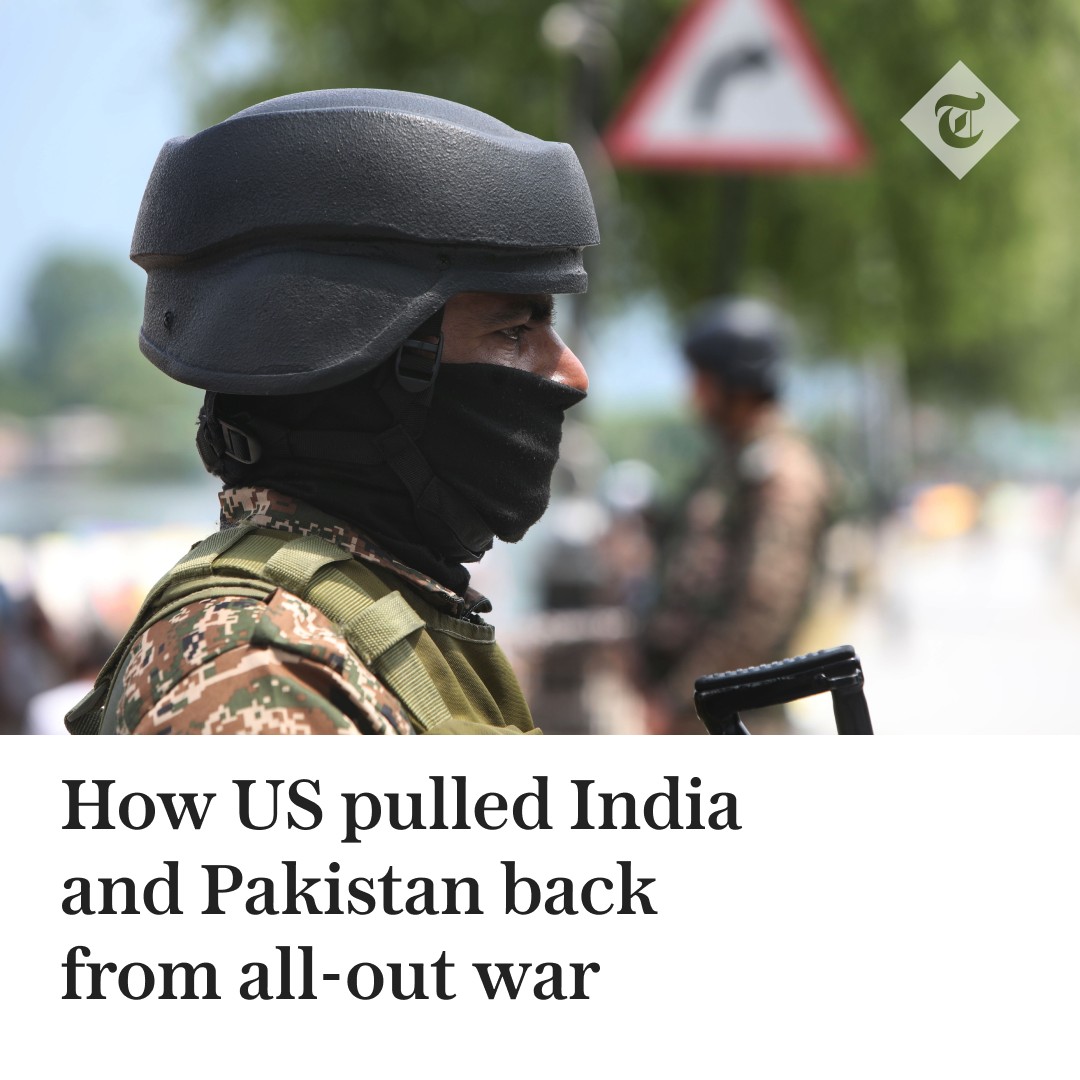
Ceasefire Agreement
The first announcement came from U.S. President Donald Trump, who stated on his social media platform, Truth Social, that a ceasefire had been agreed upon between India and Pakistan after U.S.-brokered talks.
Subsequently, U.S. Secretary of State Marco Rubio posted on X (formerly Twitter) that he and Vice President J.D. Vance had spoken with the prime ministers, foreign ministers, national security advisors, and Pakistan’s army chief within the past 48 hours, leading to a ceasefire agreement.
Pakistan officially announced the ceasefire, and India confirmed it afterward.
Indian Foreign Secretary Vikram Misri read a press statement saying that the Director General of Pakistan’s Military Operations had called his Indian counterpart, and both countries agreed to cease all forms of military action — land, air, and sea — starting from 5 PM Indian Standard Time on Saturday.
According to the U.S. President, had the war continued for a few more days, both countries would have faced complete economic collapse. Neither India nor Pakistan has the capacity to sustain a prolonged war, which is why, after intense diplomacy and persuasion, the war came to an end.
In contrast, the Ukraine-Russia war has lasted longer due to stronger economic support. Ukraine received continuous financial and military aid from the U.S., while Russia managed to withstand economic damages due to its vast gas reserves and exports. Even though U.S. aid to Ukraine has stopped under President Trump, the European Union continues to provide significant support.
Similarly, the ongoing conflict between Israel and Hamas persists because Hamas is backed by Iran, and Israel itself is an economically prosperous and militarily powerful nation.