(241207) — SEOUL, Dec. 7, 2024 (Xinhua) — People watch a televised address delivered by South Korean President Yoon Suk-yeol on a screen at a railway station in Seoul, South Korea, Dec. 7, 2024. Yoon apologized for his martial law declaration during a televised address to the nation on Saturday. (Xinhua/Yao Qilin)
South Korean President Yoon Suk Yeol recently issued a public apology following his controversial declaration of martial law on December 3, 2024. He justified the move as necessary to protect South Korea’s constitutional order from perceived threats, including alleged pro-North Korean forces. However, this decision was met with significant public outrage, protests, and opposition from lawmakers, who quickly voted to overturn the order.
In his apology, President Yoon expressed regret for the anxiety and inconvenience caused to the public, describing the decision as made out of “desperation” during a politically challenging period. The incident has led to intensified calls for his impeachment, with opposition parties asserting that his actions resembled an attempted coup.
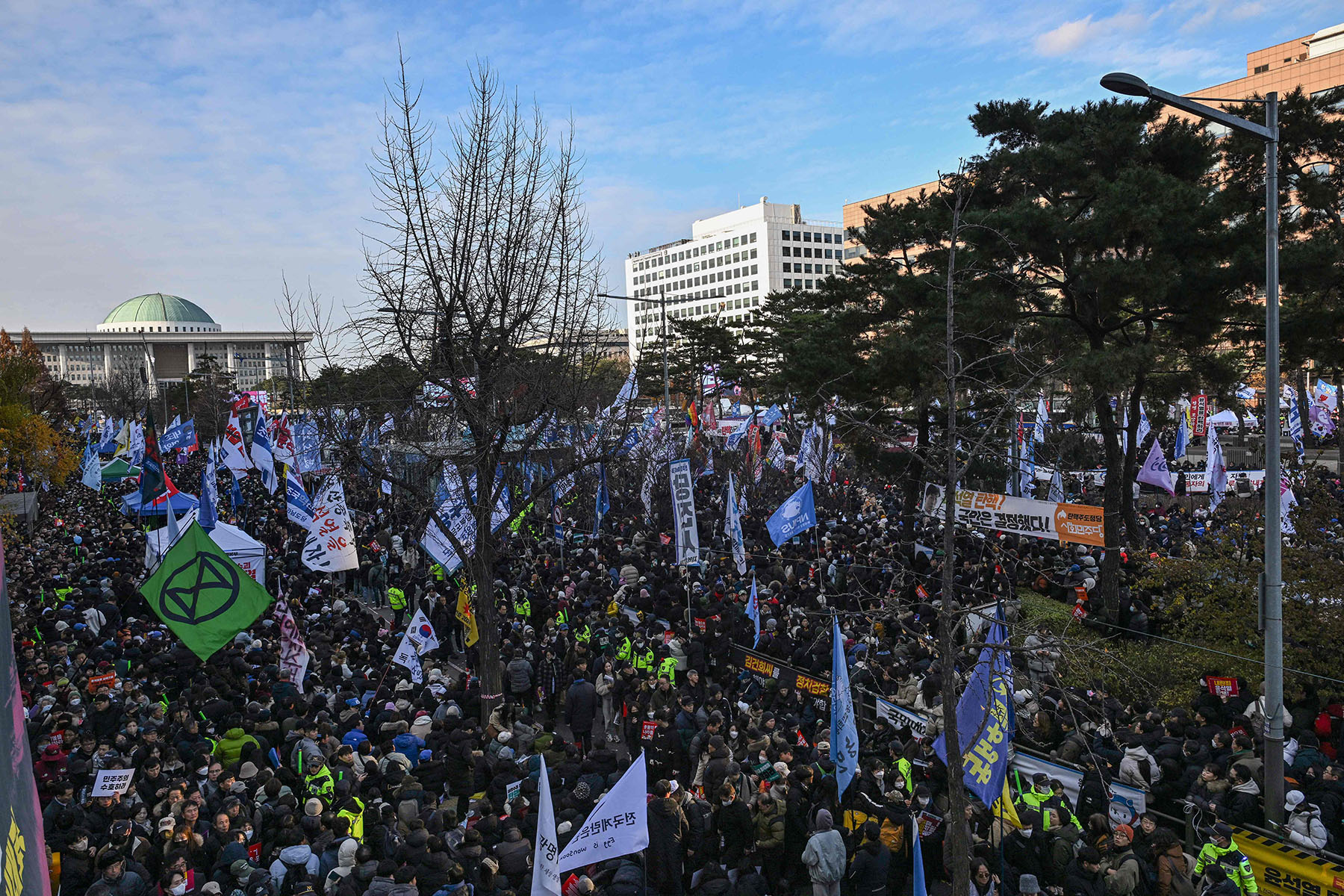
People take part in a protest calling for the ouster of South Korean President Yoon Suk Yeol outside the National Assembly in Seoul on December 7, 2024. South Korea’s embattled President Yoon Suk Yeol apologised but stopped short of resigning on December 7 over his declaration of martial law, as protesters gathered outside parliament ahead of a crucial impeachment vote that could decide his political fate. (Photo by Philip FONG / AFP)
Public rally against him
Yes, South Korean President Yoon Suk Yeol is facing sustained protests, especially from opposition parties, following his controversial attempt to declare martial law earlier this week. The move, which Yoon justified as a way to address “anti-state forces,” was quickly annulled by the opposition-led National Assembly. This unprecedented decision sparked widespread outrage and accusations of violating constitutional principles.
Civic groups, labor unions, and opposition lawmakers have organized nationwide protests demanding Yoon’s resignation. Opposition parties, particularly the Democratic Party, have called the declaration a “grave rebellion” and initiated impeachment proceedings, which could potentially suspend Yoon from office if successful
The backlash highlights growing concerns over democratic backsliding and political instability in South Korea. The situation has also drawn international attention, with calls for adherence to constitutional and democratic processes.
Impeachment
The likelihood of impeachment proceedings against South Korean President Yoon Suk Yeol is significant, given the strong opposition reaction to his martial law declaration. The Democratic Party and other opposition groups have already introduced a motion for impeachment, citing the action as a constitutional violation and a threat to democracy.
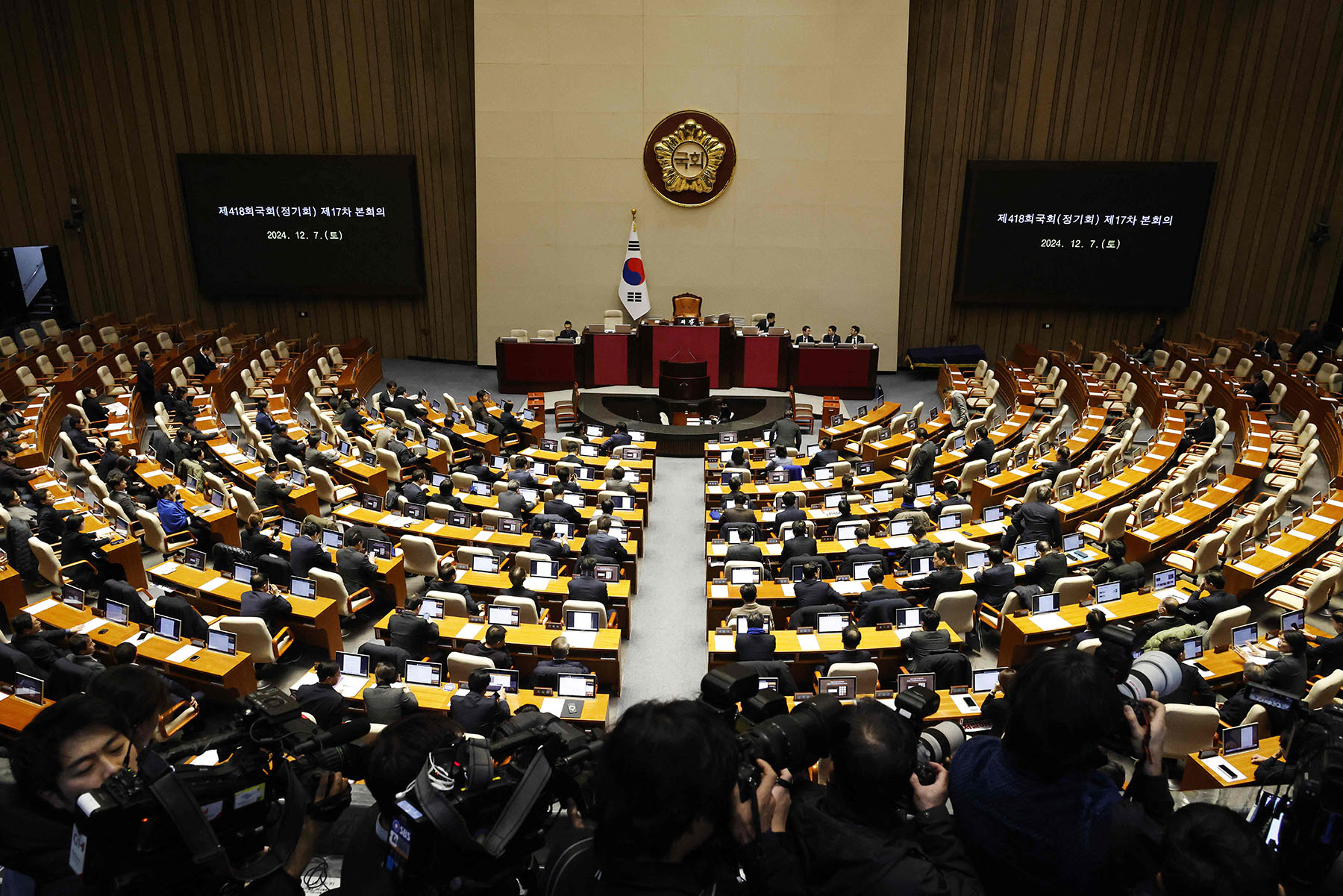
Lawmakers arrive for the plenary session of the impeachment vote of South Korea’s President Yoon Suk Yeol at the National Assembly in Seoul on December 7, 2024. South Korea’s embattled President Yoon Suk Yeol apologised but stopped short of resigning on December 7 over his declaration of martial law, as protesters gathered outside parliament ahead of a crucial impeachment vote that could decide his political fate. (Photo by JEON HEON-KYUN / POOL / AFP)
The process requires a two-thirds majority in the 300-seat National Assembly, meaning 200 votes are needed. The Democratic Party holds 168 seats, with smaller opposition parties controlling 24 more, bringing their potential base to 192 votes. Reports suggest that at least 18 members of Yoon’s own People Power Party opposed his martial law decision, hinting at possible defections that could push the impeachment motion over the threshold.
You will need to register in order to leave a comment.
You can easily log in using your email, or through Google, Facebook, and Twitter.
If you prefer not to comment with your real name, you can change your display name and profile photo to any nickname of your choice. Feel free to comment; your real identity will remain confidential.
With registration, you can view a complete summary of your comments, replies, and likes/dislikes in your profile.