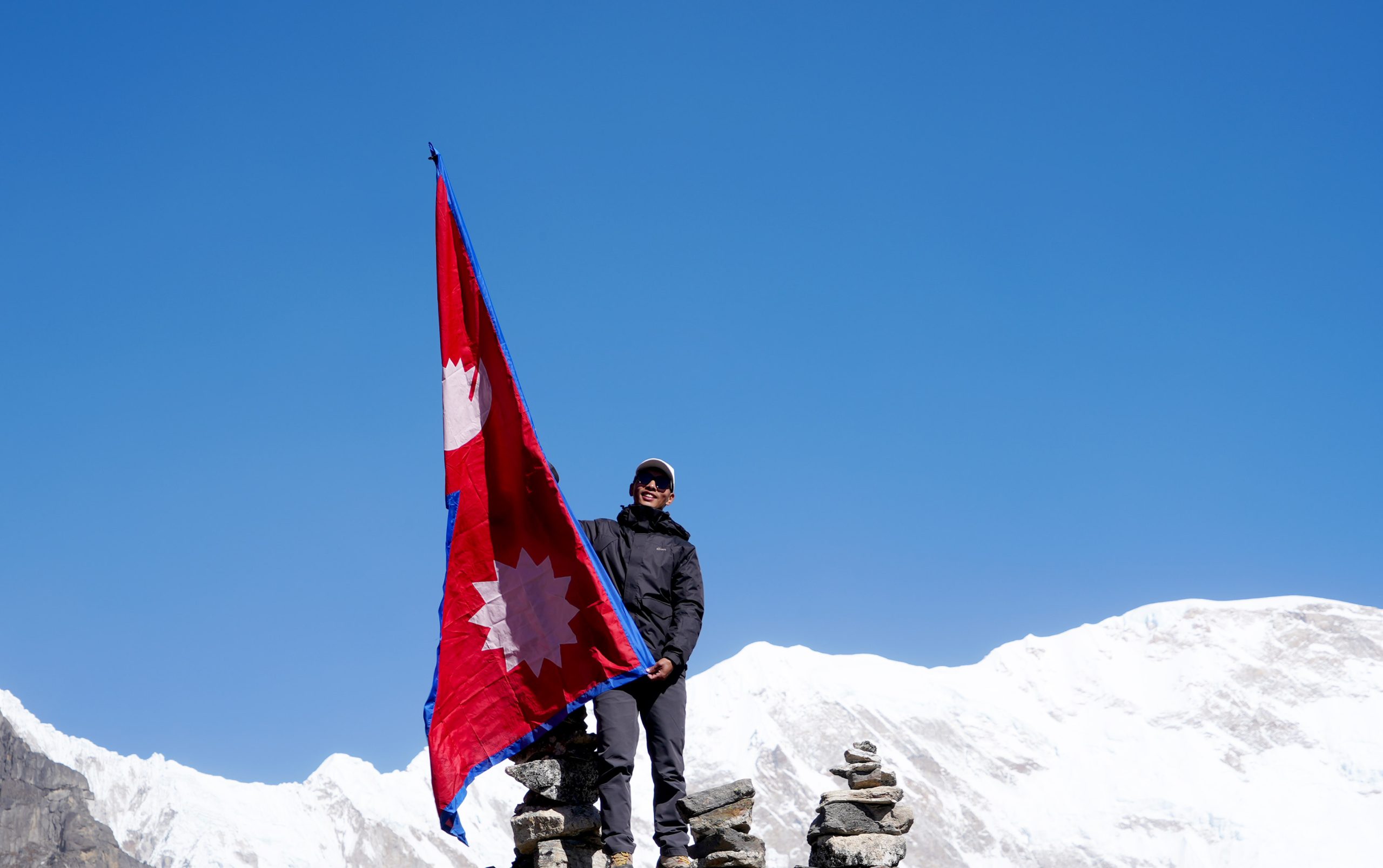
Krishna Gurung, Ward President of Sirijungha Rural Municipality-8, Yamphudin, hoisting the national flag of Nepal at the southern base camp of Kanchenjunga Himal located in Taplejung. Kanchenjunga is eight thousand 586 meters high. This mountain is the third highest mountain in the world. Photo: Dilkumar Limbu/Rss
The Kanchenjunga Himalaya, often referred to simply as Kanchenjunga, is the third-highest mountain in the world, standing at an elevation of 8,586 meters (28,169 feet). Located on the border between Nepal and the Indian state of Sikkim, it is part of the Himalayan mountain range and holds significant cultural and spiritual importance.
Key Features:
-
Peaks and Geography:
- Kanchenjunga has five main peaks: Kanchenjunga Main, West (Yalung Kang), Central, South, and Kangbachen.
- It is located in the Kanchenjunga Conservation Area (Nepal) and the Khangchendzonga National Park (India), both biodiversity hotspots.
-
Etymology:
- The name “Kanchenjunga” translates to “The Five Treasures of Snow” in Tibetan, symbolizing the five peaks as repositories of gold, silver, gems, grain, and holy books.
-
Spiritual Significance:
- In Sikkimese culture, Kanchenjunga is considered sacred. It is revered as a guardian deity and a symbol of natural harmony.
-
Climbing History:
- First ascended in 1955 by a British expedition, led by Joe Brown and George Band. Respecting local beliefs, climbers did not step on the actual summit, a tradition that continues today.
-
Ecological Significance:
- The region is home to rare species like the snow leopard, red panda, and Himalayan blue sheep.
- It boasts diverse landscapes, from subtropical forests to alpine meadows and glaciers.
-
Adventure and Tourism:
- The Kanchenjunga trek is a popular adventure, offering spectacular views of the Himalayan panorama and the chance to explore remote villages and ancient monasteries.
-
Conservation Challenges:
- The region faces threats from climate change, deforestation, and unregulated tourism which impact its delicate ecosystems.
-
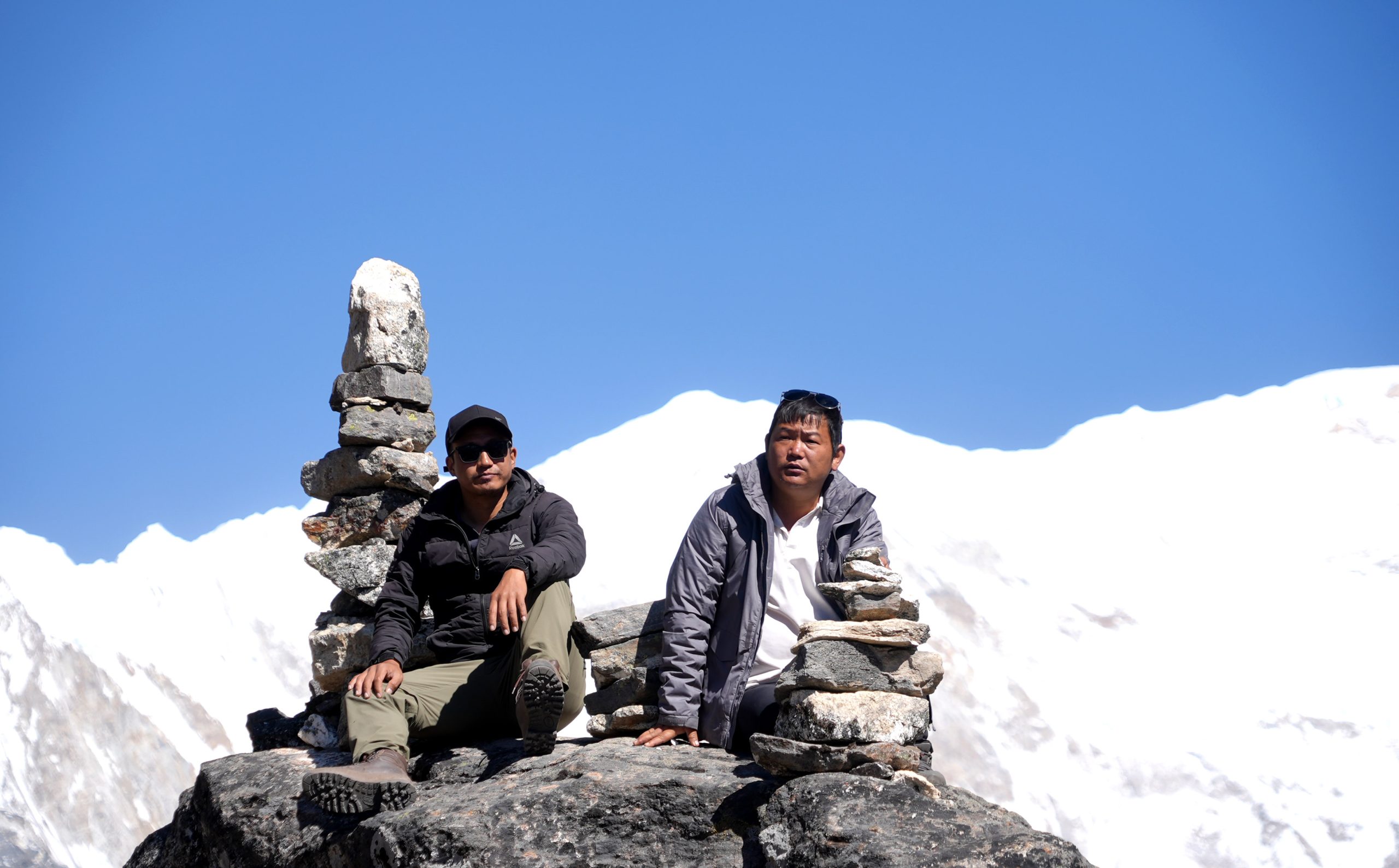
ताप्लेजुङ सिरिजङ्घा—८ क्षेत्रमा रहेको विश्वको तेस्रो अग्लो कञ्चनजङ्घा हिमालको दक्षिणी आधार शिविर क्षेत्रबाट जलवायु परिवर्तनका प्रभाव र हिमपहिरोको अवलोकन गर्दै सिरिजङ्घा गाउँपालिका उपाध्यक्ष डा चित्र माबो । तस्बिरः दिलकुमार लिम्बू/रासस Dr. Chitra Mabo, vice president of Sirijunga Rural Municipality, observing the effects of climate change and avalanches from the southern base camp area of Kanchenjunga mountain, the third highest mountain in the world, in Taplejung Sirijungha-8 area. Photo: Dilkumar Limbu/Rss
Kanchenjunga, situated in northeastern Nepal, attracts a moderate number of trekkers compared to more popular trails like Everest or Annapurna. Annually, only a few hundred tourists venture into the Kanchenjunga region, as it remains one of Nepal’s least-explored trekking destinations. This isolation offers a unique and pristine trekking experience, emphasizing its wilderness and natural beauty.
The trek typically takes 19-26 days, traversing remote villages, lush forests, and glacial terrains, reaching altitudes of over 5,100 meters. The number of visitors has been increasing slowly due to improved facilities and the promotion of the Kanchenjunga Conservation Area, which is part of Nepal’s Great Himalayan Trail.
-
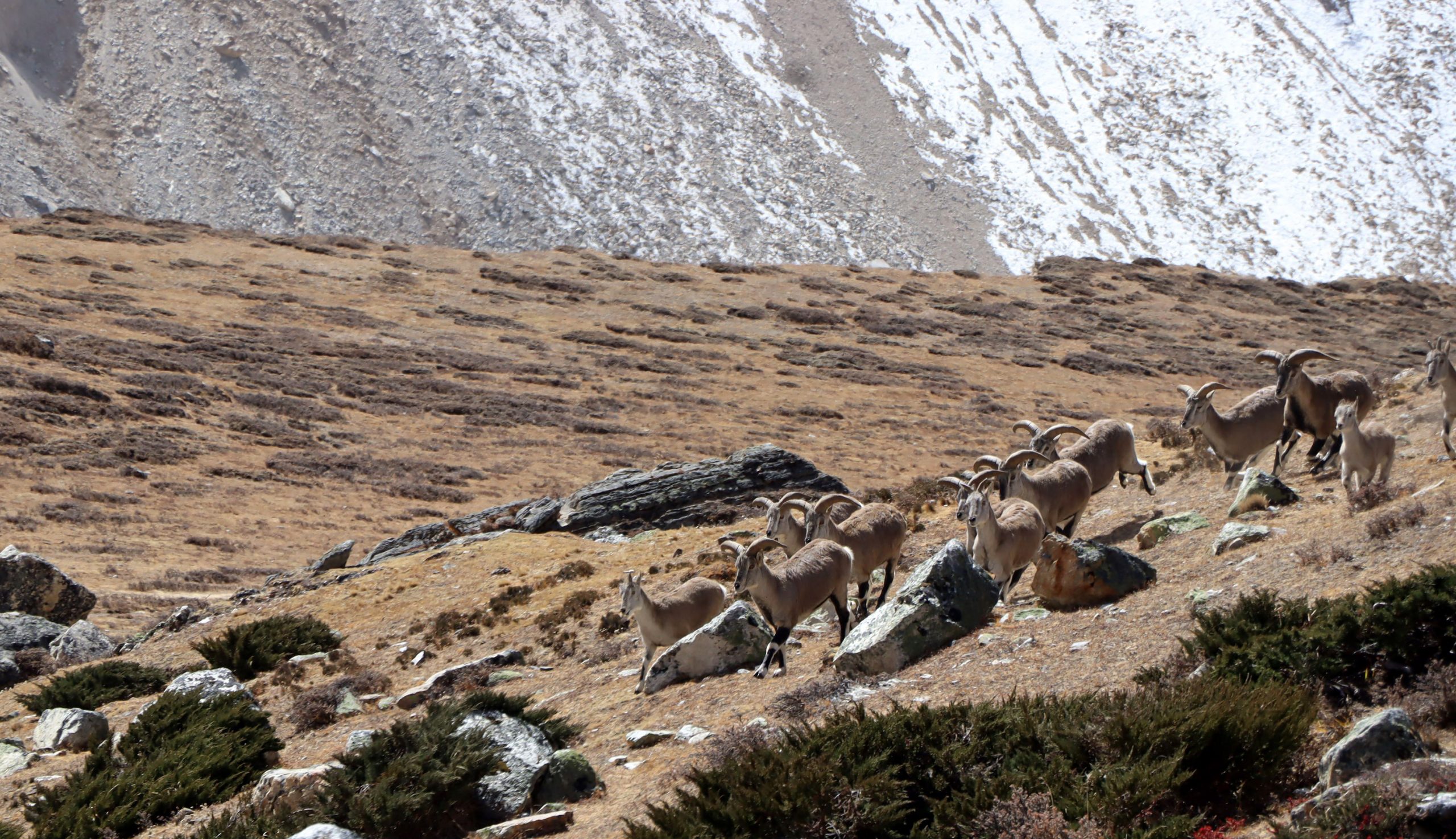
कञ्चनजङ्घा हिमालको बेस क्याम्प जाने पदमार्ग नाउर
फुङ्लिङ, ९ मङ्सिरः
ताप्लेजुङमा अवस्थित विश्वको तेस्रो अग्लो कञ्चनजङ्घा हिमालको आधार शिविर(बेस क्याम्प) जाने पदमार्गमा देखिएको नाउर(वन भेडा । तस्बिरः दिलकुकमार लिम्बू/राससNaur (forest sheep) seen on the trail to the base camp of Kanchenjunga mountain, the third highest mountain in the world, located in Taplejung. Photo: Dilkukmar Limbu/Rss