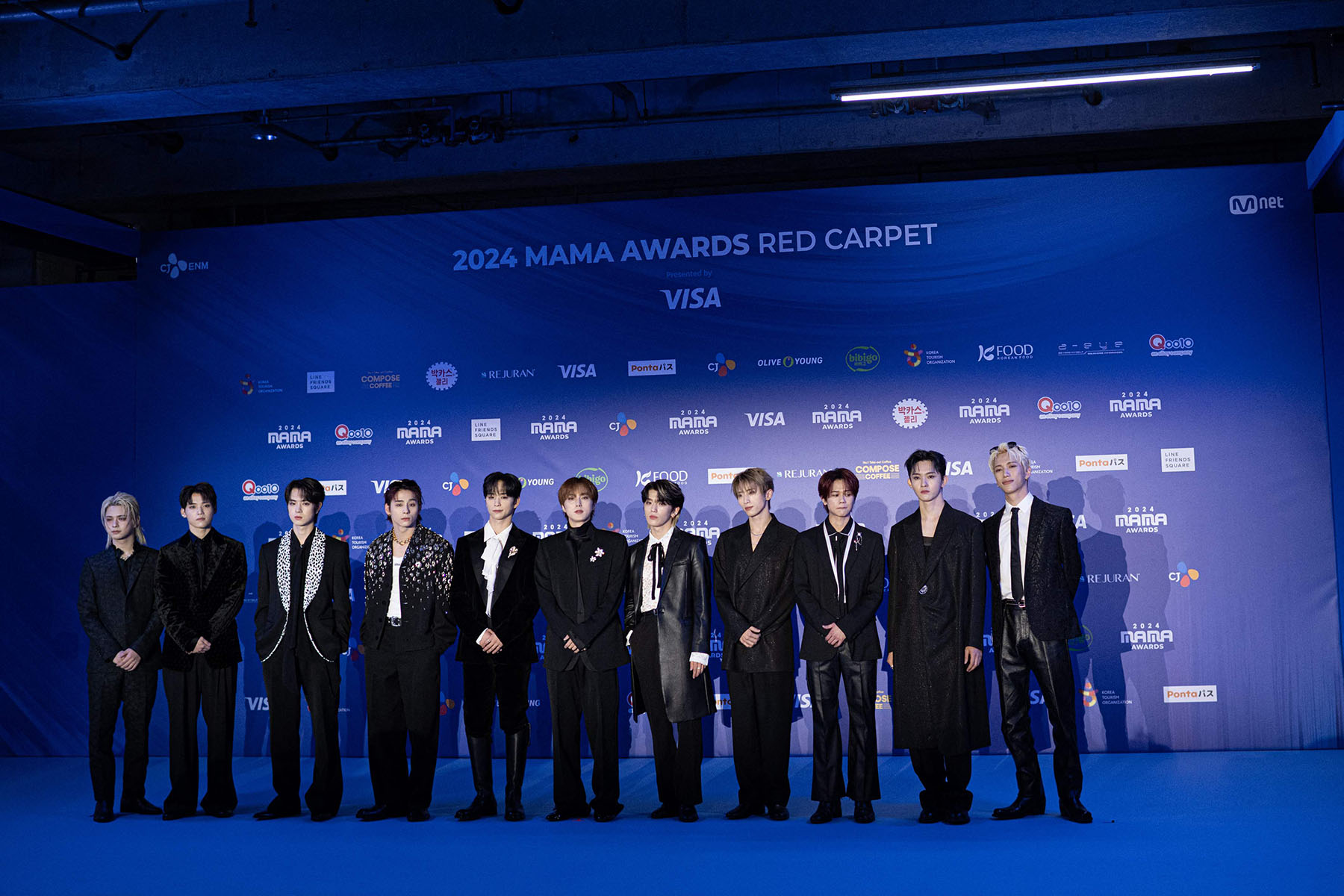
Japanese boyband INI arrive on the red carpet to attend the 2024 MAMA Awards in the city of Osaka on November 23, 2024. The annual event, which stands for Mnet Asian Music Awards (MAMA), is a top ceremony for the K-pop cultural phenomenon. It has been held in different countries over the years, and the 2024 show is split between one night in Los Angeles and two nights in the western Japanese city of Osaka. (Photo by Philip FONG / AFP)
The 2024 MAMA Awards, a premier K-pop music event, brought together artists from South Korea, Japan, and international stars over three days in Los Angeles and Osaka. The event featured a dazzling lineup that celebrated the 25th anniversary of MAMA Awards, under the theme “BIG BLUR”
Highlights:
-
Performances in Japan (Kyocera Dome, Osaka):
- Day 2 included ENHYPEN, IVE, TXT, TREASURE, and BOYNEXTDOOR.
- Day 3 featured SEVENTEEN, G-Dragon (his first MAMA performance in nine years), aespa, and (G)I-DLE.
- Special performances included cinematic-themed acts like ZEROBASEONE reinterpreting Romeo and Juliet and large-scale stages like (G)I-DLE’s MEGA STAGE with 100 dancers.
-
Collaborations and International Presence:
- Japanese artists like YOSHI from TREASURE joined K-pop stars in special collaborations.
- International performers included Anderson .Paak and BLACKPINK’s Rosé, emphasizing MAMA’s global appeal
-
Broadcast and Reach:
- The awards were available on platforms such as Mnet and YouTube, ensuring global access for fans
This year’s event reinforced the integration of Japanese and Korean music industries with iconic performances and highlighted the ongoing international growth of K-pop culture.

JAPAN-KOREA
The combined entertainment and music industries of Japan and South Korea, particularly the K-pop sector, hold significant global value. As of recent estimates, the South Korean music industry, largely driven by K-pop, reached approximately 11 trillion KRW (around $8.2 billion USD) in 2022. K-pop itself has a global market value of about $7.5 billion USD, with projections to grow further, especially as cultural exports increase globally.
In Japan, the music market remains one of the largest globally, second only to the United States. While direct K-pop contributions in Japan are harder to quantify, Japan is one of the biggest consumers of K-pop, which bolsters the industry’s international revenue streams significantly. For instance, exports of Korean cultural content, including music, reached nearly $1 billion USD in 2022.
Combined, the entertainment industries of both countries not only generate billions annually but also serve as cultural soft power hubs, expanding their global reach through music, television, and brand collaborations.