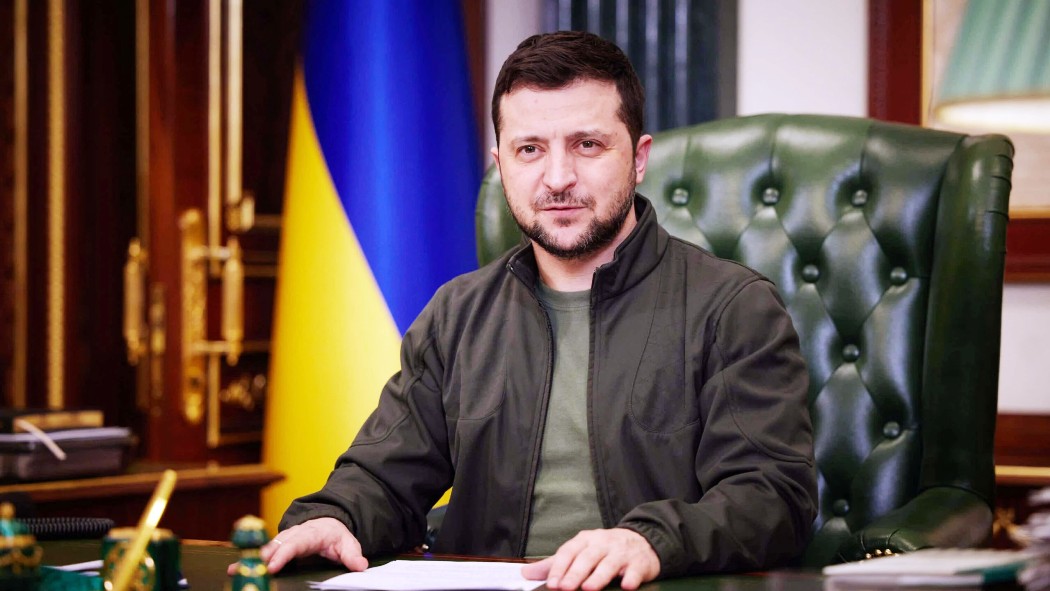
Ukrainian President Volodymyr Zelenskyy has said that the future of the eastern Donbas region was set as a top priority during talks held in Abu Dhabi with representatives of Ukraine, Russia, and the United States.
The talks are part of efforts to end Russia’s nearly four-year-long invasion of Ukraine. The United Arab Emirates (UAE) Ministry of Foreign Affairs said the discussions began on Friday and were scheduled to continue through Saturday. The ministry described the initiative as an effort to “promote dialogue and seek a political solution.” The U.S. administration also stated that the talks were positive and productive.
Prior to the start of the negotiations, Russian President Vladimir Putin held overnight, in-depth discussions with U.S. representatives Steve Witkoff and Jared Kushner. The Kremlin has maintained that, before any long-term peace agreement, Ukraine must withdraw its troops from territories in the eastern region that Russia has illegally occupied.
Speaking after meeting former U.S. President Donald Trump in Davos, President Zelenskyy said that although the future of Russian-occupied territories in eastern Ukraine remains unclear, a peace proposal is “almost ready.” He also said that he discussed with Trump a proposal to establish a free trade zone in eastern Ukraine as part of related commercial and economic initiatives.
These talks mark the first time that officials from the U.S. administration have held meetings simultaneously with representatives of both Ukraine and Russia. In a televised address, President Zelenskyy said, “Our delegation is regularly reporting from the talks. They are discussing the parameters for ending the war. The most important thing is that Russia must demonstrate a willingness to end this war.”
The Kremlin has described the talks merely as a “security working group.” Kremlin spokesperson Dmitry Peskov said, “The withdrawal of Ukrainian troops from eastern Donbas is an essential condition for Russia for any long-term peace agreement.” Russian foreign policy adviser Yuri Ushakov described the talks as “open, constructive, and productive.”
A few hours before the talks, President Zelenskyy met President Trump in Davos for about an hour. Trump said, “Both presidents—Putin and Zelenskyy—are willing to make a deal, and all sides are giving something.” He also pointed out that defining the borders remains the main challenge in the negotiations.
Addressing the audience in Davos, President Zelenskyy expressed his views on Europe’s slow decision-making, insufficient security spending, failure to stop Russia’s “shadow oil fleet,” and inadequate economic assistance to Ukraine. He said, “Europe needs to further strengthen its capabilities and ensure its role as a global power.” He added that the talks do not depend solely on Ukraine’s will; Russia must also show a desire to end the war, which would help establish lasting peace between the two sides.