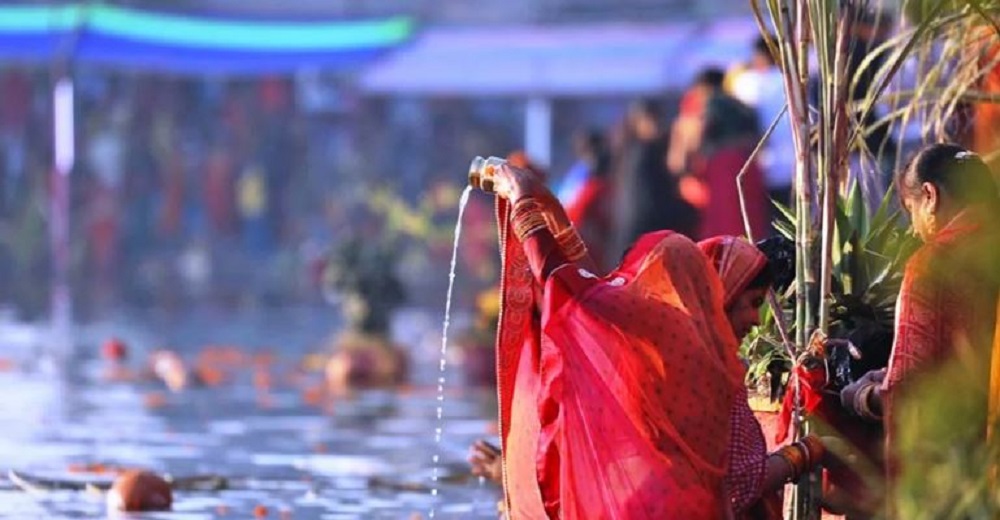
Saptari, 27 Oct: The great cultural and religious festival of the Mithilanchal region, Chhath, is being celebrated grandly across the country on Monday by offering Arghya (sacred offering) to the setting sun. This is the third day of the four-day festival, known as “Sandhya Arghya” (evening offering), during which devotees worship the setting sun.
On this occasion, rivers, ponds, and lakes across the district, including the headquarters Rajbiraj in Saptari, have been beautifully decorated like a bride. Devotees, who observe a strict fast without food or water since morning, are preparing to offer Arghya to the setting sun.
They arrange new clothes, offerings, fruits, Thekuwa, Bhusuwa, coconuts, sugarcane, and other ritual materials at the riverbanks decorated as sacred ghats. In the evening, they will offer milk and water to the setting sun while worshiping Sun God (Surya Dev) and Chhathi Maiya with deep devotion.
In Mithilanchal, Chhath is regarded as a festival of Sun worship and purity. Devotees perform this ritual to purify their souls and pray for the longevity of their children, as well as the happiness, peace, and prosperity of their families.
Women play the central role in the observance of Chhath, conducting the rituals with great faith, discipline, and devotion. On the fourth day of the festival—Tuesday morning—devotees will offer Arghya to the rising sun, marking the conclusion of the celebration.
Chhath is not merely a religious festival; it also symbolizes the social unity, traditions, and civilization of the Mithilanchal region. As people of all backgrounds participate without any discrimination, the festival is also seen as a symbol of inclusiveness and harmony.
Chhath Festival Expands Beyond the Terai Region
The Chhath festival, traditionally celebrated in Nepal’s Terai region, has now spread with joy and enthusiasm to the hilly and Himalayan areas as well. The significance of this festival has grown so much that it is now observed not only in villages and cities, from the plains to the mountains, but also by Nepali communities living abroad. In the past, residents of the Terai living in Kathmandu used to return to their hometowns to celebrate Chhath. However, this trend has gradually declined, as people now perform Chhath rituals at beautifully decorated ghats (riverside altars) along the various rivers in Kathmandu itself.

The festival, observed for childbirth, health, and family welfare, is believed to inspire nonviolence and compassion toward all living beings. In Kathmandu, several riverbanks have been thoroughly cleaned and attractively decorated with colorful lights and ornaments, creating a truly mesmerizing sight. The offerings made to Chhathi Maiya during worship include apples, bananas, oranges, coconuts filled with water, sugarcane, green beans, water chestnuts, radish, and ginger plants. Throughout the Chhath period, devotees strictly abstain from consuming fish, meat, garlic, onions, millet, lentils, and boiled rice.
Cultural, Environmental, and Spiritual Significance of Chhath
According to writer and cultural expert Dhirendra Premarshi, Chhath is a festival of self-purification and enlightenment. It encourages people to be industrious, fosters harmony, and teaches the values of humanity. He emphasized the environmental relevance of the festival, stating that devotees must have access to clean and pure water for worship. “However, people often fail to act responsibly,” he lamented. “In Bagmati, for example, devotees worship one day but then pollute the river by discarding offerings and waste after the ritual.” Premarshi also noted that Chhath was originally similar to an agricultural fair, where people showcased their local produce. “Unfortunately,” he added, “this once simple and humble festival is gradually becoming more extravagant.”
Artist Ravindra Jha described Chhath as one of the most rigorous fasting rituals, dedicated to the life-giving power of the Sun God (Surya Dev) and Chhathi Maiya. He explained that the word Chhath originates from Shashthi, symbolizing the sixth day of the lunar calendar. According to him, the festival honors the interdependent relationship between the Sun, humanity, and the Earth, promoting positivity and balance.
The festival, a symbol of reverence toward nature, is celebrated with deep devotion and joy. The third day, known as Sandhya Arghya (Evening Offering), involves devotees gathering along riverbanks to offer sacred water and prayers to the setting sun. The fourth and final day, called Bihaniya Arghya (Morning Offering), is marked by worshiping the rising sun at dawn, signifying the completion of the four-day fast and rituals.