Dang, 24 Aug: The Tharu settlement is in the spirit of Atwari. Every year, the Tharu community celebrates Atwari on the second Sunday after the Astimki festival (Janma Ashtimi) celebrated by the women of the Tharu community. The Atwari festival is a festival celebrated exclusively by the men of the Tharu community. Since it is a festival celebrated only once a year, the Tharu community celebrates Atwari in a festive atmosphere. There has been an increase in activity in the Tharu settlements on Atwari. Tharu men who have gone out of the village and district for work or higher education have returned to their villages to celebrate Atwari. Therefore, the presence of Tharu men in the Tharu settlements on Atwari is crowdy than on other days.
Bhim Bahadur Chaudhary of Hekuli, Dangisharan 3, said that people celebrate Atwari by fasting all day and performing pujas in the name of Bhyawa (Bhim) in the evening. “On the first day of Atwari, we cook delicious dishes including fish, crab, Ghongghi and eat Bhinsarya (a traditional feast) on Saturday night,” he said. “We should eat Bhinsarya before the rooster crows. If the rooster crows, the Bhinsarya is rotten, so we eat Bhinsarya before the rooster crows.” He said that it is customary to fast all day on Atwari after eating Bhinsarya. “In the evening, after bathing and washing, we light a fire with firewood and bake five to seven types of bread from wheat, rice, and uncooked rice flour,” said Chaudhary. “After baking the roti, everyone who is observing the fast sits in the Brahi Kothi (living room) and recites the name of Bhyawak (Bhima among the five Pandab). We take out some of the bread, fruits, and curd in the name of our sisters and eat it.” According to him, on the day of Atwari, fish and meat are not allowed except for the bread and fruits.
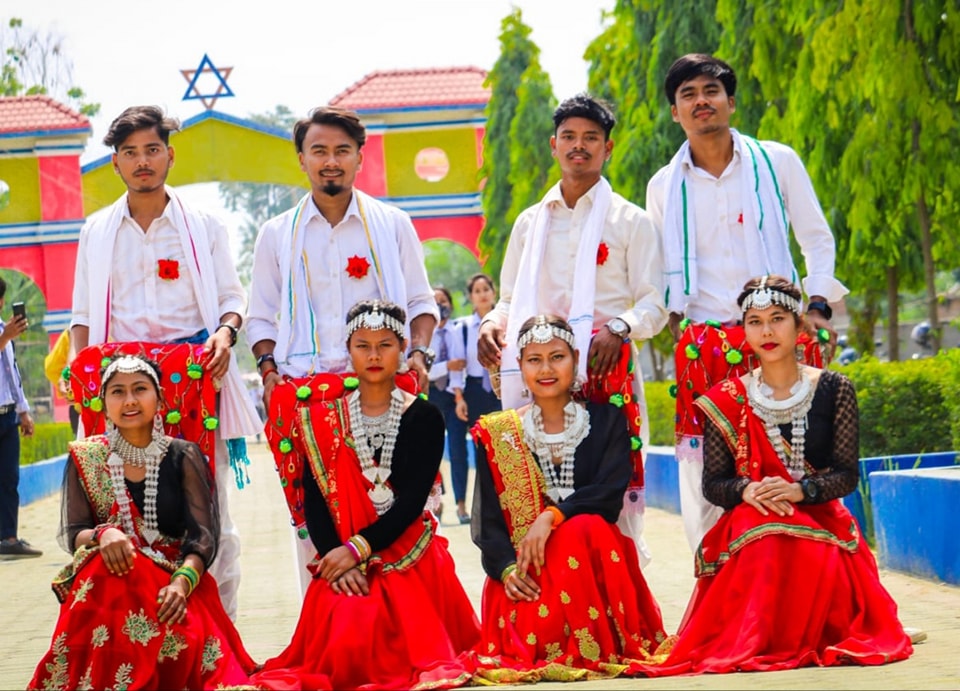
Tharu community of Nepal
“On the second day of Atwari, that is, on the day of Fahrar, we also take a bath in the morning and cook rice and vegetables,” he said. “On the day of Fahrar, there are five to seven types of vegetables, meat and vegetables are mandatory. After cooking all the dishes in this way, we worship Bhyawa in Bahri Konti and take out the rice and vegetables that are in our share in the name of our sisters and eat them. The food taken out in this way in the name of our sisters is called Agrasan (gift) in the Tharu language.” He said that the same Agrasan is given to married daughters and sisters on the second day of Atwari. Since there is a popular belief among the Tharu community that after worshipping Bhaywa in Atwari, one becomes as strong as Bhim among the five Pandab, he said that even today there is a tradition of offering food eaten in Atwari in the name of Bhyawa in fire and performing puja with Chal and Mohi.