Kathmandu, 10 Nov: Representatives of the Chinese company Chengdu Jian Food Company, who had returned to their home country following the vandalism, arson, and looting incidents of September 9 (Bhadra 24) that created unrest in Nepal, have now returned to Nepal.
This company had received approval from Nepal’s Department of Industry to make the largest-ever investment in Nepal’s meat processing sector. On July 23 (Shrawan 8), the department approved a direct foreign investment of NPR 20 billion for the company. Seven representatives from the company arrived in Nepal last Thursday and requested an appointment with Prime Minister Sushila Karki for Friday.
Along with meeting the Prime Minister, they have also planned to visit their project field sites. Additionally, five more representatives from the Jian Company are scheduled to arrive in Nepal on Tuesday.
Partnership and Resumption of Investment Plans
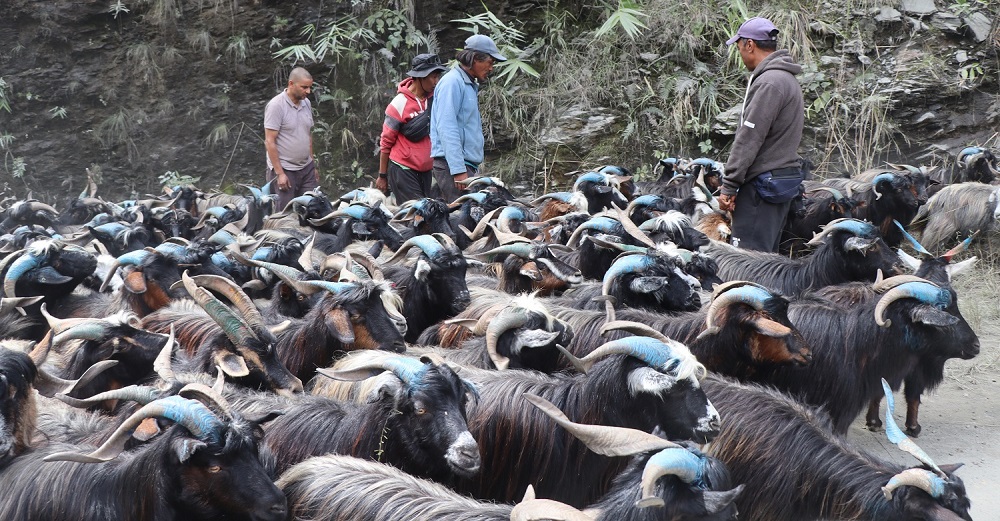
The company’s plan is to process meat in Nepal, export it to China, and establish a complete production cycle from livestock farming to processing. For this purpose, the company had partnered with Himalaya Food International in Nepal.
According to representatives from Himalaya Food International, the Chinese company had already brought in more than NPR 350 million before the unrest on Bhadra 24. However, after the protests, the Chinese representatives returned home and were initially reluctant to come back.
“After they left, a board meeting was held,” said a representative of Himalaya Food. “They had faced similar problems in Pakistan before. They began to think investment in Nepal might also not be possible. The board even discussed labeling Nepal a ‘high-risk country’ and suspending immediate investment.”
Later, Nabin Sharma, then-chairman of Himalaya Food International, visited China with facilitation from the Chinese government, which encouraged and supported the continuation of the project. “I signed an agreement to resume the investment partnership once the situation in Nepal improved,” Sharma said.
As part of the new arrangement, the Chinese Jian Company would take a 78% share in Himalaya Food International, while the previous Nepali shareholders would retain 22%. Mr. Wu Xiang, a representative from Jian Company, has been appointed as the new Chairman of Himalaya Food International.

Renewed Commitment and Future Plans
After returning to Nepal, Sharma informed that as the situation normalized, the Chinese delegation confirmed their return. The company now plans to begin operations rapidly, with a goal to start meat processing by February 2026, following their scheduled meeting with Prime Minister Sushila Karki to ensure investment security.
“They want assurance from the government regarding peace and protection of their investment,” Sharma explained. “Once we meet the Prime Minister, we will proceed to the field.”
Previously, the plan was to invest NPR 20 billion from the Chinese company and raise additional funds through Nepali banks. Now, the Chinese side has agreed to bring in even more investment directly. “They said bank loans in Nepal are expensive, so they will bring the required funds themselves,” Sharma added.
According to him, an additional NPR 2 billion investment approval has been requested from Nepal Rastra Bank this week. Currently, construction work is being handled by the Jian Company, while the operations, processing, and export will be managed by Himalaya Food International.
The industry aims to produce 200,000 metric tons of meat and 55,000 metric tons of by-products (such as hides, internal organs, and heads) annually. The plant will be located on 100 bighas of land in Marin Rural Municipality–4 of Sindhuli District, employing 5,156 workers once fully operational.
The company has planned to begin production and export within two years. According to the company’s investment schedule, NPR 6 billion will be invested in the first year, NPR 10 billion in the second, and NPR 4 billion in the third year.
China, currently the world’s largest meat consumer, imports meat from distant countries like Australia, Argentina, and Brazil. Because of Nepal’s geographical proximity and lower production costs, Chinese investors see strong potential for establishing meat processing industries in Nepal.