This happened about 64 years ago, when Jane Goodall was just 26 years old. She went to Tanzania to study chimpanzees. At that time, she had no formal scientific background or qualifications. But she arrived at the Gombe Stream Game Reserve in Tanzania with a single purpose: to study chimpanzees.
Today, her research has transformed our understanding of the behavior of these animals. It has revealed new facts. To achieve this, she spent a long time with these animals, stayed close to them, and observed them in great detail.
Her love for animals started from a young age. She began reading books written by biologists to learn more. After finishing school, she worked as a waitress and in the film industry, mainly to raise money for her research.
By 1957, she had saved enough money. After that, she went to meet the renowned Kenyan-British professor Louis Leakey. Professor Leakey was a famous paleoanthropologist—a scientist who studies prehistoric humans and their ancestors. Jane shared her research plan with him.
Louis Leakey was impressed after hearing her plan and offered her a job as an assistant at a museum. Over time, Leakey became Jane’s mentor as well.
Initially, Jane did not go to Tanzania alone for her research. Following security protocols of that time, her mother accompanied her as a guardian. However, her mother stayed only for about three months before returning home.
Those early days were very challenging for them. They stayed in army tents deep in the jungle, and during that time, they contracted malaria. On top of that, whenever they made a footstep sound, chimpanzees would hide in the bushes. It was a difficult and frightening period, but Jane did not give up.
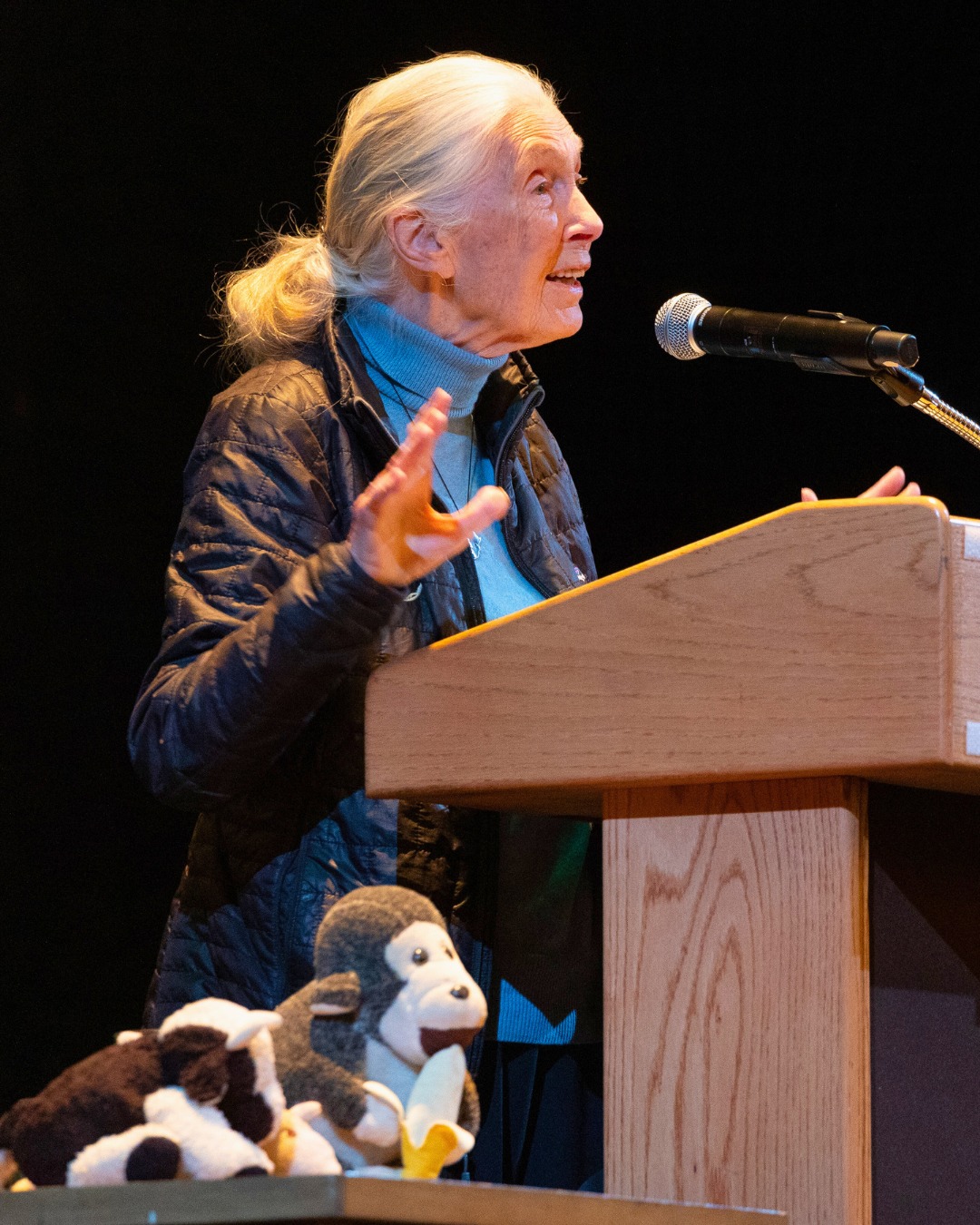
This picture is taken from her facebook of 25 July 2025
Gradually, she learned the jungle trails and became accustomed to walking through dense forests. In a way, she became obsessed with her study. Eventually, she started going alone to the forested hills. Each day, she tried to get close to the places where chimpanzees fed, attempting to live near them and observe their natural habitat.
While in the jungle, she wore clothes of the same color every day. She never forced herself on the chimpanzees; instead, she waited patiently where she thought they would come. She never followed them if they didn’t show up. This approach slowly made the chimpanzees stop fearing her and even become curious.
The jungle also had many other monkeys. At first, they too ran away when they saw her, but gradually they started coming closer. As she got closer to the chimpanzees, she discovered they were not herbivores as previously thought, but omnivores.
She learned that chimpanzees communicated with each other when they hunted for meat. She also gained insights into their family relationships. In chimpanzee society, one female can mate with many males, or a male can take a female with him to keep. They patrol the boundaries of their territory and try to keep strangers out, but bring young females into their area.
This understanding about chimpanzees was significant. To study them, Jane took an unconventional approach—she named each chimpanzee as if they were individuals.
She named one male chimpanzee David Greybeard because she first saw him making tools. Jane discovered chimpanzees, like humans, make and use various tools they need.
For example, they use sticks to get ants or termites, or to drink water from small holes, or tear leaves like a knife. At that time, this discovery was groundbreaking because previously only humans were known to use tools historically.
She also discovered new information about chimpanzee communication—non-verbal signals. According to her, when chimpanzees meet after being apart, they greet each other like humans—shaking hands, hugging, and even kissing.
Chimpanzees are also considered close relatives of humans, especially regarding how they raise their young. Jane found that chimpanzees raised in difficult childhoods tend to struggle forming close relationships as adults and can be aggressive like humans.
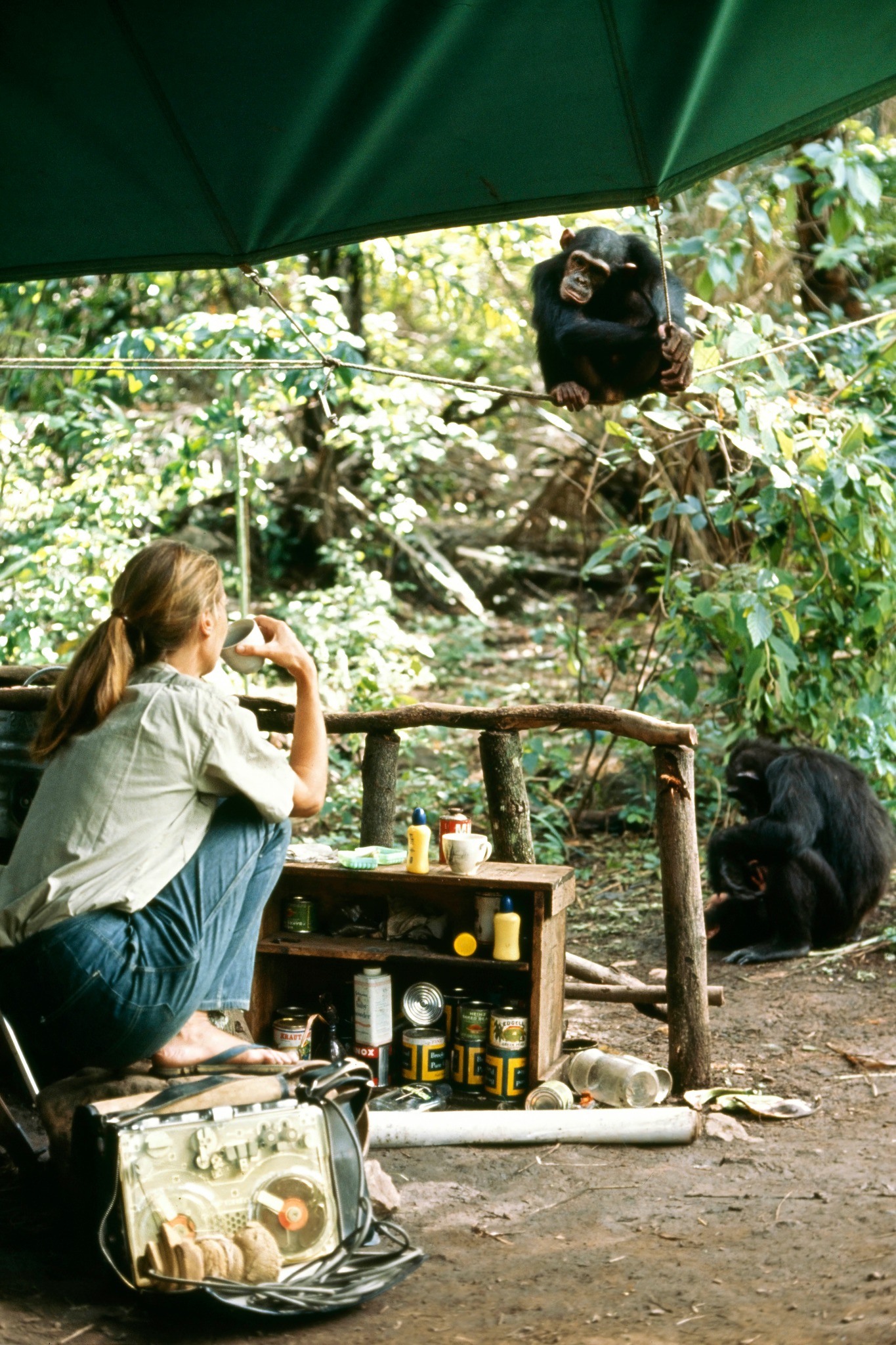
Jane discovered all these facts without any formal education. But in 1962, Leakey helped her earn a PhD based on the results of her studies despite her lacking a formal degree. That same year, the National Geographic Society sent wildlife photographer and filmmaker Hugo van Lawick to document her work.
As a result, in 1965, the documentary “Miss Goodall and the Wild Chimpanzees” was made, which greatly helped bring Jane’s discoveries to public attention. Later in 1967, Jane married Hugo van Lawick.
Jane’s fearless and focused research strengthened evidence that humans and chimpanzees share a common ancestor. According to research to date, chimpanzees and humans share about 98.6% of their DNA.
She is now 91 years old. Having spent over 60 years studying and conserving wild chimpanzees, she remains active today, traveling worldwide to raise awareness about conservation and the environment.