April 25, 2026 4:40 pm
Category Not Found!
April 25, 2026 4:40 pm

SYRIA-CONFLICT-DAMASCUS

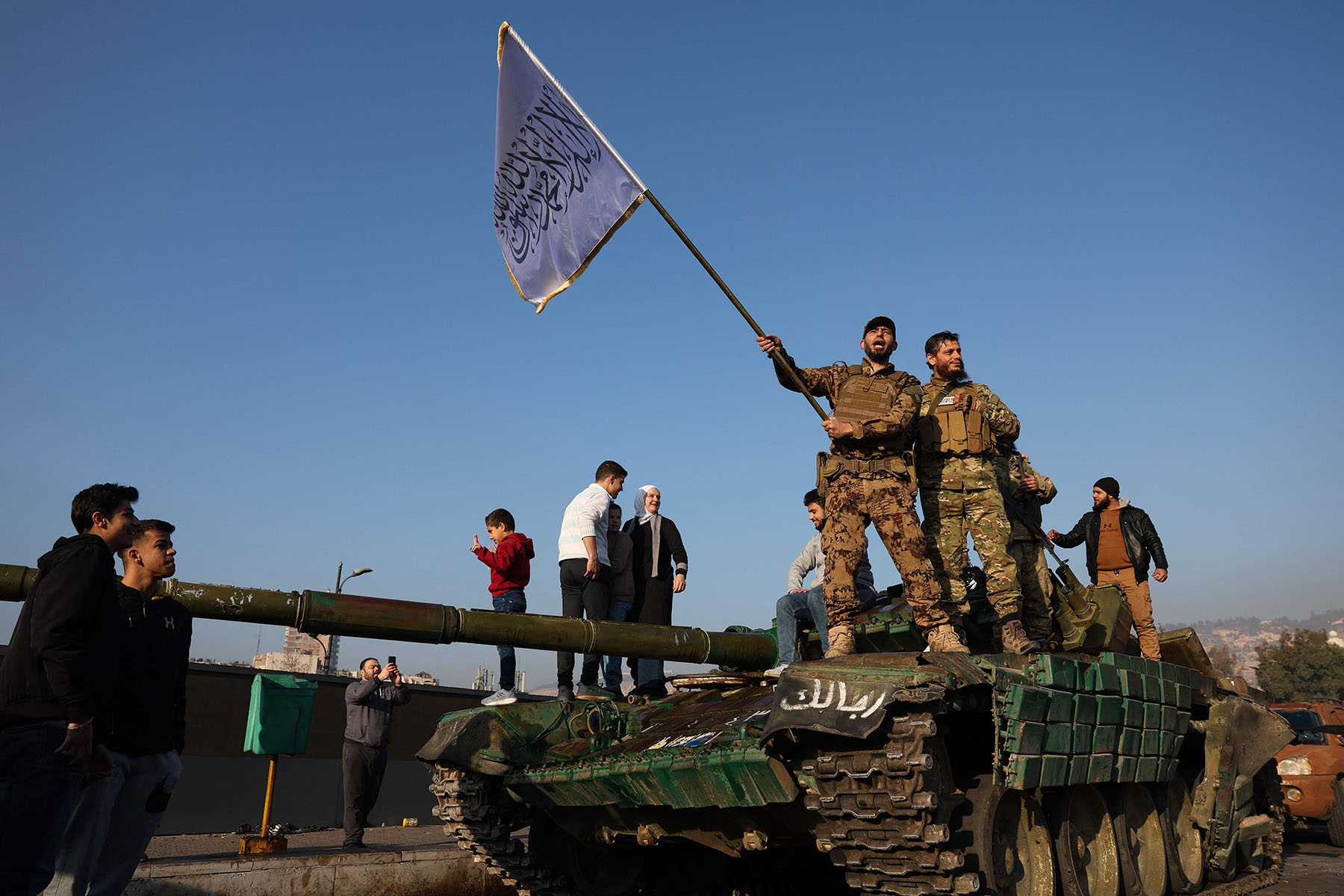
An anti-government fighter waves an Islamic flag from atop a tank in Damascus on December 9, 2024. Syrians flocked to the main square of the capital city Damascus on December 9 to mark what many regard as a long-awaited new dawn after the fall of president Bashar al-Assad. Assad fled to Russia the day before after a lightning offensive spearheaded by Islamist rebels ousted him from power, opening a new chapter in Syria’s history after five decades of rule by his clan. (Photo by OMAR HAJ KADOUR / AFP)

Recent developments in Syria have been dramatic, with President Bashar al-Assad reportedly fleeing the capital, Damascus, amidst a significant military offensive by opposition forces. This marks the end of the Assad family’s 50-year rule over Syria. The opposition’s rapid advances have captured key territories, including the cities of Homs and Daraa, and they have declared a “new era” for the country. Assad’s current whereabouts remain unknown, though there are speculations that he might have sought refuge abroad, potentially in Russia​.

The swift collapse of regime defenses is attributed to weakened support from key allies like Russia and Iran. Russia has been heavily engaged in Ukraine and has limited its resources in Syria, while Iran has faced setbacks in the region, including losses within Hezbollah. The power vacuum created by Assad’s departure is expected to shift the regional dynamics, possibly leading to further instability unless a strong peace process is initiated​.

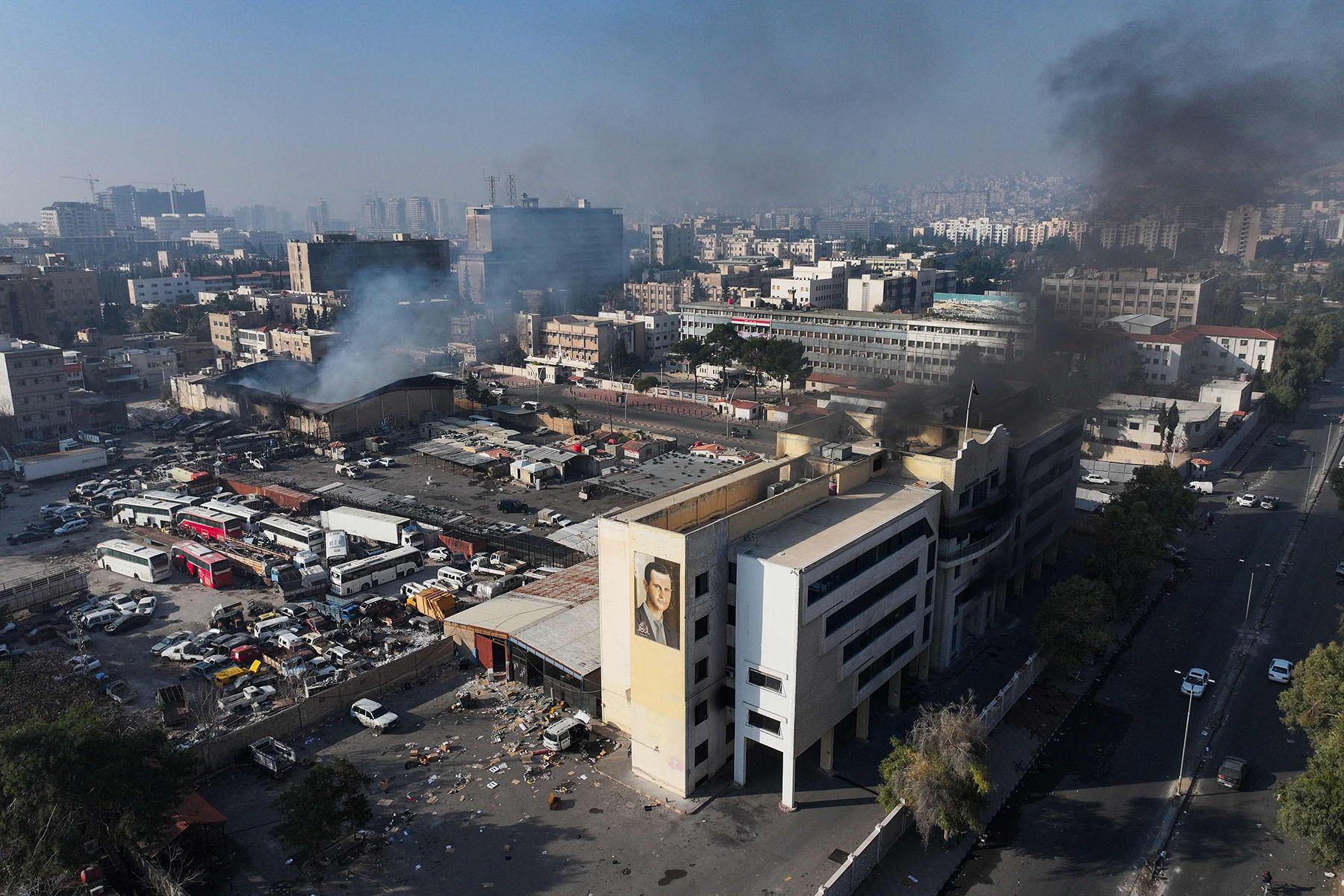
This aerial photo shows a portrait of ousted president Bashar al-Assad displayed on the side of a burning government building in Damascus on December 9, 2024. Syrians flocked to the main square of the capital city Damascus on December 9 to mark what many regard as a long-awaited new dawn after the fall of president Bashar al-Assad. Assad fled to Russia the day before after a lightning offensive spearheaded by Islamist rebels ousted him from power, opening a new chapter in Syria’s history after five decades of rule by his clan. (Photo by OMAR HAJ KADOUR / AFP)

These events have brought renewed attention to the prolonged Syrian conflict, signaling an urgent need for international efforts to stabilize the region and promote a political solution.

The leader of the Syrian rebel coalition is Abu Mohammad al-Julani, who heads Hayat Tahrir al-Sham (HTS). This group played a significant role in the recent offensive that led to the fall of Bashar al-Assad’s regime. HTS, originally an Islamist group, has been instrumental in capturing major cities like Aleppo and advancing on Damascus during the uprising.

Interim Government

There is an interim government in parts of Syria, particularly in regions controlled by opposition forces. The Syrian Interim Government (SIG), based in the areas of northern Syria supported by Turkey, functions as a parallel administration to the Assad regime. Its structure includes ministries for key sectors such as defense, health, and justice. Abd al-Rahman Mustafa currently leads the SIG and oversees efforts to maintain governance, manage local services, and address challenges like border control and internal security​.

The SIG operates within a fragmented political landscape, with limited international recognition, relying on support from Turkey and opposition factions. The governance challenges include managing a diverse coalition of armed groups and maintaining public services amidst ongoing conflict​.

Abu Mohammad al-Julani
Abu Mohammad al-Julani is a prominent and controversial figure in the Syrian conflict, known as the leader of Hay’at Tahrir al-Sham (HTS), a dominant rebel group in northwestern Syria. Al-Julani rose to prominence during the Syrian Civil War and has played a pivotal role in shaping the opposition landscape.

Abu Mohammad al-Julani

Background:

  • Full Name: His real name is Ahmad Hussein al-Shara.
  • Origins: He was born in 1982 in Daraa, Syria.
  • Early Associations: Al-Julani reportedly joined jihadist movements in Iraq during the early 2000s, where he aligned with al-Qaeda under Abu Musab al-Zarqawi. He later returned to Syria following the outbreak of the civil war in 2011.

Leadership in HTS:

  • Al-Julani initially led the al-Nusra Front, al-Qaeda’s Syrian affiliate, but later distanced himself from al-Qaeda in 2016 to form HTS. This move was likely aimed at gaining broader support among opposition factions and international recognition.
  • HTS operates predominantly in Idlib and controls significant parts of northwestern Syria, serving as a de facto government in those regions.

Ideological Stance:

  • While originally linked with global jihadist movements, al-Julani has since sought to portray HTS as a nationalist Syrian opposition group, focusing on removing Assad rather than promoting global jihad. However, HTS remains a controversial player, designated as a terrorist organization by many nations.

Recent Role:

  • Al-Julani has been a key figure in the Syrian opposition’s recent victories, including the push that led to the fall of Assad’s regime in Damascus. He is widely recognized for his strategic leadership and ability to unify various factions, although his group’s strict governance has faced criticism​.
 
Picture of Phatam Bahadur Gurung

Phatam Bahadur Gurung

Recommendation

Latest Update

Login

Please Note:

  • You will need to register in order to leave a comment.
  • You can easily log in using your email, or through Google, Facebook, and Twitter.
  • If you prefer not to comment with your real name, you can change your display name and profile photo to any nickname of your choice. Feel free to comment; your real identity will remain confidential.
  • With registration, you can view a complete summary of your comments, replies, and likes/dislikes in your profile.