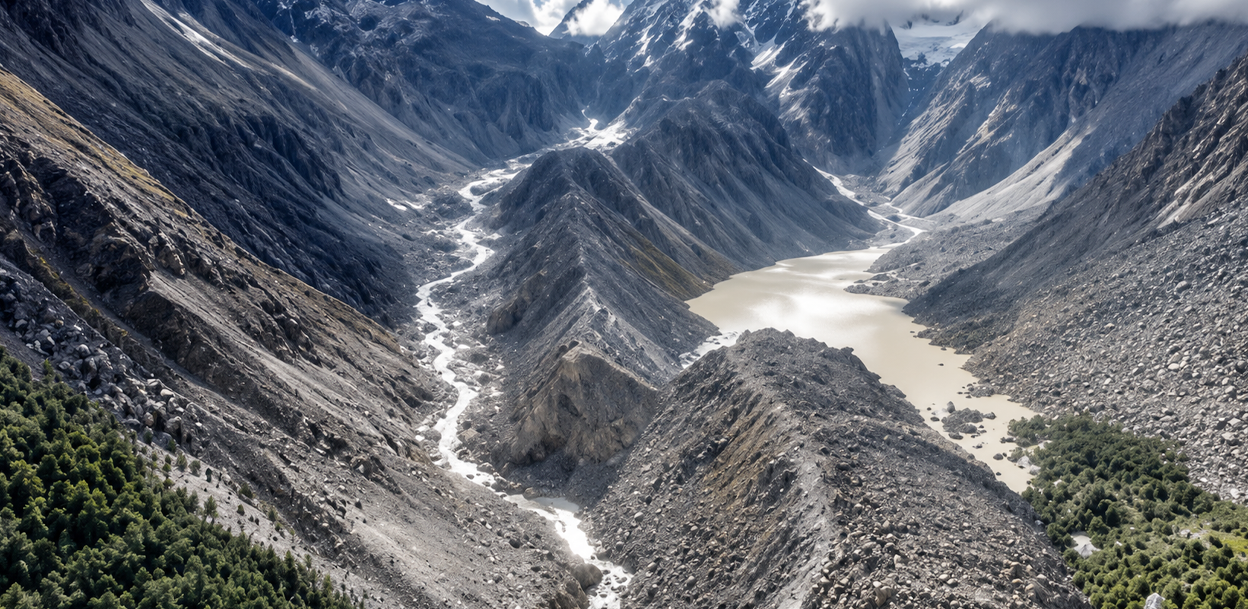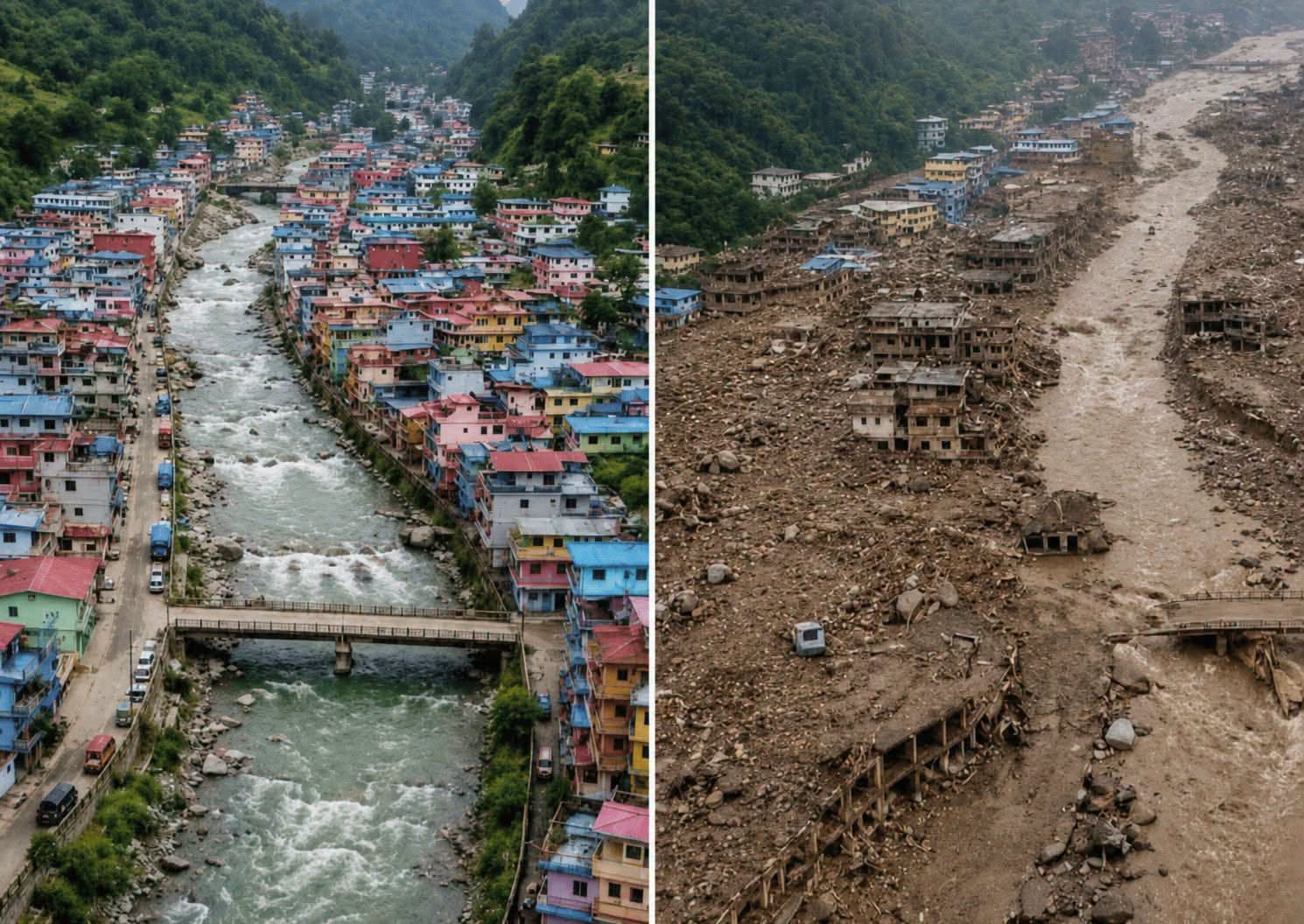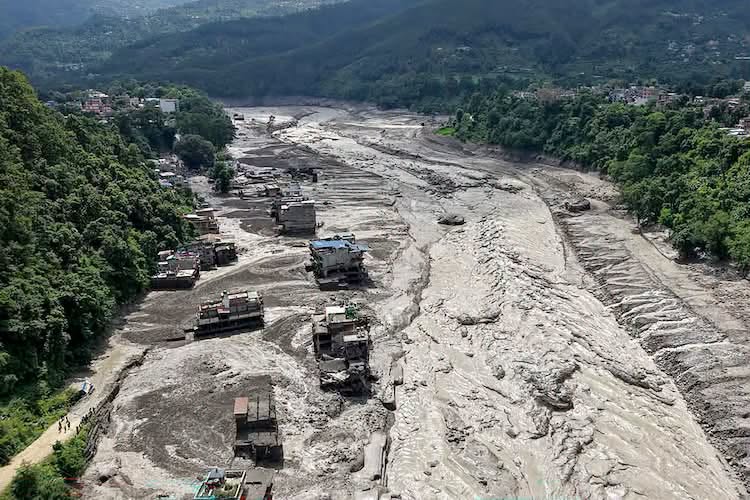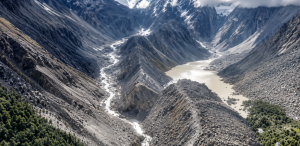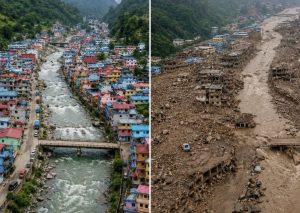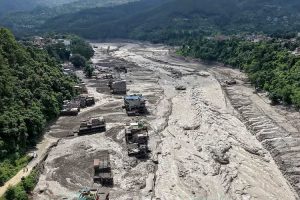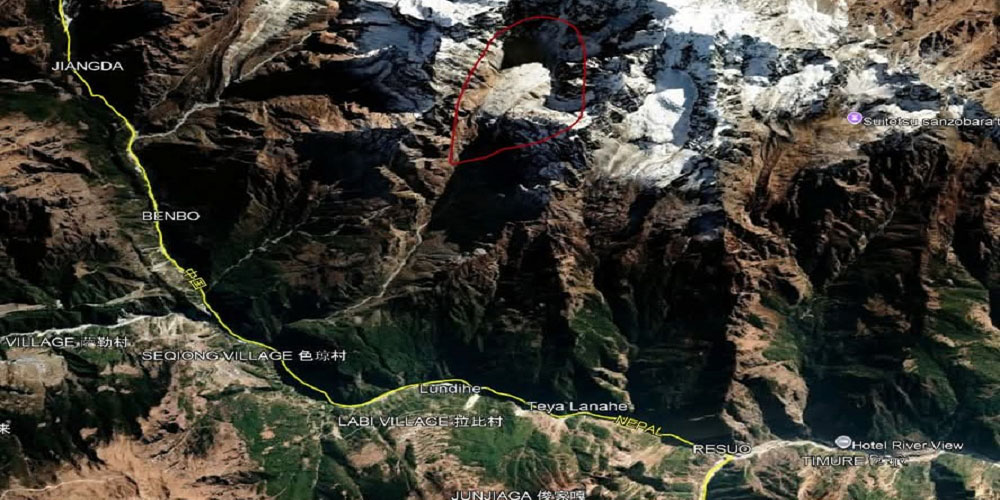
Kathmandu, 29 August: A scientific study has confirmed that a large mass of snow broke away from a point just below the northern summit of Langtang Lirung and fell, triggering a high-velocity glacial flood. Chinese and Nepali glaciologists reached this conclusion after analyzing satellite and drone images, determining that a section of the mountain broke off and that the resulting destructive glacial flood entered Nepal through the Lhende River and the Bhote Koshi River. The National Disaster Risk Reduction and Management Authority (NDRRMA) has also accepted this conclusion.
The Department of Hydrology and Meteorology said that on Wednesday, the day the glacial flood occurred, water equivalent to around 20 million cubic meters flowed from the affected area through the Bhote Koshi River and reached the Devghat area of Chitwan. Nepali flood expert Binod Parajuli said the figure was calculated after adjusting for the density of the normally flowing river water. The risk of the lake formed at the flood’s source bursting remains high.
According to flood expert Binod Parajuli, an excessive amount of water from the lake overflowed the dam on Friday night, increasing the flow of the Bhote Koshi more than it had been during the daytime. Parajuli said information that the flood flow had increased on the Chinese side was relayed to the Rasuwa District Police Office, and the information subsequently reached Kathmandu.
He said it was still unclear late Friday night whether the increased flow was caused by the lake breaching or simply by the increased volume of water flowing downstream. Efforts were continuing late into the night to obtain information by maintaining contact with the Chinese side. Due to the increased flow, the Flood Forecasting Division has urged people to remain on high alert from the Trishuli River’s downstream areas to Mugling in Chitwan.
He said, “The water has overflowed and flowed downstream, causing a normal rise in the Bhote Koshi’s flood level. It is not as severe as Wednesday’s flood.” Nevertheless, repeated alerts, phone calls and messages are being sent to security personnel and teams involved in rescue and relief operations to keep them vigilant and ensure safety.
Meanwhile, the Chinese Embassy in Nepal said that over the past two days, avalanches containing snow and rocks have occurred in a tributary on the Nepali side of the upper reaches of a river in the Nepal-China border area, causing a devastating flood disaster on both sides of the border.
In a statement issued Friday, the embassy said, “Rescue and emergency response on both the Nepal and China sides are now at a critical stage. Local communities and relevant personnel in downstream areas of the lake formed by the landslide need to closely monitor changes in the river water level.”
The embassy also urged authorities and local communities to remain highly vigilant and make the necessary preparations for emergency response and preventive measures. It said that both Nepal and China are coordinating efforts to monitor the situation, assess risks and manage potential threats. The embassy also urged the public to follow official information, avoid unverified reports and refrain from creating unnecessary fear.
Five Hydrological Monitoring Stations Swept Away
The Bhote Koshi flood has swept away five hydrological monitoring stations operated by the Department of Hydrology and Meteorology. As a result, scientific information on the river’s water level has been unavailable for the past two days.
According to Parajuli, the department’s monitoring stations at Rasuwa, Syafrubesi, Langtang, Betrabati and Malekhu were washed away by the flood. He added, “This has raised concerns about how we can determine how much the flood level has increased. On Saturday, we are going to assess whether it is possible to monitor the flood by installing CCTV cameras in Rasuwa.”
Biggest Glacial Flood in 450 Years
Glaciologist Dr. Rijhan Bhakta Kayastha said the disaster was the largest glacial flood to cause such a major catastrophe in Nepal in 450 years. He said studies indicate that a similar disaster had previously occurred in the Pokhara Valley, burying the entire city of Pokhara.
Another researcher, Dr. Sudeep Thakuri, estimates that this could potentially be the largest glacial flood ever recorded in the South Asian region.
The increasing impact of rising temperatures in Nepal’s mountains is accelerating the process of ice melting, the formation of glacial lakes and their eventual outburst, experts say.