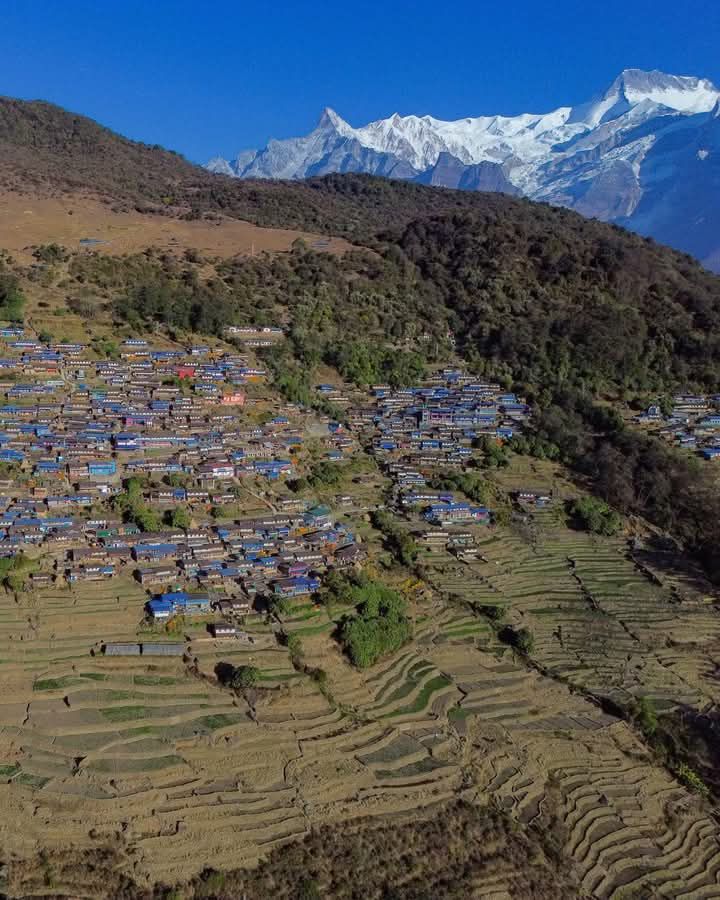
Gandaki, 31 January: A sprawling settlement surrounded by forests, paths paved with stones, and sacred shrines of the Gurung community’s religious faith placed here and there. Anyone who visits the tourist village of Sikles in Kaski is attracted by the Gurung culture, tradition, and history along with its natural beauty.
Sikles, which is predominantly inhabited by the Gurung community, is very important in terms of culture and tourism. Sikles’s identity is not limited to that, it is also a historical place politically. Sikles is also considered the birthplace of Nepal’s peace process.
The then Home Minister and coordinator of the government negotiation team, Krishna Prasad Sitaula, had reached Sikles to discuss with the then armed protesting Nepal Communist Party (Maoist) Chairman Pushpa Kamal Dahal ‘Prachanda’ to create an environment for talks. Immediately after that, the top leadership of the Maoist party, including Chairman Prachanda, appeared in public in Baluwatar on Asad 2, 2063(16 June 2006). A peace memorial was unveiled at this place, which became the starting point of the peace process, some time ago.
Located 37 kilometers from Kahunkhola in the tourist capital Pokhara, this place is at an altitude of about 1,950 meters above sea level. In recent years, as the influx of domestic and foreign tourists has increased, the number of homes and hotels in Sikles has started increasing.
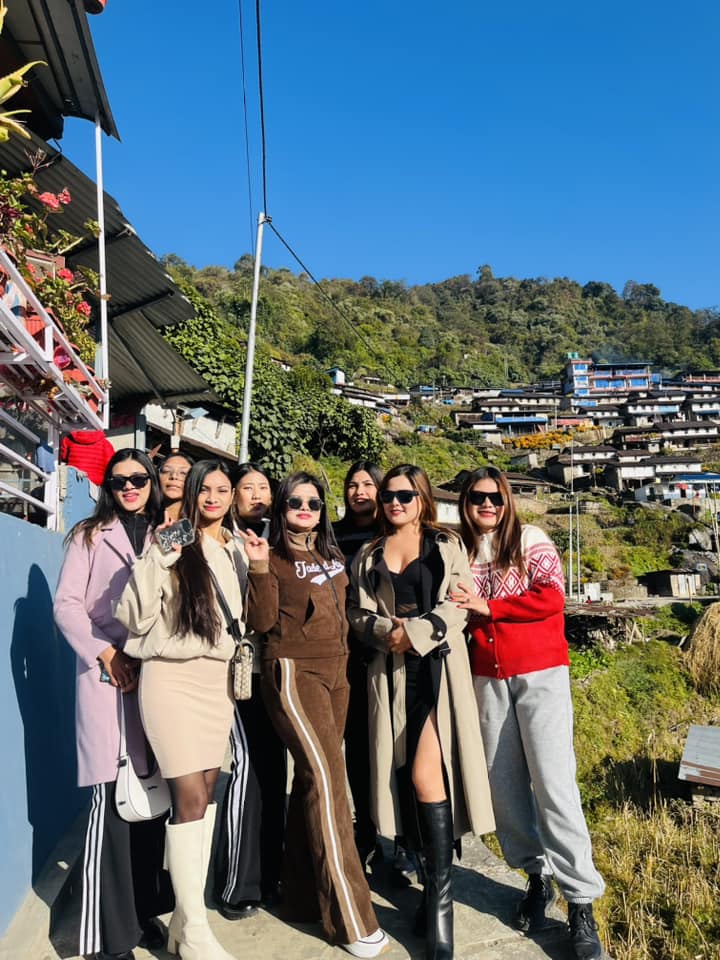
The warm hospitality of the locals in Sikles, rich in nature and culture, has been luring tourists. This village, which is under the Annapurna Conservation Area Project (ACAP), is located in Ward No. 1 of Madi Rural Municipality. It is customary to welcome visitors with hot tea and corn and soybeans upon entering Sikles. In the evening, hotel and homestay operators offer delicious dishes.
Similarly, there is a tradition of saying goodbye with tika and flowers. Lilimaya Gurung, the owner of Sajan Indreni Guest House, has the experience that tourists who come to Sikles once come back again. She says that Sikles, which has its own unique uniqueness as a Gurung village, is also a place to see and understand the vibrant aspects of nature and culture. She, who has been operating a hotel in Sikles for the last ten years, initially started a homestay. Currently, 28 hotels and 36 homestays are serving tourists in Sikles.
Devijung Gurung, ward chairperson of Madi Rural Municipality-1, said that the Eco Museum operated by the Annapurna Conservation Project (ACAP) in Sikles and the koibos built here are becoming a destination for researchers. The Eco Museum has materials that vividly depict the cultural heritage and traditions as well as the lifestyle of the Gurung community (including other ethnic minorities). According to Chairman Gurung, efforts have been made to showcase the lifestyle of the Gurung community in particular in the museum.
The museum, which has developed as a unique place of Gurung civilization, is becoming useful for anyone who wants to know about Gurung civilization. The museum houses Gurung culture as well as environmental studies and various herbs found in the Sikles region.
The museum provides information and observation about the herbs found in the Sikles region, such as Kutko, Kurilo, Satuwa, Vish, Nilobish, Jatamasi, Siltimur, Panchaaule, and Yarsagumba. In addition, materials that vividly depict the costumes, culture, and lifestyle of Gurung culture are on display. The original costumes of the Gurung community are kept in the museum. Tourists also take pictures dressed in these costumes. As soon as you enter the museum, you can see the statues of Gurung religious leaders Pachyu, Lheuri, and Banpo Lama.
The museum, which has been in operation since 2071 BS(2014), is a destination that should not be missed on the ‘bullet list’ of tourists, says Kristi Gurung, secretary of the museum management subcommittee. In the first six months of the current fiscal year, 1,700 people have visited the museum. The entrance fee to the museum has been fixed at Rs 50 for Nepali citizens, Rs 30 for students, and Rs 150 for foreign tourists.
Ward Chairman Gurung informed that CCTV has been installed at 64 different places for the safety of tourists. According to him, systematic arrangements have been made for stairs, roads, and street lights to develop Sikles as a cultural village. 200 kilowatts of electricity is being supplied regularly from the locally operated Sikles Hydropower. Along with the museum, a peace memorial and Sikles Park have also been built in Sikles. The views of various mountains visible from here are a means of attracting tourists.