Russia will demand a written pledge barring Ukraine from NATO membership as a condition to end the war, but some NATO countries will block such a decision, Oleksandr Leonov, executive director of the Center for Applied Political Studies “PENTA”, told Radio NV on May 30.
Leonov noted that Washington initially agreed to Ukraine forgoing NATO membership early in talks, which Russia now views as a given concession, prompting further demands.
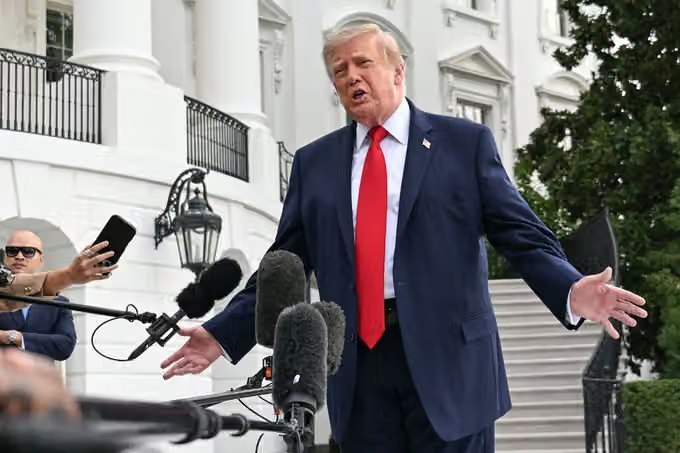
However, U.S. President Donald Trump could only delay Ukraine’s NATO bid during his term, not permanently block it, the expert said.
“As for NATO’s decision, there are statements, and these are not only statements by [Secretary General] Mark Rutte, but also statements by his predecessors, and statements by some European Union officials, high commissioners, that Russia has no right to influence NATO’s decision,” the political scientist added.
“And Ukraine will be a member of NATO, but it’s just a matter of time. If we are talking about such a decision (Ukraine’s abandoning NATO aspirations – ed.), obviously, Russia will demand a document, saying that we will not take their word for it. And there may be real problems with this document. There are countries that will block such a decision, or even NATO resolutions.”
On May 28, Reuters reported, citing sources, that Russian President Vladimir Putin’s conditions include a formal Western commitment to halt NATO’s eastward expansion, potentially excluding Ukraine, Georgia, and Moldova.
U.S. presidential envoy Keith Kellogg said on May 29 that Washington is open to discussing Russia’s demand, which the Kremlin welcomed.
Radio Liberty reported on May 31, citing informed sources, that NATO is not actively discussing Russia’s written pledge demand not to expand eastward.
Conclusion
Russia is pushing for NATO to officially ban Ukraine’s future membership in the alliance, viewing Ukraine’s accession as a security threat. However, several NATO allies disagree with this demand and are reluctant to limit the alliance’s open-door policy. This disagreement has created tensions among NATO members as they navigate how to respond to Russia’s request while supporting Ukraine.