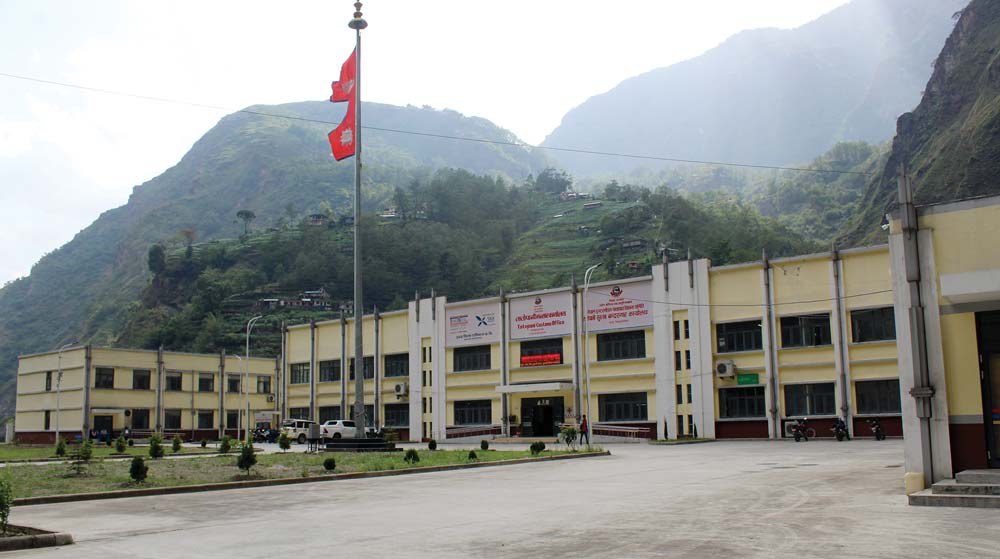
Kathmandu, 9 Jul: After the structure of the Rasuwagadhi border crossing, which connects Nepal and China, was destroyed by flooding, the alternative border crossing is once again expected to be Tatopani in Sindhupalchok. However, the infrastructure at Tatopani is still not fully restored. The border post, which was rebuilt and reopened in September 2023 after being damaged by the 2015 earthquake, is connected by roads that deteriorate even with light rainfall.
On Tuesday, flooding from the Lhendekhola River destroyed the Miteri Bridge at Rasuwagadhi, which links Nepal and China, halting imports and exports. With the Rasuwagadhi crossing closed due to the flood, attention has turned to the Tatopani border as an alternative.
Previously, Rasuwagadhi was considered the alternative to the Tatopani border, and infrastructure work was underway there. However, before the infrastructure construction was completed, flooding caused significant damage. The customs office also suffered major damage, resulting in a halt in imports and exports.
The National Traders’ Association reported that 40 to 45 containers of goods coming from China were damaged. Former association president Naresh Katuwal stated that 15 containers were washed away and the rest submerged. He added that a large quantity of goods brought specifically for the festival of Teej were destroyed by the flood.
He further noted that items such as clothing, ready-made garments, footwear, hydropower equipment, and electric vehicles were damaged. Since 200 to 300 containers remain safe in Kerung, he urged the Chinese government to allow these goods to be returned via the Tatopani border as soon as possible.
Katuwal said that Nepal can bring the goods back from Kerung through Tatopani within three to four days. According to Rajendra Chudal, head of the Tatopani Customs Office, a 20-meter road toward China is currently damaged and blocked. However, since the damage is not severe, Tatopani is likely to become the alternative to Rasuwagadhi.
Customs officer Chudal also said that importers can apply to the Customs Department to change their border crossing. Only a few importers have done so, and if all their goods and investments were damaged at Rasuwagadhi, it could cause problems for import-export trade.

Heavy Damage to Dry Port
The under-construction dry port in Rasuwa has suffered significant damage due to flooding. According to the Nepal Intermodal Transport Development Committee, around 60 percent of the dry port has been damaged. The committee’s Executive Director, Ashish Gajurel, informed that, in addition to the physical infrastructure, there have also been losses among the workers.
At the time of the flood, only 19 percent of the construction work remained to complete the project. However, the flood has washed away all the physical infrastructure. Around 400 meters of the retaining wall on the port site were swept away, and the entire batching plant was destroyed.
According to the committee, various facilities such as the litigation shed, warehouse, inspection shed, toilet blocks, foundation of the warehouse, retaining wall near the entry road, and parking yard facilities have all been completely damaged.
According to the Rasuwa Customs Office, goods worth NPR 74.20 billion were imported and goods worth NPR 3.07 billion were exported through the Rasuwa border during the first 11 months of the current fiscal year. The office reported that revenue collection during this period amounted to NPR 30.05 billion. Trade with China accounts for 13 percent of Nepal’s total trade. Items exported through the Rasuwa border include instant noodles, handicrafts, ready-made garments, Nepali paper, and statues. Imports typically include clothing, electronic goods, and hydropower equipment.