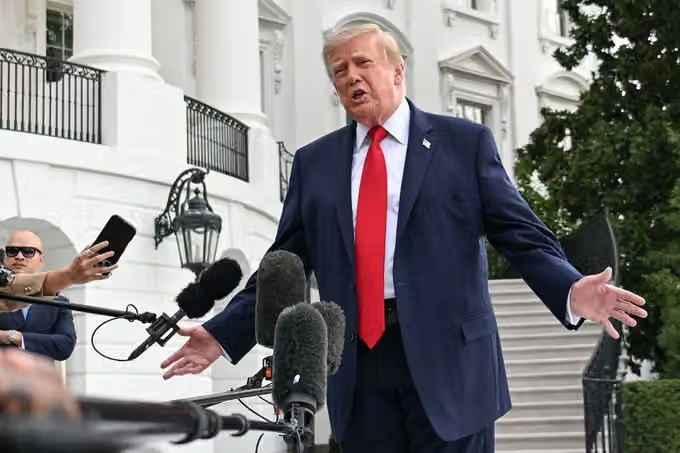
Kathmandu, 22 January: US President Donald Trump has entered the White House for a second term after being sworn in on Monday. Trump, who previously served as US President from 2017 to 2021, was elected as the 47th President of the United States last November.
Trump, who announced his withdrawal from the Paris Agreement during his previous term, has announced that he will withdraw from the Paris Agreement again upon his inauguration in his second term. Stakeholders have expressed concern following his announcement.
Dr. Maheshwar Dhakal, head of the Climate Management Division under the Ministry of Forests and Environment, says that it will not be good for other countries if the US withdraws from the Paris Agreement. “It is not good for a rich and powerful country like the US to withdraw, it will also have an impact on the international community,” he said. “Even if the US withdraws from the Paris Agreement, we will not abandon the issue of climate change. We must be able to bring cooperation based on bilateral relations.”
Climate scientist Raju Pandit Chhetri says that if a country like the US withdraws from the Paris Agreement to mitigate climate change, other powerful countries may also back down from its implementation. He says that the 2024 Climate Change Report published by the World Meteorological Organization (WMO) has highlighted the climate crisis and listed 2024 as the hottest year on record. He said, “When a powerful country backs down from implementing the agreement at a time when the risk of climate change is increasing, countries like Nepal will have to bear the consequences.”
He said that the US is the second largest greenhouse gas emitter in the world and that the US has a greater responsibility to combat the climate crisis. Pandit said, “If the US withdraws from its moral obligation to implement the Paris Agreement, it will not only affect the solution to the climate crisis, but if other countries continue to withdraw in the same way, the problem will be compounded. Other countries should pay special attention to the implementation of the agreement.”
Problems in implementing NCQG
The 29th Summit of the Parties to the United Nations Framework Convention on Climate Change (UNFCCC) was held in Baku, Azerbaijan, from November 11 to November 19. The agreement on the New Climate Finance Goal (NCGF) was seen as an achievement in the COP negotiation process. The agreement by developed countries to provide up to $300 billion annually to developing countries was analyzed as the main positive achievement of COP. However, the demand from developing countries was $1.3 trillion annually.
The Least Developed Countries (LDCs) group expressed dissatisfaction with the commitment of rich countries to provide very little climate finance as per demand, saying that the outcome of COP was not productive. Climate and disaster management expert Dr. Dharmaraj Upreti said that there is a possibility that the implementation of NCCG will face challenges if even the US$300 billion pledged at COP-29 is not made available.
“The US$300 billion climate finance is insufficient in view of the growing climate crisis. Moreover, there is a fear that even that amount will not be available if rich and powerful countries withdraw from their responsibilities,” he said. “In addition, there are multilateral funds such as the Green Climate Fund, the Adaptation Fund, and the Loss and Damage Fund, and the financial size of these funds is equally likely to not increase.” Emphasis has been placed on the need to implement a ‘Loss and Damage Fund’ to address the increasing natural disasters such as floods, landslides, storms, and droughts in poor countries due to climate change.
Challenges in implementing carbon emission reduction goals
Stakeholders have expressed concern that the US’s withdrawal from the Paris Agreement will pose additional challenges to the implementation of the target set for reducing carbon emissions. If the agreement is not implemented, it will pose additional challenges to achieving the target of limiting global temperature increase to 1.5 degrees Celsius, said Naresh Sharma, Deputy Secretary of the Climate Management Division.
“The US is also ahead in the use of clean energy. It remains to be seen how the implementation of the Paris Agreement will progress in practice in the geopolitical environment, although I do not think that this will lead to America falling behind,” he said.
Considering the years 1850 to 1900 as the base year, the Earth’s temperature has increased by 1.4 degrees Celsius so far. Of that, 1.3 degrees Celsius has been caused by humans, according to a WMO study.
The WMO says that there is a significant increase in sea temperatures, a decrease in ice, and major economic and human losses. It concludes that the El Niño effect has further increased the temperature increase. According to the organization’s study, sea levels have risen by 4.77 mm per year from 2014 to 2023. The organization says that in 2023, the equivalent of 1.2 meters of water was lost from the glacier, making it the highest ice melt event since 1953.
As the organization released the study report, UN Secretary-General Antonio Guterres expressed concern about the growing climate crisis globally. The UN and Guterres have recently expressed concern about the climate crisis, saying that the climate crisis is increasing and that it could create a catastrophic situation in the future.
Challenges in mountain security
Climate activist Geeta Pandey believes that if the Paris Agreement to curb global warming is not implemented, Nepal’s mountainous regions will be further affected and the rate of melting of snow from the mountains could increase. “With the increasing global temperature, there is a risk that snow from the mountains will melt and turn into black rock. If the United States withdraws from the implementation of the agreement, the goal of limiting global warming may not be achieved. Countries like Nepal will have to bear the brunt of this,” she says.
A study by the Asian Development Bank (ADB) has shown that the impact of climate change could reduce gross domestic product (GDP) in developing Asia and the Pacific by 17 percent by 2070. According to a study by the International Centre for Integrated Mountain Development (ICIMOD), the impact of climate change in the Hindu Kush Himalayan region is more than three times the global average. According to ICIMOD, glacier melt in the region was 65 percent higher in the decade from 2011 to 2020 than in the previous decade.
Climate activist Abhishek Shrestha says the impact of the US withdrawing from the Paris Agreement, ignoring scientific warnings that global temperatures are reaching unprecedented new levels, will be global. “The US withdrawing from the Paris Agreement is not good for anyone, the US, the world’s largest carbon emitter and major fossil fuel producer, must take responsibility for implementation,” he said.
Reinforcement needed in internal homework
Experts emphasize that Nepal should continue to build its internal capacity after the US withdrew from the implementation of the Paris Agreement. Climate activist Rajan Thapa says that countries like Nepal can move forward by building their economic and technical capacity.
“It was previously estimated that the US could withdraw from the Paris Agreement, which has taught us that we should not rely on just one country for climate finance,” he said. He said that climate finance can be brought in by increasing cooperation with other countries.
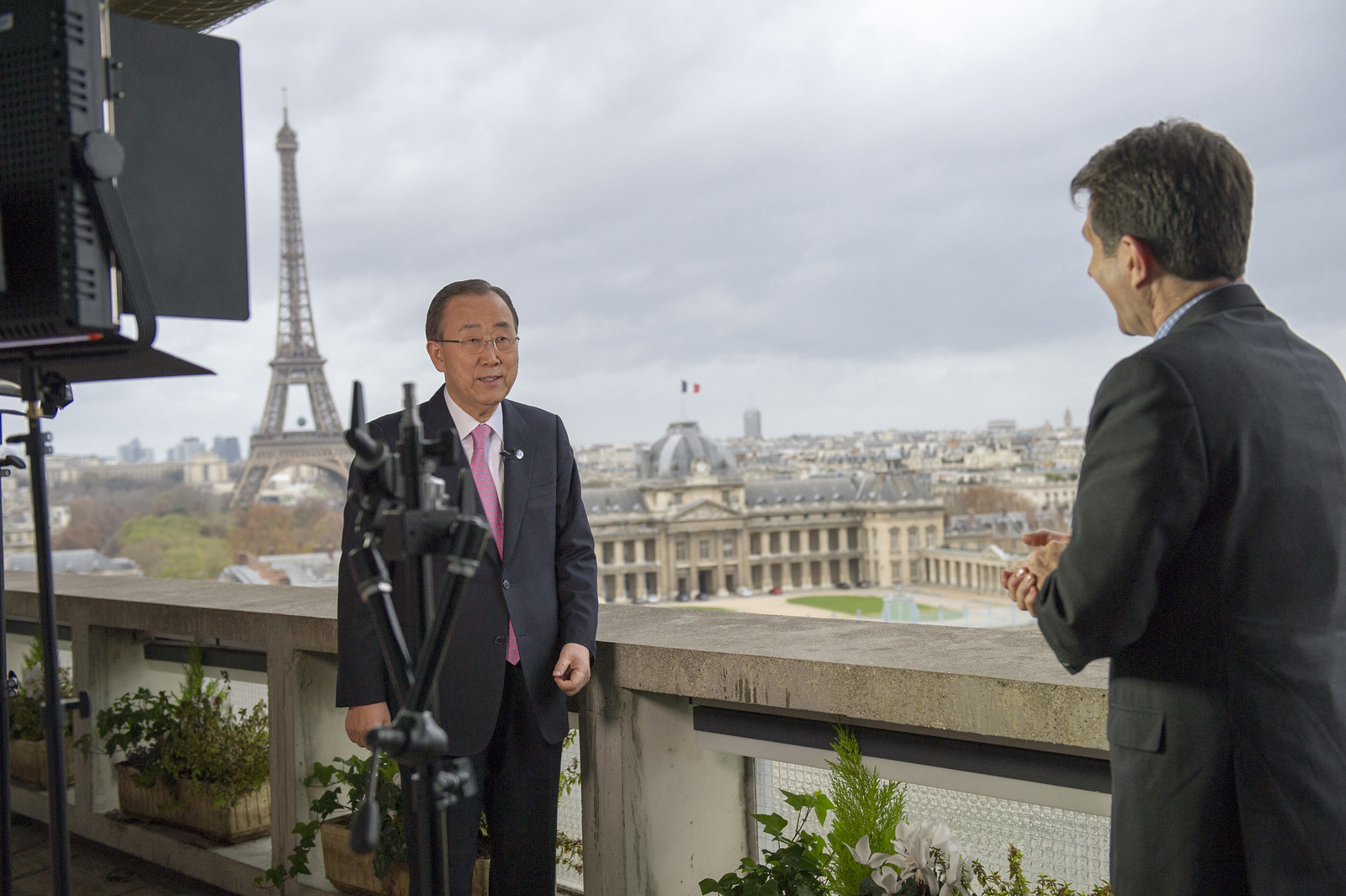
What is the Paris Agreement?
In 2015, the 21st Conference of the Parties to the United Nations Framework Convention on Climate Change (UNFCCC) was held in Paris, France. More than 190 countries from around the world participated in the conference. The participating countries concluded that global warming is causing a climate crisis and that it may eventually lead to the extinction of the Earth, and agreed on an important agenda to limit global warming to 1.5 degrees Celsius. The agreement is known as the ‘Paris Climate Agreement’. To set this goal, a policy on reducing carbon emissions must be formulated and implemented.
The Paris Agreement is being hailed as a historic step. While the agreement is morally binding, it is not legally binding. There is no provision that prevents a party from withdrawing from the agreement because it is legally obligated to reduce climate pollution.
The main negotiators of the Paris Agreement were Americans. The agreement was signed in 2015 during the Barack Obama administration. After the country, Trump announced that the United States would withdraw from the Paris Agreement in 2017. But the withdrawal announcement was not implemented after Joe Biden won the election. Joe Biden announced that he would rejoin the Paris Agreement on his first day in office. The United States had set a goal in December of reducing climate pollution by 66 percent by 2035 compared to 2005 levels.