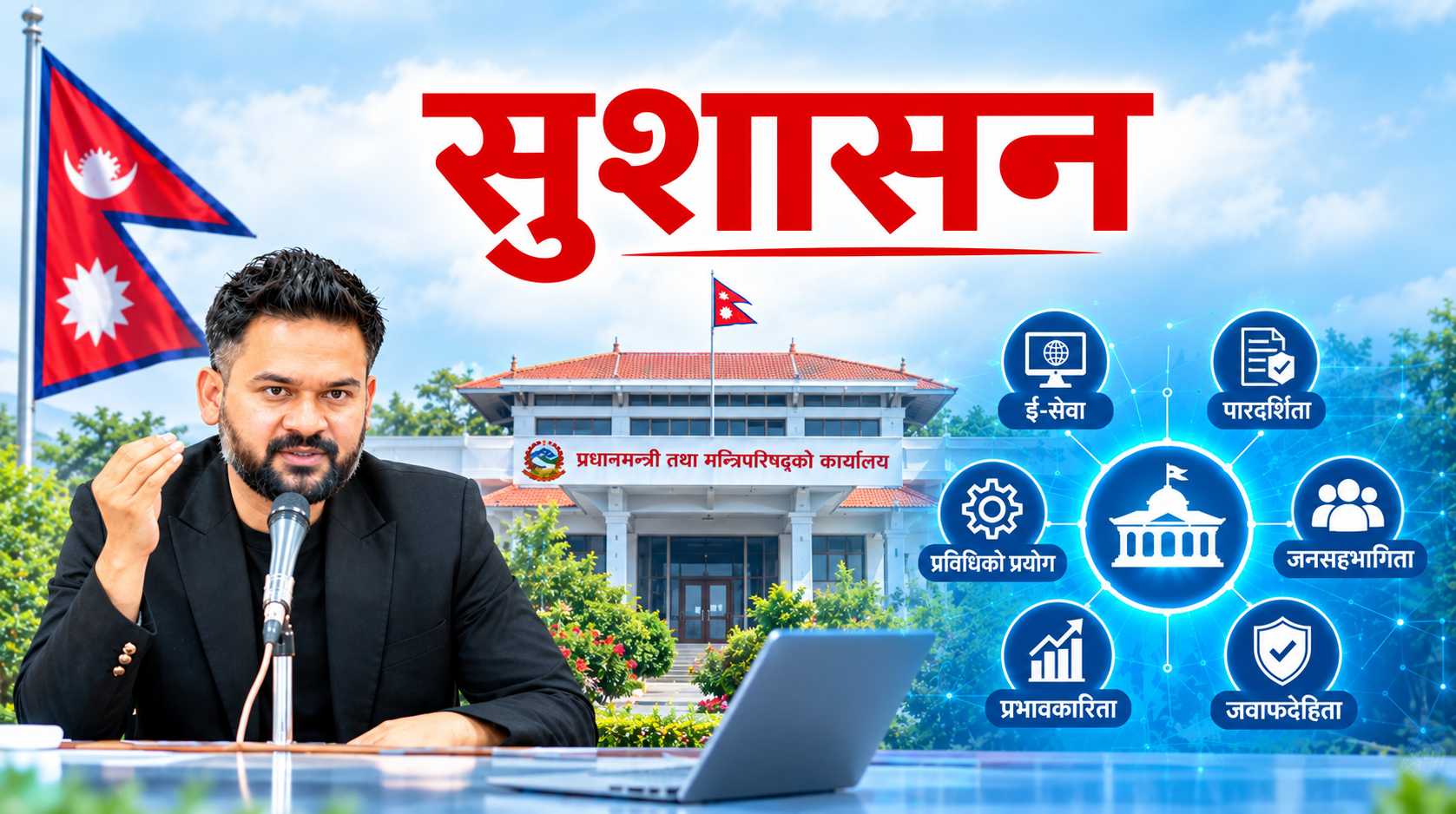
Kathmandu, 30 Sep: The government has succeeded in laying a strong foundation for policy reforms, digital transformation and good governance during its first six months in office. The government’s progress from Chaitra 13, 2082, to Ashoj 12, 2083, has confirmed this achievement, according to the Office of the Prime Minister and Council of Ministers.
The restructuring of ministries, the “Zero Pending Files” campaign in public service delivery, digital facilitation of passport and citizenship services, and Nepal’s strong presence at international forums have been identified as major milestones during the period.
According to details released by the Prime Minister’s Office on Tuesday, the government approved the Government (Allocation of Business) Rules, 2083 immediately after its formation, reducing the number of ministries from 22 to 18. A detailed Organizational and Management Survey was also completed and implemented for the abolition and restructuring of boards, committees and projects considered unproductive or having overlapping areas of responsibility.
National Integrity Policy Implemented
To make public service delivery more effective, the National Integrity Policy, 2083, was approved and implemented. Fiscal Year 2083/84 was declared the “Year of Lawmaking and Reform,” and a high-level committee for legal reform was formed.
The National Agriculture Policy, 2083, and the Integrated National Transport Policy, 2083, have also been approved. The Public Procurement Act (Second Amendment) and the Public Procurement Regulations (15th and 16th Amendments) were issued and implemented.
According to Deepa Dahal, Press and Research Adviser to Prime Minister Balendra Shah, these measures have eased practical and procedural complexities in public procurement.
She said the government also launched integrity, monitoring and zero-pending-file campaigns during the period. Implementation of the 100-point governance reform action plan announced immediately after the government was formed, regular monitoring, and performance agreements with secretaries have helped make public service delivery faster and more effective.
Asset Investigation and Control of Irregularities
According to the Prime Minister’s Office, the government has also strengthened efforts to investigate assets and control irregularities.
The report of the Commission of Inquiry into Government and Public Land (Rawal Commission, 2052) has been implemented, while the report of the Commission of Inquiry into Irregularities in Cooperatives, 2082, has been made public and its recommendations are being implemented.
The government has also strengthened public service delivery and digital transformation initiatives. Following amendments to the Passport Regulations, citizens can now obtain citizenship or passport services from any district.
The postal delivery service for passports has been expanded to 75 districts, allowing passports to be delivered directly to citizens’ homes.
E-Pension System
A digital citizen charter, “Hello Home Affairs,” “Hello Infrastructure,” and a 24-hour call center have been brought into operation. Citizens can now obtain police reports through the Nagarik App.
An e-pension system has also been introduced, allowing retired government employees to verify their pensions from home. The system has made it easier for citizens to access government services without having to visit government offices.
Education, Examinations and Consultation
A fully competitive and merit-based system has been introduced for the appointment of officials at universities and the Teacher Service Commission.
The results of the Secondary Education Examination (SEE) were published within one month, while the Grade 12 results were published within 40 days.
The online system for obtaining No Objection Certificates (NOCs) for foreign study has been interconnected with universities. A continuous assessment guideline has also been implemented for Grades 4 and 5 to reduce students’ anxiety over periodic examinations. The measure has been viewed as an important achievement in education-sector reform.
An additional 318,000 citizens have been enrolled in the health insurance program, bringing the total number of beneficiaries to 10.7 million. The surgical backlog at hospitals has been reduced by 50 percent, while affordable pharmacy services have also been introduced.
Under a campaign against encroachment on public land, 3,457 illegal houses and structures have been removed in the Kathmandu Valley and a total of 4,226 across the country.
Similarly, rapid response mechanisms and district industrial security coordination committees have been established to strengthen security in the industrial and banking sectors.
The Prime Minister’s Office said 26 betting apps and more than 305,663 betting domain links have also been shut down during the period.
Bhotekoshi and Rasuwa Flood Response
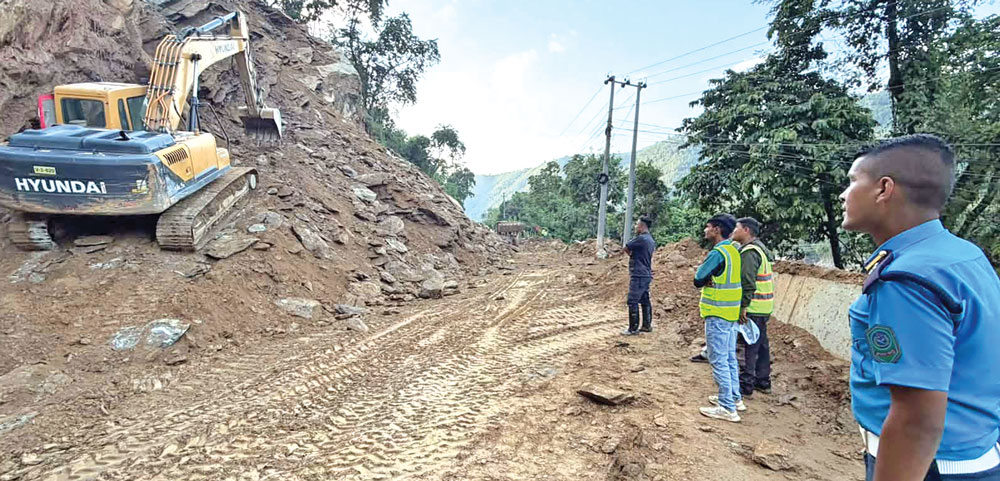
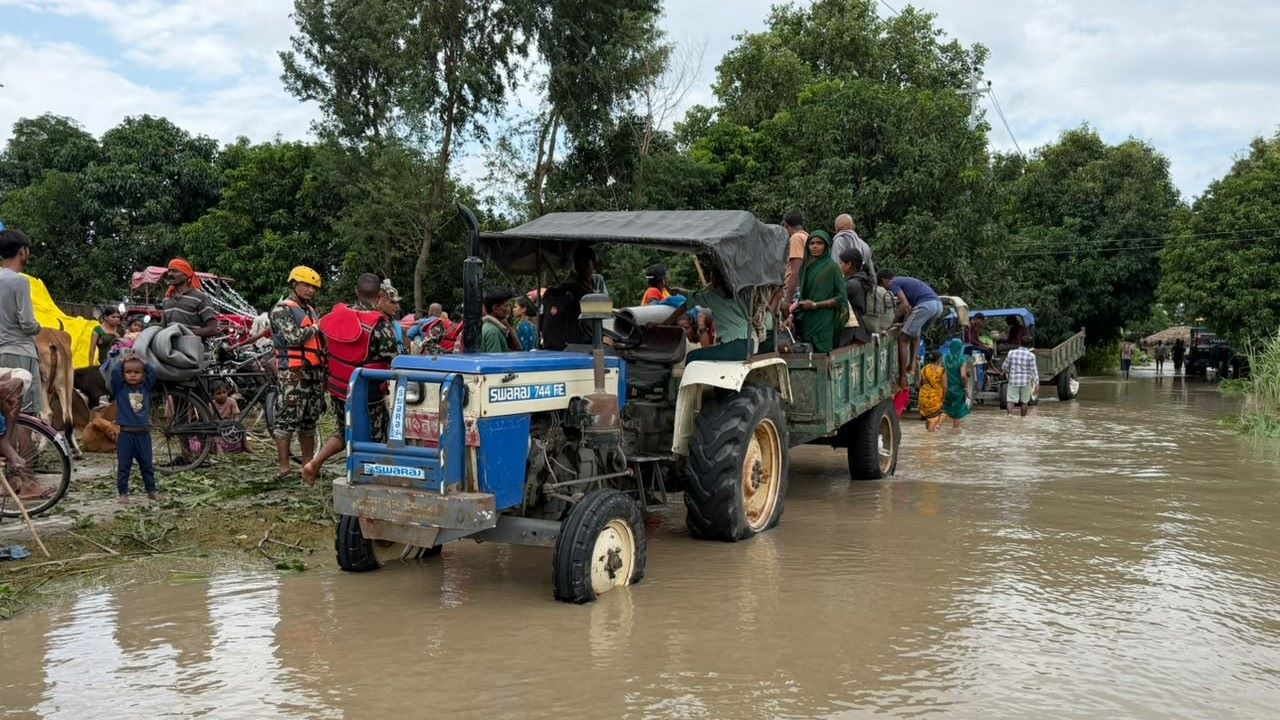
The government has claimed that its response to the Bhotekoshi and Rasuwa floods has been made more effective.
Electricity services disrupted by floods in Rasuwa, Nuwakot and Dhading were restored immediately. A total of 16,591 people in flood-affected areas were vaccinated against cholera, while 1,302 people received tetanus vaccinations.
A Bailey bridge has been completed at Tadi in Nuwakot to restore road connectivity, while another is under construction at Betrabati.
Temporary suspension bridges and alternative footbridges have been constructed in flood-affected areas to facilitate local transportation. A “Business Recovery Package” was also announced for flood-affected businesses, providing relief and tax exemptions.
Economic Reform, Trade and Investment
The government has published a report on Nepal’s current economic situation and initiated the process of repealing 15 outdated laws based on recommendations from the High-Level Economic Reform Recommendation Commission.
To make the capital market more dynamic, the 21-point Capital Market Reform Action Plan, 2083, has been implemented.
Amid rising prices in the global market, a 50 percent exemption has been provided on customs duties and infrastructure fees applicable to petroleum imports.
Since the formation of the current government, land ownership certificates have been distributed to 775 landless Dalits, squatters and unorganized settlers.
Injured participants of the Gen Z movement and families of those killed have been provided free education and concessional facilities for importing vehicles for self-employment purposes.
Stronger Diplomatic Presence
During the period, Nepal also strengthened its foreign relations and diplomatic engagement, including a strong presence at the United Nations General Assembly.
Addressing the UN General Assembly, Prime Minister Balendra Shah strongly highlighted the significant losses and crises Nepal has been forced to endure despite contributing minimally to global greenhouse gas emissions.
Questioning the existing international system and the “world order,” Prime Minister Shah said resources and technology reach destinations for warfare on time, while farmers in poorer countries struggle to receive fertilizers, fuel and food when they need them.
He also proposed a “Himalayan Climate Resilience Mechanism” involving Nepal, India and China to address risks in the Himalayan region through satellite data, early warning systems and disaster management.
Diplomatic Relations Established with Five Countries
During the period, Nepal established diplomatic relations with five additional countries—Guinea-Bissau, Micronesia, Grenada, Namibia and Senegal.
For the first time in the country’s history, applications were invited through open competition for the appointment of ambassadors, following which 13 candidates were recommended.
Prime Minister Shah’s Press and Research Adviser Dahal said, “The government, under the leadership of Prime Minister Balendra Shah, is fully committed to providing direct relief to the people and ensuring transparent good governance. The foundation laid during the first six months confirms this commitment.”