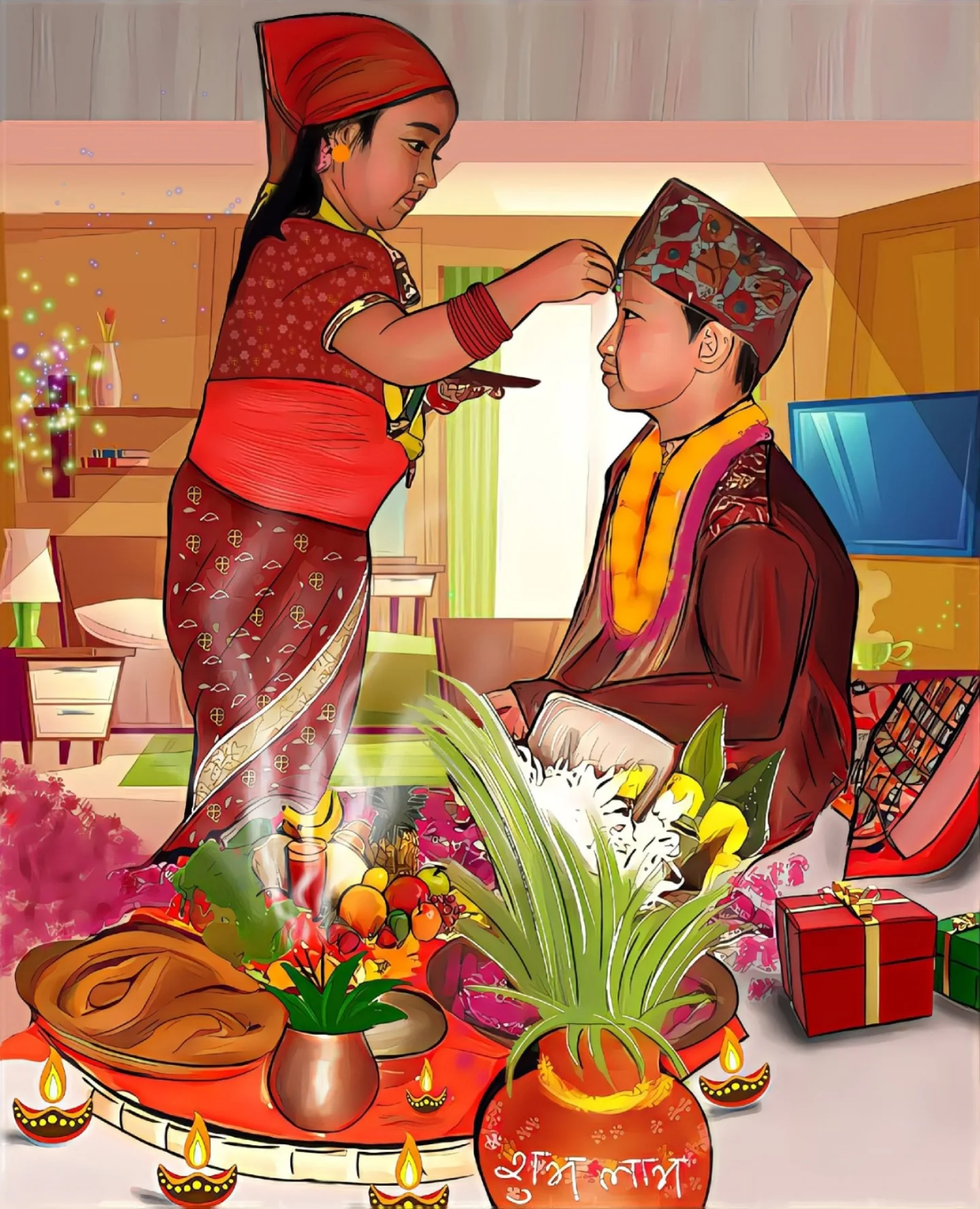
Kathmandu, 11 Oct: Bhai Tika, the fifth and final day of the Tihar festival, is being celebrated across Nepal today, with sisters applying colorful tika to their brothers and praying for their long life, good health and prosperity. The festival, which falls on the second day of the bright fortnight of the Nepali month of Kartik, is also known as Yam Dwitiya.
On this occasion, sisters traditionally apply five- or seven-colored tika to their brothers as a symbol of love, blessings and protection. After receiving tika, brothers also apply tika to their sisters and offer gifts or money according to their financial capacity as a gesture of respect and affection.
Although Bhai Tika can be performed throughout the day, the Nepal Panchanga Nirnayak Development Committee has identified 11:07 am as the most auspicious time for those who wish to follow the traditional astrological timing.
According to the committee’s chairperson, Associate Professor Dr. Purushottam Bhattarai, there is no restriction on applying tika at any time during the day for the general public. However, according to religious traditions, those holding state leadership positions are expected to observe the auspicious time.
Which Direction Should Brothers and Sisters Face?
This year, the committee has recommended that sisters face east while applying tika and brothers face west while receiving it. This arrangement places the Moon, which is in the zodiac sign of Scorpio, on the right-hand side.
Religious scholar Professor Dr. Ram Chandra Gautam explained that Hindu traditions consider it auspicious to keep the Moon either in front or on the right side during religious ceremonies and other activities.
On Bhai Tika, devotees worship the oil lamp, Kalash (sacred water vessel) and Lord Ganesh. They also offer prayers to the eight immortal figures, known as Ashta Chiranjivi: Markandeya, Ashwatthama, Bali, Vyasa, Hanuman, Vibhishana, Kripacharya and Parshuram, as well as Yama, the god of death, and his sister Yamuna.
Traditionally, sisters create a protective boundary around their brothers using a stream of oil before applying tika. They then put garlands of marigold, globe amaranth and chrysanthemum around their brothers’ necks and offer traditional delicacies, including walnuts, chestnuts, spices and sel roti.
Bal Gopaleshwar Temple Opens for Devotees
The Bal Gopaleshwar Temple at Rani Pokhari in Kathmandu will remain open throughout the day for people who do not have brothers or sisters. The temple opens to the public only once a year, on Bhai Tika. People visit the temple to offer prayers, receive tika and observe the festival.
According to Kathmandu Metropolitan City, all necessary arrangements have been completed to welcome devotees.
Cultural expert Dr. Govinda Tandon said that people without brothers or sisters also have a longstanding tradition of visiting the Khanjaneshwar Mahadev Temple at Jayabageshwari to worship and receive tika.
Meanwhile, the Newar community celebrates Bhai Tika as Kija Puja. Depending on family traditions, some members of the community perform the ritual on Bhai Tika, while others observe it a day earlier.
According to decisions made by priests and astrologers at the Taleju Temple in Bhaktapur, most Newar families in the area completed their Kija Puja celebrations yesterday.