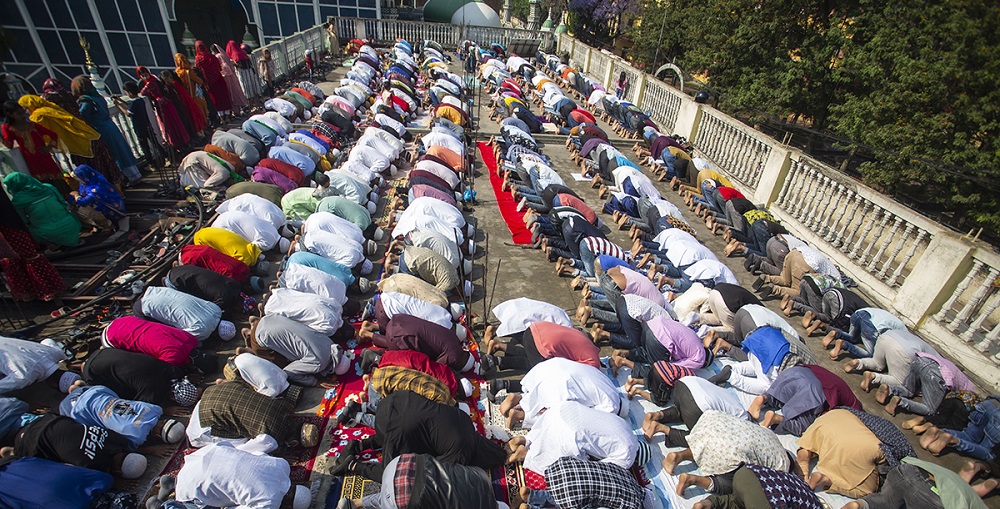
Kathmandu, 21 March: The Muslim community across the country, who observed a month-long fast during the ninth month of the Arabic Hijri calendar, are celebrating Eid al-Fitr today. They are performing special prayers and seeking blessings from their elders.
After offering special prayers on Saturday, it is customary to visit elders over the next three days to receive blessings. During this festival, blessings are also given to those younger than oneself. It is a tradition to offer sweets such as vermicelli (sewai) and dates to relatives who come to seek blessings.
This festival is called Eid al-Fitr because it involves giving charity joyfully to the poor, needy, and destitute. According to Abdul Sattar, a Muslim devotee and central member of the Nepali Congress, the date for celebrating Eid al-Fitr is confirmed upon the sighting of the moon on the last day of the ninth month of the Arabic calendar.
Special prayers will be offered on Saturday morning at the Nepali Jame Mosque near Ghantaghar. After that, the process of seeking blessings from elders will begin. Another notable aspect of this festival is giving charity to the needy and the poor. Similarly, special prayers will be offered at the Kashmiri Mosque also located near Ghantaghar, as well as at mosques and Eidgahs across the country.
Mr. Sattar further mentioned that the Muslim holy book, the Quran, stipulates that devotees must donate 2.5% of their savings from the year, either in cash or kind. This donated cash or goods, known as *Zakat*, is distributed to the needy and the poor.
During Eid al-Fitr, every individual donates wheat or an equivalent amount of cash according to their means. This is called *Sadaqat-ul-Fitr*. It is mandatory to pay this donation even for a child in the mother’s womb. This donation is also given to the needy and the poor.
A month-long fast (*Roza*) had begun for the Muslim community exactly a month ago. Mr. Sattar explained that this fast is observed to atone for sins committed throughout the year. During the month, fasting was observed from sunrise to sunset, and the moon was venerated in the evening.
On the occasion of this festival, the Muslim community wears new clothes, visits friends and relatives, and exchanges Eid greetings. The Ministry of Home Affairs has announced that the government has given a public holiday today on this occasion.