South Korea and China agreed on Saturday at a meeting of top diplomats from the three countries that establishing peace on the Korean Peninsula is a shared responsibility.
In talks following a rare trilateral summit in Seoul in May last year, the neighbors, embroiled in historical and territorial disputes, agreed to deepen ties. They reiterated their goal of a denuclearized Korean peninsula. The US has increased trade tariffs in the region amid growing concerns about North Korea’s weapons tests and its deployment of troops to support Russia’s war in Ukraine.
“We reaffirmed that maintaining peace and stability on the Korean Peninsula is the common interest and responsibility of all three countries,” South Korean President Cho Tae-yul said on Saturday. He said, “In addition, I have emphasized the need to immediately stop illegal military cooperation between Russia and North Korea.”
Seoul and Tokyo have taken a stronger stance against North Korea than China, Pyongyang’s most important ally and economic benefactor. Japanese Foreign Minister Takeshi Iwaya said he, Cho and Chinese Foreign Minister Wang Yi had a frank exchange of views on trilateral cooperation and regional and international affairs. “We will promote future-oriented cooperation,” he said.
“The international situation is becoming increasingly serious and it is no exaggeration to say that we are at a crucial juncture in history,” Iwaya said at the meeting on Saturday. “In this context, it is more important than ever to try to overcome division and confrontation through dialogue and cooperation,” he said.
Wang said this year marks the 80th anniversary of the end of World War II and that “only by honestly reflecting on history can we build the future.” Strengthening cooperation, he said, helps countries “jointly resist risks” and promote “mutual understanding” among them.

New economic opportunities
Saturday’s agenda also included the war in Ukraine. Speaking about Ukraine, Japanese diplomat Iwaya said that unilaterally changing the status quo by force is unacceptable anywhere. “Regarding the situation in Ukraine, I have emphasized that the international community must unite and emphasize that any attempt to unilaterally change the status quo through force will not be tolerated anywhere in the world,” he said.
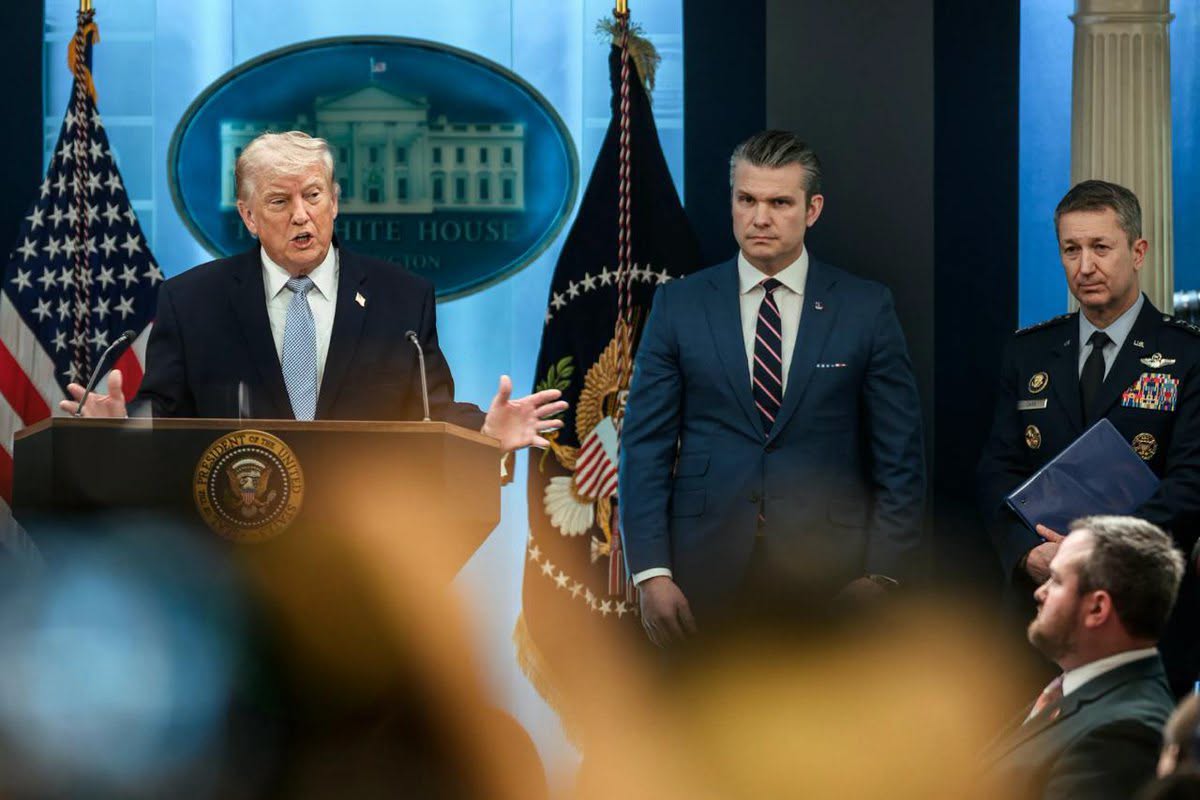
Officials said that issues including climate change, population growth and trade will be discussed on Saturday, as well as cooperation in disaster relief and science and technology. In recent weeks, the tariffs imposed by US President Donald Trump on China and, to a lesser extent, South Korea and Japan have affected all three countries.
None of the ministers directly addressed this issue in their statements to the press. According to Iwaya, all three agreed to intensify coordination for the upcoming summit between the leaders of the two countries. The foreign minister will hold bilateral talks with both counterparts on Saturday, while Japan and China will hold their first ‘high-level economic dialogue’ in six years.
“The trilateral dialogue has been ongoing for more than a decade, but this phase has ‘higher significance’ because of the new American stance,” said Patricia M. Kim, a foreign policy scholar at the Brookings Institution in Washington. “There is increasing pressure on their leaders to diversify their options and seek alternative economic opportunities,” he told AFP. “Beijing is actively working to improve relations with other major and middle power countries amid the growing conflict with the United States,” he said.