Gandaki, 10 June: The historic Gandaki Shatakundi Gayatri Kotihom has contributed to the promotion of tourism in Pokhara. Not only from Nepal, but devotees from India who participated in the Kotihom also visited various religious and tourist sites in Pokhara, leading to an increase in both domestic and international tourist numbers.
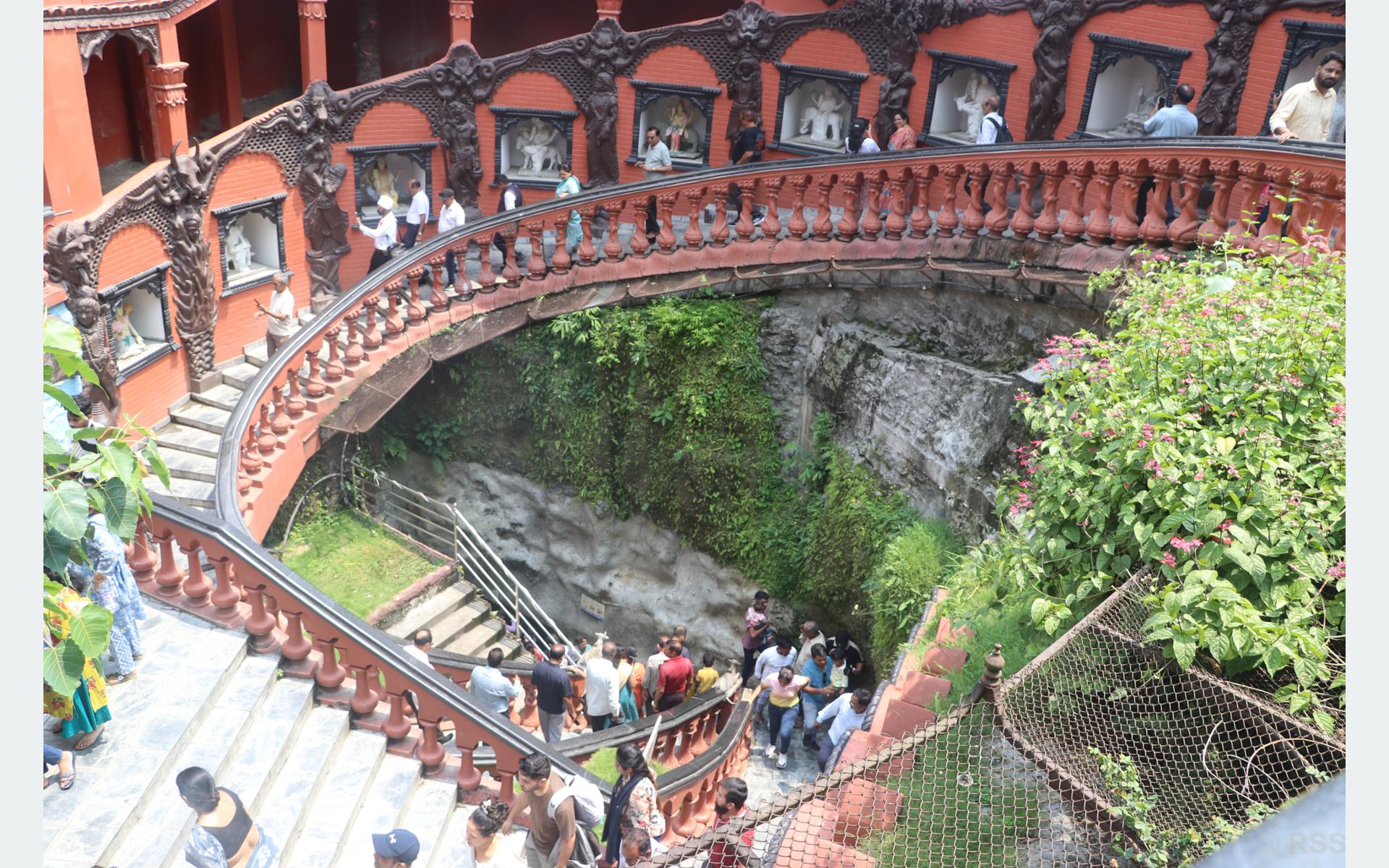
Pokhara Metropolitan City–17, Biraauta — According to Laxman Bastola, Chairperson of the Gupteshwor Cave Management Committee, tourist arrivals—both domestic and international—at the Gupteshwor Mahadev Cave, a major tourist site located near the Kotihom organized by the Human Service Foundation since Baisakh 16 (late April), have increased by approximately 10% compared to previous years.
He stated that from Chaitra 17 to Jestha 26 of the previous fiscal year, 93,716 tourists visited the cave. In the same period of the current fiscal year, 101,144 people purchased tickets and visited the site.
Chairperson Bastola stated that the increase in tourist numbers is mainly due to devotees coming from outside Pokhara for the Kotihom, who also visit the Mahadev shrine inside the cave and enjoy the scenic view of the nearby Patale Chhango (Devi’s Falls).
He stated that 7,428 more people visited the cave during this period compared to the previous year, adding, “The rise in the number of tourists at the cave is due to the influence of the Kotihom event. During this time, the attraction among Indian tourists has also increased.”
Located around 100 meters below the surface, the cave leads visitors through dripping water from the rocky ceiling—creating a natural shower—before reaching a spacious chamber where the idol of Lord Mahadev (Shiva) is enshrined. After passing by Lord Shiva on the right and walking about 100 meters further, visitors reach an open area.
Chairperson Bastola said, “The stone walls of Patre Chhattān (stone cliff) display various forms of gods and goddesses. From the natural bridge over the Siddhartha Highway, looking directly at Patale Chhango (Devi’s Falls) along with the reflection of the waterfall in the pond below creates a mesmerizing view for tourists. The Kotihom event has helped promote the cave and contributed to tourism development.”
He added that visitors often come repeatedly to see Lord Mahadev inside the cave with the belief that their wishes will be fulfilled. According to him, the cave was discovered in 1993 (2050 BS), and since then it has been promoted.
Through the Kotihom event, tourism promotion in Pokhara has benefited not only Gupteshwor Cave but also other religious and tourist sites such as Patale Chhango, Tal Barahi Temple, Bindhyabasini Temple, the Shiva statue in Pumdikot, and natural attractions like Phewa Lake, Sarangkot, and the World Peace Pagoda, according to tourism entrepreneurs.
Vijayshree Krishnamurti Maharaj, Chairperson of Human Service Foundation Nepal and the main organizer of the grand yagna (Mahayagya), shared that with the aspiration of world peace and promoting Pokhara as a renowned religious gateway to Muktinath, their goal is to introduce the entire religious heritage, pilgrimage sites, and monasteries of Gandaki Province to the world.
He stated that through Kotihom, the religious, cultural, and historical significance of these sites is being highlighted nationally and internationally, helping to promote Pokhara’s tourism. This initiative also aims to revive Vedic knowledge and religious traditions in modern society by emphasizing scientific, social, and spiritual aspects.
The temple complex, spread over 29 ropani 12 aana (approximately 14,500 square meters) of land and nearly 80 ropani including surrounding areas, features 100 kunds (sacred water ponds). About 300 people, including priests and Brahmins, prepared the charu (sacred mixture of barley, sesame, rice, ghee, and other materials) used in the Kotihom fire rituals, which began on Baisakh 17 (early May) and have now been completed, Maharaj said.
Youth coordinator of the Kotihom, Lamichhane, informed that millions of devotees participated in the one-and-a-half-month-long event and more than NPR 100 million was collected.