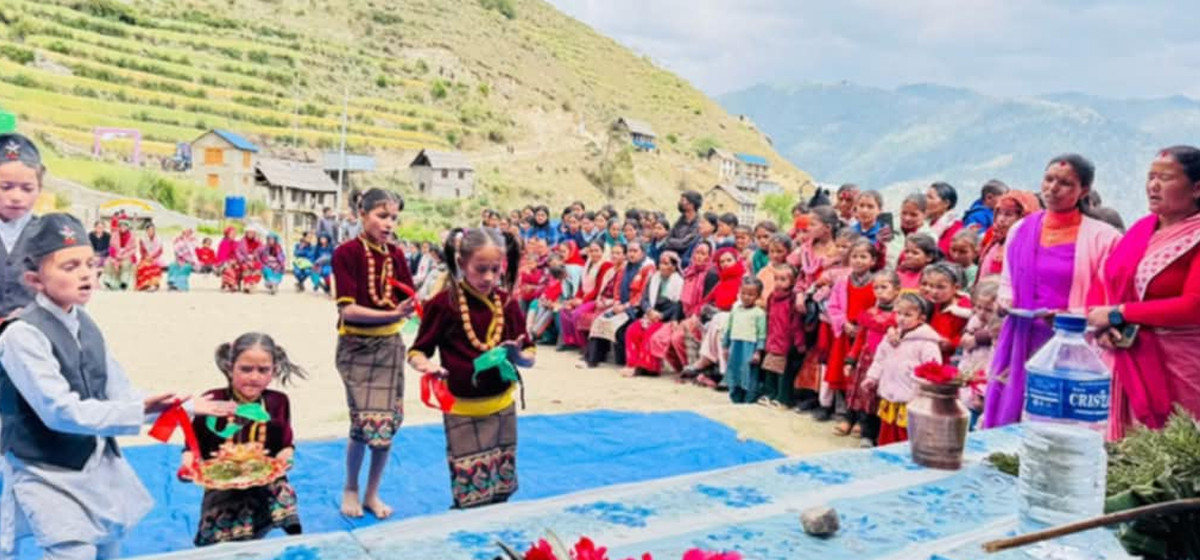
Jumla, 13 May: Hima Rural Municipality in Jumla has been formally declared a child marriage-free zone.
The declaration was made on Tuesday after Ward No. 6 of the rural municipality was officially recognized as free from child marriage, making the entire municipality eligible for the status.
According to Chairperson Laxman Bahadur Shahi, Hima has become the first local unit in Jumla to be declared child marriage-free. He credited this achievement to the active collaboration of the local community, mothers’ groups, adolescents, religious leaders, and priests.
“There was a time when over 70 percent of marriages in our village involved children,” Shahi said. “But now that rate has dropped to zero. Our youth are now aware and conscious. They neither participate in child marriages nor allow them to happen.”
Across the district, which comprises 8 local units (1 municipality and 7 rural municipalities) and 60 wards, only 14 wards have so far been declared child marriage-free.
According to legal provisions, a local unit can be declared child marriage-free once the rate drops below 20 percent. Hima fulfilled this criterion and earned the recognition.
Since 2018, the municipality had been running a campaign to reduce child marriage. Efforts included parent awareness programs, education for adolescent girls, social dialogue, and initiatives led by mothers’ groups and youth clubs, along with programs promoting the rejection of child marriage.
Measures such as barring those involved in child marriage from government services and imposing social sanctions were also adopted.
Chairperson Shahi emphasized that continuous awareness and monitoring are essential to maintaining the municipality’s status. “We will continue this campaign with the support and coordination of all stakeholders to sustain the progress we have made,” he said.
Causes of Child Marriage in Nepal
-
Poverty – Families marry off daughters early to reduce economic burden.
-
Social Norms & Tradition – Deep-rooted beliefs that early marriage protects girls’ “honor.”
-
Gender Inequality – Girls are often seen as financial burdens rather than individuals with rights.
-
Lack of Education – Low awareness of laws and consequences of child marriage.
- Weak Law Enforcement – Despite laws, enforcement in rural areas is poor.
Nepal is making progress, but child marriage persists due to poverty, tradition, and weak enforcement. Stronger policies, education, and community engagement are needed for further reduction.